Do Not Call Back If Your Phone Gives You These Warning Signs!
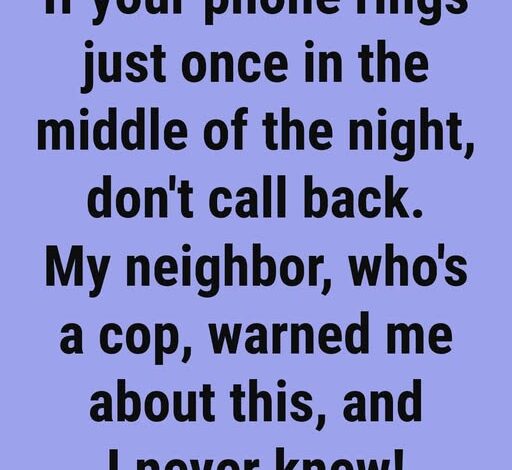
In a world where your phone rarely sits silent, it’s easy to assume every buzz, ring, or missed call deserves your attention. But some calls aren’t just interruptions—they’re traps. Scammers have learned how to weaponize curiosity, urgency, and routine politeness, turning a single returned call into an opportunity to drain money, harvest personal data, or lure you into a conversation designed to manipulate you. Most people don’t realize how effortlessly criminals can mimic local numbers, official agencies, or recognizable businesses. They count on you reacting before thinking.
What makes these scams dangerous isn’t just the technology behind them—it’s the psychology. A missed call from an unknown number can spark the same instinct that makes people answer the door when someone knocks: What if it’s important? What if it’s urgent? What if ignoring it makes things worse? Scam artists understand this better than anyone. Their schemes rely on you acting fast, not smart.
The smartest first step is the simplest one: pause. Let the phone ring. Let the voicemail sit. Let the text go unanswered. Real organizations don’t hide. Real people leave messages. Real emergencies don’t begin with a mysterious missed call and no information. If something needs your attention, it will come through clear, official channels—emails, written notices, legitimate contact numbers you can cross-check.
Scam calls, on the other hand, thrive on ambiguity. They use silence and mystery as bait, hoping you’ll pull the hook yourself by calling back.
If you ever feel even a flicker of uncertainty—don’t respond. Instead, take a moment to verify. Look up the number on an official website. Search it online. Use your bank’s official app or customer-service line rather than trusting the number calling you. This tiny delay is often the only thing standing between you and fraud.
For those who have already answered a suspicious call, the instinct to panic is natural, but unnecessary. Scammers often record voices or attempt to collect small verbal confirmations, but an answered call doesn’t doom you. What matters is what you do next.
Watch your financial accounts for any strange activity. Set alerts so you’re notified immediately if something unexpected happens. Update your passwords—long, unique combinations that can’t be guessed or reused across multiple sites. Two-factor authentication isn’t just an option anymore; it’s a shield against anyone who managed to gather scraps of your information from a call you regret answering.
If you notice something off—mysterious charges, spam texts multiplying, unusual account activity—your phone carrier and bank should be your first calls. They’ve seen every scam that exists. They know how to block, freeze, trace, and investigate. And the sooner you alert them, the more damage you prevent. Modern scams move fast, but carriers and financial institutions can move faster if you give them time to respond.
Healthy skepticism is no longer cynicism—it’s survival. Ignoring a strange call isn’t rude. Deleting a vague voicemail isn’t overreacting. Hanging up the moment someone pressures you isn’t paranoia. It’s common sense. Scammers depend on people being too polite or too curious to disengage. Your refusal to play along is your strongest defense.
Phones have become an extension of our lives—bank accounts, medical information, work messages, photos, private conversations, everything stored behind a glass screen. That kind of access means you have something worth stealing. Scammers are counting on the fact that people forget this. They hope you’ll trust a familiar-sounding number or return that one-second voicemail out of habit.
But awareness is a powerful antidote.
If a call feels off, trust your instincts. If a message feels urgent in a way that doesn’t make sense, trust that feeling. If something pushes you to act before you think, step back. Scammers can fake numbers. They can fake names. They can fake authority. But they can’t fake your caution.
Protecting yourself doesn’t require tech skills or special tools. It just requires slowing down, paying attention, and refusing to let strangers dictate your reactions. In a digital world full of noise, silence can be your safest answer.
Choosing not to engage doesn’t close you off from the world. It protects your privacy, your money, your safety, and your peace of mind. And those are worth far more than returning a call from a number that never deserved your attention in the first place.