DID YOU KNOW?!
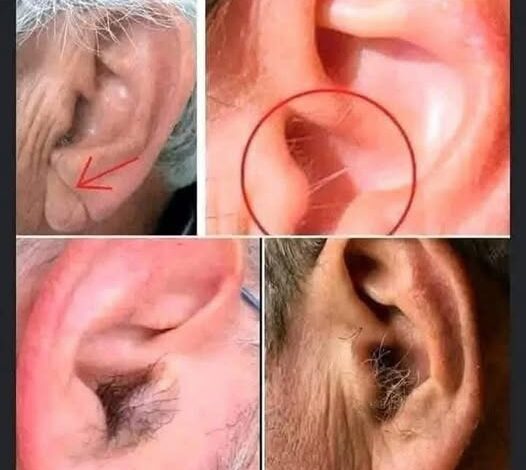
The human body is an intricate map of biological history, and even the most seemingly inconsequential changes can serve as markers for deeper physiological shifts. Among these, the emergence of hair on and within the ears is a phenomenon that many dismiss as a mere quirk of the aging process. However, this transition is far from random; it is the result of a complex interplay between hormonal evolution, genetic blueprints, and the body’s defensive mechanisms. While often viewed through a purely cosmetic lens, the growth of ear hair offers a fascinating glimpse into how our internal chemistry recalibrates over the decades, transitioning from the smooth profiles of youth to the textured complexities of later life.
At the epicenter of this biological shift are androgens, the group of hormones—including testosterone—that dictate various masculine physical characteristics. While these hormones are present throughout a man’s life, the way the body’s hair follicles interact with them changes significantly over time. In a process that seems counterintuitive, the same hormones that might cause hair on the scalp to thin can simultaneously stimulate the follicles in the ears, nose, and eyebrows to enter a hyper-active state. As men age, these specific follicles become increasingly sensitized to the presence of testosterone, causing the fine, nearly invisible vellus hairs to transform into terminal hairs—thick, pigmented strands that demand attention. This is not a failure of the body, but rather a shift in its “instruction manual,” triggered by the steady march of the years.
It is important to recognize that the hair located inside the ear canal is not merely a cosmetic nuisance; it is a vital component of the body’s sensory and defensive architecture. These internal hairs, working in tandem with cerumen, or earwax, act as a filtration system designed to trap dust, debris, and microscopic pathogens before they can reach the delicate tympanic membrane. By preventing foreign particles from infiltrating the inner ear, this hair plays a quiet but essential role in staving off infections and maintaining auditory health. However, when the growth migrates to the tragus or the outer rim of the pinna, it moves beyond the realm of protection and into the territory of hormonal signaling and genetic inheritance.
Genetics serve as the primary architect for this particular trait. If a man’s father or grandfathers were known for their prominent ear hair, the likelihood of him following a similar biological path is exceptionally high. This hereditary link suggests that the sensitivity of ear follicles to androgens is a trait passed down through generations, a silent “promise kept” within the DNA. For many, this growth is simply a normal, expected milestone of their family’s aging process. Yet, in the modern era of “compassionate realism” regarding men’s health, these changes are no longer ignored or treated with shame. Instead, they are being discussed with a sense of clinical transparency, allowing men to navigate their aging journey with self-knowledge rather than confusion.
In rarer instances, excessive hair growth on the ears can be attributed to a condition known as hypertrichosis. Unlike the standard, age-related increase in ear hair, hypertrichosis involves a dramatic and often generalized overgrowth of hair in areas of the body where it is typically sparse or absent. This condition can be congenital or acquired, sometimes appearing as a side effect of specific medications or as a symptom of a broader metabolic imbalance. When hair growth on the ears exceeds the norms of one’s genetic peer group or appears suddenly and aggressively, it serves as a signal for a more thorough medical investigation. In a world that is increasingly hyper-focused on health data and “absolute” physical monitoring, these small biological deviations are becoming vital data points in a person’s overall wellness profile.
The history of medical observation has also flirted with the idea that ear hair might serve as a visible indicator of internal cardiovascular health. Since the 1970s, some researchers have explored a tentative correlation between “Frank’s Sign”—a diagonal crease in the earlobe—combined with excessive ear hair and an increased risk of coronary artery disease. While the evidence for this remains largely inconclusive and the link is considered more of a statistical observation than a definitive diagnostic tool, it highlights the medical community’s desire to find non-invasive ways to predict systemic health issues. In an age where even a “scabbing neck rash” can trigger national speculation about a leader’s health, the idea that a few hairs on the ear could whisper secrets about the heart is a concept that continues to capture the public imagination.
Managing ear hair is a routine part of modern grooming, yet it requires a gentle hand due to the sensitivity of the ear’s skin and the proximity to the eardrum. For most, the use of specialized trimmers or professional waxing serves as an effective way to handle the cosmetic aspect of the growth. However, as the global discourse around aging shifts toward acceptance and transparency, many men are choosing to view these changes with a sense of “dignified realism.” Just as the international community looks for “light” amidst the “many” challenges of 2026, individuals are finding peace in the understanding that their bodies are functioning exactly as their genetic and hormonal codes intended.
The broader conversation about these physical changes mirrors the way we process larger global events. Whether we are analyzing a “one word only” response from a foreign power or the subtle changes in our own reflection, the goal is the same: to find meaning in the signals. A sudden increase in ear hair, much like a shift in diplomatic protocol or a “NEWS ALERT” regarding policy changes, is a prompt for attention. It is a reminder that the status quo is in constant flux and that staying informed is the best way to navigate uncertainty.
Ultimately, the growth of ear hair is a testament to the body’s ongoing evolution. It is a small but significant detail in the narrative of a man’s life, a physical marker of time’s passage and the persistent influence of the endocrine system. By understanding the hormonal and genetic drivers of this growth, we move away from a culture of myth and toward one of scientific literacy. While a stray hair might seem like a minor distraction, it is part of a larger, fascinating system of biological communication—a signal from the interior that the body is continuing its long, complex journey.
In the landscape of 2026, where every “chilling” development and “historic” shift is scrutinized for deeper meaning, our own bodies remain the most intimate subjects of study. Embracing the reality of these changes allows for a sense of autonomy and peace. After all, the “Many” shifts we experience as we age are not signs of decline, but rather indications of a system that is still active, still responding, and still telling its unique story. As long as we are brave enough to see the light of fact over the shadows of shame, even a simple hair can be a source of insight into the marvel of human biology.