!BREAKING – At least 4?
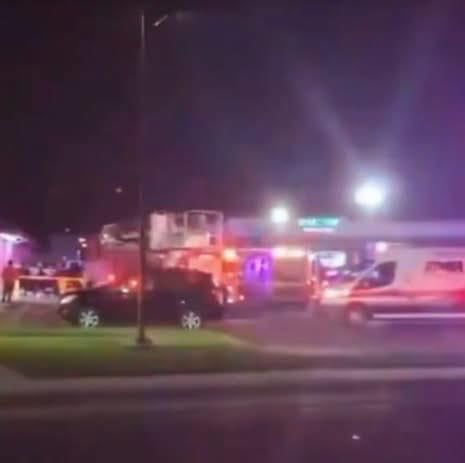
In the residential neighborhoods of Stockton, California, the afternoon of February 20, 2026, began with the quintessential sounds of a community in celebration. On a quiet suburban street, a family had gathered to mark a child’s birthday—a milestone defined by the bright colors of outdoor decorations, the rhythm of upbeat music, and the high-pitched laughter of children opening gifts. However, this scene of domestic joy was shattered in an instant when the celebratory atmosphere was pierced by the sharp, rhythmic crack of gunfire. What followed was a descent into a nightmare that has left at least four people dead and ten others wounded, marking one of the most devastating acts of violence in the city’s recent history.
The transition from a birthday party to a forensic crime scene happened with terrifying speed. Witnesses initially described a moment of collective confusion; several neighbors noted that they heard the initial volleys but mistook them for the festive pop of fireworks. It was only when the music stopped and was replaced by the guttural screams of parents that the reality of the situation became clear. As a barrage of bullets tore through the gathering, the instinct of the attendees shifted from celebration to survival. Fathers and mothers were seen throwing themselves over children, using their own bodies as human shields against the incoming fire as they scrambled for cover behind parked cars and patio furniture.
By the time the sirens of the Stockton Police Department and emergency medical teams filled the air, the suspect had fled, leaving behind a scene of unimaginable carnage. First responders described the sight as “heartbreaking” and “chaotic,” a jarring juxtaposition of childhood innocence and violent tragedy. Overturned chairs, half-eaten birthday cake, and scattered gift wrap were strewn across a lawn now marked by the presence of casualty markers. Paramedics worked frantically to stabilize the wounded, eventually transporting ten victims to local trauma centers. Hospital officials later confirmed that several of these individuals remain in critical condition, fighting for their lives as surgeons work around the clock.
The Stockton Police Department has since launched a massive, multi-agency investigation to identify the perpetrator and determine the motive behind the assault. Detectives are currently conducting a “grid sweep” of the neighborhood, collecting spent shell casings and reviewing any available footage from residential security cameras and doorbell monitors. At this stage, authorities have not confirmed whether the shooter was known to the family or if the party was the victim of a tragic, random act of violence. The central question haunting the community is why a children’s gathering was targeted for such a high-velocity attack.
In the hours following the shooting, a heavy silence has settled over the Stockton neighborhood. Residents have begun to create a makeshift memorial near the site of the tragedy, placing candles and stuffed animals where, just hours earlier, children had been playing. The emotional toll on the survivors is immense; counselors and victim advocates have been deployed to assist the families who witnessed the bloodshed. For many, the trauma is compounded by the fact that a day intended to build a core childhood memory has instead been permanently etched into their minds as a day of profound loss.
This incident occurs against a backdrop of heightened tension regarding public safety and community violence. Local officials, including the Mayor of Stockton, issued a somber statement expressing their outrage and grief. They emphasized that when a child’s birthday party becomes a site of mass casualty, it represents a “violation of the sacred space of the family.” There is a growing call for increased patrols and a renewed focus on gang intervention and firearm task forces, although investigators have not yet linked this specific event to any particular group or criminal enterprise.
The forensic investigation is expected to be lengthy. Ballistics experts are analyzing the caliber and trajectory of the rounds to determine the type of weaponry used, while digital forensic teams are scrubbing social media for any “digital fingerprints” that may have been left by a suspect bragging about or planning the attack. Stockton’s Chief of Police has made a direct plea to the public, urging anyone with even the smallest detail—a strange car seen idling on the corner or a person acting nervously in the vicinity—to come forward. In cases of such sudden violence, the breakthrough often comes from a witness who noticed a detail that seemed insignificant until the first shot was fired.
As of February 25, 2026, the identities of the deceased have not been officially released, pending the completion of the arduous process of family notification. However, it is known that the victims represent a cross-section of the family unit, including adults who were simply there to support a loved one’s child. The Stockton community has organized a series of vigils, with local leaders calling for a “stand against the normalization of such horror.” They argue that the frequency of these events should not dull the public’s capacity for shock and demand for change.
The tragedy in Stockton is a reminder of the fragility of the peace we often take for granted. It highlights the reality that violence does not always seek out dark corners or late-night venues; sometimes, it intrudes upon the most brightly lit and joyous moments of our lives. For the families involved, the recovery will be measured in years, not days. The physical wounds may eventually heal, but the psychological impact of a birthday party turned into a battlefield is a burden they will carry forever.
As the sun sets over California, the yellow police tape remains a stark reminder of the lives that were cut short and the families that were irrevocably altered. The search for justice continues, driven by a police department that has vowed not to rest until the person responsible is in custody. For the people of Stockton, the goal is now two-fold: to support the survivors in their long journey toward healing and to ensure that such a heartbreaking scene never unfolds on their streets again.