At My Grandmas Funeral, I Saw My Mom Hiding a Package in the Coffin, I Quietly Took It And Was Stunned When I Looked Inside
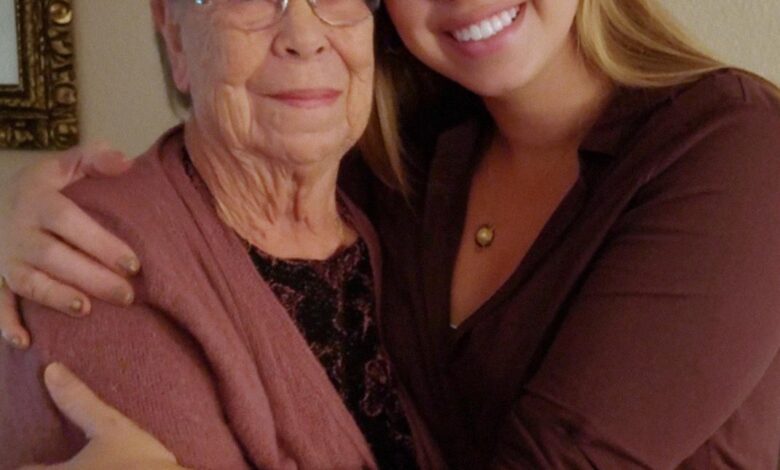
Grief is often described as a series of waves, but for me, it felt like a staircase that simply ended in the dark. My grandmother, Catherine, was not just the matriarch of our family; she was my compass. She was the woman who taught me that a pinch of cinnamon could fix a mediocre apple pie and that integrity was the only currency that never lost its value. Standing beside her mahogany casket, the air heavy with the scent of lilies and the hushed murmurs of the neighborhood, I felt as though the floor had been pulled from beneath my feet.
The funeral home was bathed in a soft, artificial glow that smoothed the lines on Grandma’s face. She looked peaceful, draped in the blue silk dress she had worn to my college graduation. Mrs. Anderson, her neighbor of forty years, squeezed my hand. “She never stopped talking about you, Emerald,” she whispered. “You were her North Star.”
I tried to smile, but my gaze kept drifting to my mother, Victoria. She stood several feet away, perfectly composed in a sharp black suit, her eyes fixed more on her reflection in the polished wood of the pews than on the woman who had given her life. They had been estranged for years—a “personality clash,” my mother called it. To me, it always felt more like a fundamental difference in how they viewed the world.
As the room began to clear, I watched my mother approach the casket. She didn’t lean in for a final kiss or a whisper of goodbye. Instead, she glanced around with a sharp, furtive kineticism before sliding a small, blue-wrapped package beneath the fold of Grandma’s dress. Her heels clicked with cold precision as she walked away, leaving a trail of expensive perfume and a growing knot of unease in my stomach.
“Did you see that?” I asked Mrs. Anderson.
“See what, dear?”
“Nothing,” I murmured, but the instinct Grandma had spent twenty years honing in me was screaming. Grandma Catherine was a woman of order and transparency; she never would have made a secret pact with my mother.
I waited until the funeral director, Mr. Peters, had retired to his office. The room was silent now, save for the rhythmic ticking of a grandfather clock in the hall. With trembling fingers and a heart hammering against my ribs, I reached into the silk lining of the casket. My hand brushed against the cold, still lace of Grandma’s sleeve before finding the bundle. It was a package wrapped in one of Grandma’s own handkerchiefs, the delicate “C” she had embroidered herself years ago visible in the corner.
I slipped it into my purse and left the funeral home, the weight of it feeling like a leaden anchor.
Back in Grandma’s apartment—the place that still smelled of lavender and Earl Grey tea—I sat in her old reading chair and untied the twine. Inside was a stack of letters. As I read them, the grandmother I thought I knew was replaced by a woman who had been fighting a silent, heartbreaking war for her own survival.
The correspondence spanned three years. The first letter, written in Grandma’s elegant, cursive hand, was a plea: “Victoria, I know what you did. I watched the money disappear from my accounts. I wanted to believe it was a mistake, but we both know about the gambling. Please, let me help you find a way back.”
My breath caught. I remembered that winter; my mother had suddenly developed an interest in Grandma’s bank statements, claiming she was “looking out for her future.”
Letter after letter detailed a descent into deception. My mother hadn’t just “borrowed” money; she had systematically bled Grandma dry, using tears and promises of recovery as emotional leverage. The final letter from Grandma was the most devastating: “Emerald will receive everything that is left. She is the only one who loved me without a price tag. You believe you’ve won, Victoria, but the truth is a debt that always comes due.”
But it was the last paper in the stack that truly shattered me. It was a note written by my mother, dated only two days ago. It was the response she had meant to bury with her mother, a final act of spiteful victory: “Fine. You win. I took the money. But Emerald adores me. She’ll give me whatever I ask for, including your precious inheritance. Because she loves me, I still win. Goodbye, Victoria.”
I sat in the dark for hours, the letters scattered around me like fallen leaves. The woman I called “Mom” had viewed my love as a tool—a secondary bank account to be accessed once Grandma was gone. She didn’t want the package buried to honor a secret; she wanted the evidence of her theft and her cold-blooded plan to disappear forever.
By morning, the grief had been replaced by a crystalline, protective anger. I called her.
“Mom? I found something Grandma left for you. Can we meet at the coffee shop on Mill Street?”
“Oh, Emerald, sweetie,” her voice was honey-coated, the picture of maternal concern. “Of course. It’s so thoughtful of you to handle her affairs so quickly.”
When she arrived at the cafe, she was wearing a vibrant red blazer, looking like a woman ready to celebrate a closing deal. She reached across the table to pat my hand. “You look tired, darling. Don’t worry, I’m here to help you manage everything Grandma left behind.”
I didn’t pat her hand back. Instead, I placed a small envelope on the table. Inside was a single page—the letter she had written to Grandma, admitting the theft and her plan to manipulate me. Underneath it, I had added a note of my own.
As she read her own sharp, angry handwriting, the color drained from her face, leaving her looking hollowed out and gray. She looked up, her mouth opening to craft a lie, but I stopped her.
“I have the rest of the letters, Mom. I know about the accounts. I know about the gambling. And I know what you think of my love for you.”
“Emerald, you don’t understand—”
“I understand perfectly,” I said, rising from the table. “You thought Grandma’s death was a win. But she was right—the truth is a debt. And today, I’m closing your account.”
I walked out of the coffee shop and into the bright, unforgiving light of the afternoon. The waves of grief were still there, but for the first time, I felt like I knew exactly how to swim. Some secrets are meant to stay buried, but the truth is what keeps us from drowning.