An Actress Enduring Journey Through Hollywood and Life!
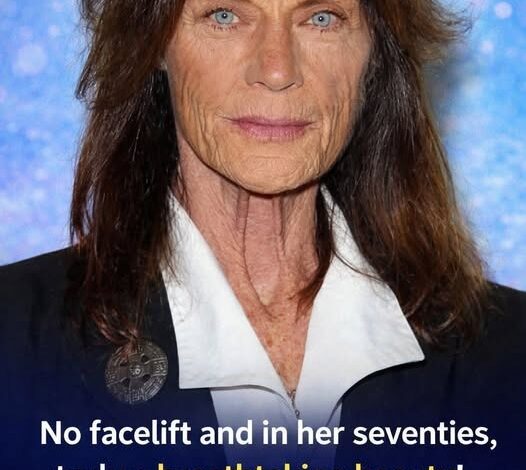
Aging rarely announces itself all at once. It arrives quietly, layered over years, revealing its presence in reflections we barely notice at first. It shows up in old photographs that feel closer than they should, in familiar voices that carry new textures, in reunions that gently remind us how much time has passed. Rather than diminishing a life, these changes often sharpen it, bringing perspective, depth, and a clearer understanding of what actually matters.
For public figures, this process unfolds in full view. Their faces, voices, and choices become part of a shared timeline, allowing audiences to witness not just careers, but lives in motion. Actors, in particular, offer a rare kind of continuity. Through decades of performances, they invite viewers to grow alongside them, watching talent mature as experience reshapes how stories are told. In these long arcs, time does not weaken creativity. It often strengthens it.
Hollywood has long been associated with youth, speed, and constant reinvention. Yet many performers quietly challenge that narrative by continuing to work on their own terms well into later life. Some slow their pace, becoming more selective. Others shift toward roles that reflect hard-earned wisdom rather than ambition. In doing so, they reveal an important truth: creativity does not expire. It evolves.
One actress whose career illustrates this enduring journey is Meg Foster.
From the moment she appeared on screen in the late 1960s and early 1970s, Meg Foster was unmistakable. Her striking blue eyes, intense presence, and calm confidence set her apart in an industry that often favored familiarity over individuality. She didn’t blend in, and she never tried to. That refusal to conform became one of her defining strengths.
Foster built a body of work across film and television that reflected range rather than typecasting. She appeared in dramas, thrillers, science fiction, and Westerns, often portraying characters with emotional complexity and quiet strength. In a time when many actresses were boxed into narrow archetypes, she gravitated toward roles that felt grounded and real, even when the settings were fantastical.
Her career during the 1970s and 1980s placed her alongside some of Hollywood’s most recognizable faces, yet she never chased celebrity for its own sake. Instead, she chose projects that interested her, even if they didn’t promise mainstream attention. That approach earned her a reputation as a performer respected by peers and audiences alike—someone whose presence elevated a scene without demanding the spotlight.
As the years passed, the industry changed, and so did Foster’s relationship with it. Like many actors, she faced the shifting realities of Hollywood’s priorities, particularly as opportunities for women narrowed with age. But rather than viewing this as an ending, she treated it as a transition. She continued working, taking roles that aligned with her sensibilities and stepping away when projects did not.
Outside of acting, Foster embraced a quieter life, focusing on personal passions and self-expression. She moved away from the constant churn of Hollywood, choosing instead to live in a way that felt authentic and sustainable. This distance did not diminish her legacy; it clarified it. By stepping back, she preserved her independence and sense of self in an industry that often demands constant visibility.
Now in her mid-seventies, Foster’s life stands as a reminder that relevance is not measured by headlines or screen time alone. It is measured by integrity, consistency, and the courage to define success on one’s own terms. Her enduring appeal lies not in resisting age, but in accepting it without apology.
Aging, for actors like Foster, becomes less about loss and more about refinement. Experience brings subtlety. Time deepens emotional range. The urgency of early career ambition gives way to discernment, allowing for choices driven by meaning rather than momentum. In this stage of life, creativity often becomes more intentional, shaped by lived experience rather than external expectation.
Audiences, too, are evolving. There is growing appreciation for stories that reflect the fullness of life, including its later chapters. Performers who age visibly and honestly offer something rare: a mirror that validates the passage of time rather than denying it. They show that growth does not stop at a certain age—it simply changes form.
Meg Foster’s journey fits squarely within that perspective. She represents a generation of actors who proved that individuality could outlast trends, and that authenticity could endure long after the spotlight moved elsewhere. Her career is not defined by a single role or era, but by a steady commitment to craft and self-respect.
In a culture that often pressures people—especially women—to remain frozen in youth, her example carries quiet power. She did not chase reinvention for approval. She allowed herself to evolve naturally, trusting that the value of her work and her life did not depend on constant validation.
This broader lesson extends beyond Hollywood. Aging, in any field, is often framed as something to fear or resist. Yet stories like Foster’s suggest another possibility: that aging can be a process of clarification. As years accumulate, priorities sharpen. The noise falls away. What remains is choice—how to spend time, where to invest energy, and what truly matters.
For actors, this can mean selecting roles that resonate personally, or stepping away when the work no longer aligns with their values. For everyone else, it may mean redefining success, nurturing long-neglected interests, or embracing a pace that allows for reflection.
Time reshapes everyone. It alters appearances, circumstances, and opportunities. But it also offers something invaluable: perspective. When embraced rather than resisted, that perspective becomes a source of strength.
Meg Foster’s enduring journey through Hollywood and life reflects that truth. Her path shows that aging is not a retreat from relevance, creativity, or purpose. It is a continuation—one shaped by experience, self-knowledge, and the freedom to live without apology.