After Opening Ceremony Reaction, JD Vance Sends Message to US Olympians!
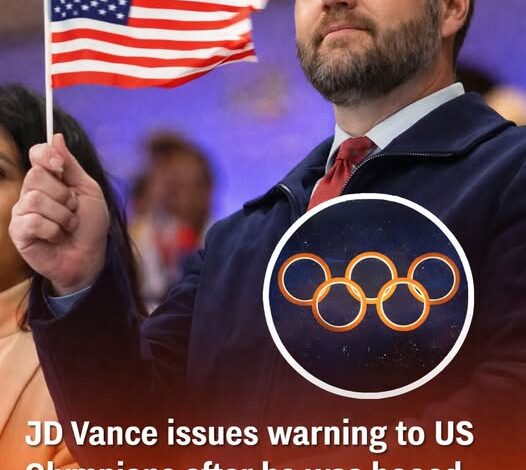
Vice President JD Vance spoke out in support of Team USA following a noticeable reaction during the Winter Olympics opening ceremony in Milan, where he and his wife, Usha Vance, attended to cheer on American athletes. The couple’s appearance in the stadium drew a mixed response from sections of the crowd, with audible boos interspersed among applause. Commentators covering the ceremony acknowledged the divided reaction, noting the moment as it unfolded live.
In remarks delivered afterward, Vance sought to shift the focus back to the athletes and their performance on the global stage. Speaking during an interview, he emphasized that the Olympic Games should remain centered on competition, unity, and national pride rather than political divisions. “You’re there to represent your country and hopefully win a medal,” he said, underscoring his belief that the athletes’ mission transcends partisan disputes. “You’re not there to get involved in politics.”
His comments came at a time when the intersection of sports and politics remains a sensitive topic in the United States. Vance acknowledged that representing the country on an international stage means standing for a broad and diverse population. “When you represent the country, you represent Democrats and Republicans,” he said, highlighting the idea that Olympic athletes carry the hopes of the entire nation, regardless of political affiliation.
The vice president’s message aimed to reinforce a sense of unity amid the charged atmosphere that can sometimes accompany high-profile global events. He praised Team USA competitors for their discipline and commitment, expressing confidence that most athletes remain focused on their training and performance. According to Vance, the dedication shown by American Olympians continues to earn widespread support at home, even in times of political tension.
The reaction during the opening ceremony did not overshadow the broader significance of the Games. The Winter Olympics, hosted this year in Milan, bring together athletes from around the world to compete in events that celebrate skill, perseverance, and international cooperation. For many viewers, the ceremony is a symbolic moment that showcases both national identity and global unity.
Still, the audible response to Vance’s appearance sparked discussion about the role political leaders play at international sporting events. While it is customary for government officials to attend and support national delegations, public reactions can reflect broader sentiments or current political climates. The moment highlighted how even ceremonial appearances can become part of larger conversations.
Some athletes themselves have spoken openly about the emotional complexity of representing the United States in a polarized era. Curler Richard Ruohonen shared that he hopes to embody values such as respect and compassion while competing. His perspective suggests that athletes can view their role not only as competitors but also as ambassadors for shared human principles.
Freestyle skier Hunter Hess expressed similar nuance, noting that wearing the national colors currently carries “mixed emotions.” His comments reflect the broader reality that athletes, like all citizens, navigate personal and national identities within a complicated social landscape. Yet despite these sentiments, the overwhelming focus for competitors remains their sport and their preparation.
Former President Donald Trump also weighed in on reports of the crowd’s reaction, expressing surprise at the suggestion of boos and voicing support for the administration’s engagement with Team USA. His remarks added another layer to the public conversation, illustrating how Olympic events can intersect with domestic political narratives.
Olympic officials, for their part, reiterated that the Games are meant to rise above political disputes. Representatives emphasized respect, sportsmanship, and fair play as core principles guiding the international competition. The International Olympic Committee underscored its commitment to maintaining the spirit of unity that defines the event, while welcoming continued participation and collaboration from the United States in future Olympic planning.
The Milan ceremony itself was designed to highlight cultural exchange and shared celebration. Athletes marched beneath their national flags while audiences from around the world watched. For many competitors, simply qualifying for the Olympics represents years of dedication and sacrifice. The global stage provides a rare opportunity to unite countries through sport, even amid broader geopolitical differences.
Vance’s remarks reflected an awareness of that symbolism. By encouraging athletes to focus on their events rather than political commentary, he reinforced the longstanding view that the Olympics serve as a platform for excellence and camaraderie. His emphasis on unity echoed themes often associated with the Games, which aim to foster peaceful competition and mutual respect among nations.
The discussion surrounding the ceremony also underscores a recurring challenge in modern sports: separating athletic achievement from political context. In recent years, athletes around the world have used their visibility to address social and political issues, while others have chosen to concentrate solely on competition. The diversity of approaches reflects the varied perspectives within any national delegation.
For Team USA, the weeks ahead will be defined by performance on the ice and snow. The athletes competing in Milan carry the responsibility of representing a country of more than 330 million people. Their focus remains on training, teamwork, and striving for podium finishes.
As the Games continue, the spotlight will likely shift back to the competitions themselves—medal counts, record-breaking performances, and personal triumphs. The opening ceremony moment, while widely discussed, becomes part of the broader narrative surrounding this Olympic cycle.
Ultimately, Vance’s message to American athletes was clear: compete with pride, represent the entire nation, and let the Games be about sport. In a world where political tensions often dominate headlines, the Olympic arena offers a rare space where achievement can transcend division. Whether in moments of applause or criticism, the athletes remain at the center, embodying dedication and the pursuit of excellence on behalf of their country.