After My Husbands Death, I Was Shocked to Find Out We Were Never Married and I Cannot Claim Inheritance!
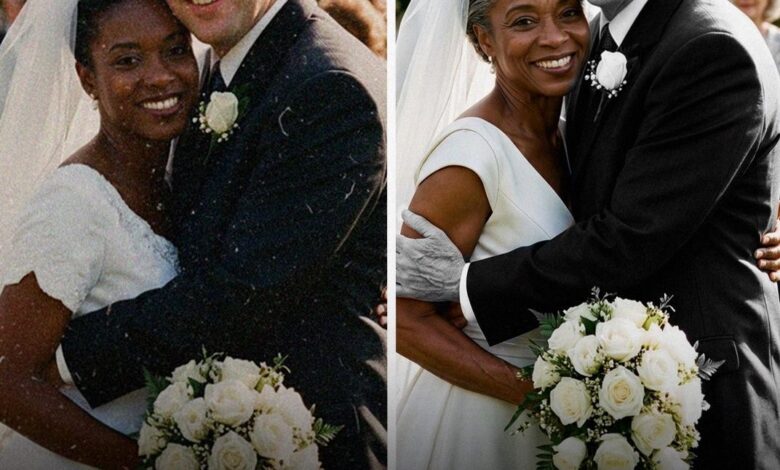
I was fifty-three when my life split cleanly into two parts—before the phone call, and everything that came after it.
Michael and I had been together for twenty-seven years. We built a life the way most people do—slowly, imperfectly, one decision at a time. We raised three children, argued about bills and chores, laughed over nothing, and found comfort in the quiet routines that only long-term love creates. He wasn’t just my husband. He was my constant.
Then one rainy Tuesday afternoon, he was gone.
The call came from a police officer I’d never met. A car accident. No details that mattered, no words that could soften the impact. Just a finality that hit so hard it didn’t even feel real at first. I remember standing there, phone still in my hand, waiting for something—anything—to make it not true.
Nothing did.
The funeral passed in a blur. Faces, voices, flowers, hands on my shoulders—I barely registered any of it. I stayed upright because my children needed me to. Mia, my oldest, tried to be strong, holding herself together with sheer will. Ben, quieter, carried his grief like a weight he refused to drop. I held onto them both, as if that alone could keep us from breaking apart completely.
The weeks that followed felt unreal. I moved through my days like I was underwater. I cooked meals I didn’t taste, answered questions I didn’t hear, and lay awake at night reaching across the bed for someone who wasn’t there anymore. Grief didn’t come in waves—it just stayed, heavy and constant.
Then came the meeting that made everything worse.
Three weeks after the funeral, I sat in a lawyer’s office, surrounded by polished wood and silence that felt too formal for what I was dealing with. He handed me documents, and I started reading, trying to focus through the fog in my head.
That’s when I saw it.
No record of marriage found.
At first, I thought it was a mistake. Something clerical. Something fixable. After all, how could twenty-seven years not exist on paper? We had a ceremony. I had photos. I still had my dress.
“I’m sorry,” the lawyer said, stumbling slightly over how to address me. “Ms. Patricia… there’s no legal record of your marriage.”
The words didn’t make sense. I repeated our wedding date, described the ceremony, insisted there had to be proof somewhere.
He shook his head gently. “Without a filed marriage certificate, the law doesn’t recognize you as his spouse. And your partner passed away without a will.”
I felt the room tilt.
“What does that mean?” I asked, even though part of me already understood.
“It means you don’t have a legal claim to his estate. His next of kin—his relatives—are entitled to everything. You’ll need to vacate the house within two weeks.”
Two weeks.
The house we built together. The savings we scraped together over decades. The car in the driveway. Every piece of the life we created—legally, it wasn’t mine.
I walked out of that office in shock. Grief turned into something heavier, sharper. Betrayal. Confusion. Anger I didn’t know where to put.
Had he forgotten? Had he never cared enough to make it official? How could someone share a life with you for nearly three decades and leave you with nothing?
The following weeks were brutal. My body started to break down under the pressure. I barely ate. I barely slept. My hands trembled constantly. Some mornings, just getting out of bed felt impossible.
The kids were struggling too. Mia and Ben had been planning their futures—college, independence, something beyond this house. Now they talked about staying close, about scaling back their dreams to help me survive. That hurt more than anything else.
I forced myself to keep going. To work my part-time job at the library. To maintain some version of normalcy. To keep the house clean even though it wouldn’t be ours much longer. Every day felt like walking toward an ending I couldn’t stop.
Then, one week before we were supposed to leave, there was a knock at the door.
A woman stood there, holding a folder, introducing herself as a county clerk named Sarah. She spoke calmly, but there was something in her tone that made me listen closely.
“We reviewed your partner’s records,” she said. “And there’s something you need to understand.”
We sat at the kitchen table, the same one where Michael and I had shared countless meals, arguments, and quiet moments. She opened the folder carefully.
“You were told your marriage was never legally filed,” she said. “That part is true. But what you weren’t told is why.”
I felt my chest tighten. “Why would he do that?”
She met my eyes. “It wasn’t an oversight. It was intentional.”
The words hit like another blow.
But then she kept talking.
“He set up trusts, insurance policies, and financial protections designed to bypass probate. He structured everything to protect you and your children from potential legal disputes, creditors, or challenges from extended family.”
She laid out documents in front of me—papers I’d never seen. Trust agreements with my name on them. Accounts created for the kids. Safeguards I didn’t know existed.
I stared at them, trying to make sense of it all. “Why wouldn’t he tell me?”
She slid an envelope across the table. “He did. Just not in the way you expected.”
My hands shook as I opened it. Seeing his handwriting nearly broke me.
The letter was simple, direct, and unmistakably him.
He explained everything. Years ago, he’d made business decisions that could have exposed us to financial risk—lawsuits, debts, complications that could drag the entire family down. By not formalizing the marriage legally, and instead placing everything into protected structures, he ensured that no matter what happened to him, we wouldn’t lose everything.
He knew it might hurt me. He knew I might feel confused or betrayed. But every decision, he wrote, was made to keep us safe.
“You are my wife in every way that matters,” he wrote. “I would do anything to protect you—even if it means you won’t understand why.”
I pressed the letter to my chest and cried harder than I had since the funeral.
Not from grief this time, but from realization.
I had spent weeks thinking he had failed us.
In reality, he had been protecting us all along.
Over the next few weeks, Sarah helped me piece everything together. The house was secured in a trust. The kids’ education was fully funded. There were accounts set aside for living expenses—enough to keep us stable, enough to breathe again.
We weren’t losing everything.
We were being held up by something he had built quietly, carefully, without needing recognition.
One evening, sitting at the kitchen table, I reread his letters. There were several, each explaining a different part of what he had done. Each one filled with the same steady intention—protect first, explain later.
“You really thought of everything,” I said out loud, to the empty room that didn’t feel quite as empty anymore.
Mia sat across from me, smiling softly. “He always did, Mom.”
Ben leaned in the doorway, trying to lighten the mood. “Guess college is back on the table.”
We laughed—real laughter, for the first time in weeks.
That night, lying in bed, I understood something I hadn’t before. Love doesn’t always look the way you expect it to. Sometimes it isn’t visible. Sometimes it doesn’t come with explanations or reassurance.
Sometimes love is quiet planning. It’s foresight. It’s sacrifice that only makes sense when it’s almost too late to see it.
We didn’t have a piece of paper proving we were married.
But we had something stronger than that.
And in the end, that was what saved us.