After a Terrible Crash Left Me Disabled, My Husband Made Me Pay Him to Take Care of Me – He Cried in the End!
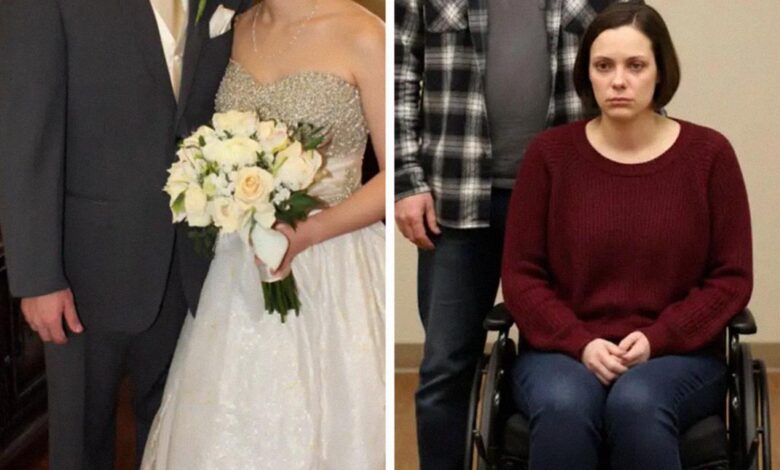
After the crash, I honestly thought the hardest part would be learning to walk again. I was wrong. The real test wasn’t physical therapy or pain or the humiliation of needing help to do basic things. The real test was discovering exactly what my husband believed my care was worth.
I’m thirty-five. Before the accident, I was the engine of our marriage. I paid most of the bills. I cooked. I cleaned. I tracked every appointment, every renewal, every phone call, every form. If something needed to be handled, it was handled by me. My husband would flash that helpless smile and say, “Can you just do it, babe? I’m bad with paperwork.”
He was bad with more than paperwork, but I didn’t say that out loud.
When he wanted to switch jobs or “take a break to figure things out,” I’d sit down with spreadsheets and make it work. I picked up extra hours. I moved money around. I made sure rent got paid and the fridge stayed full. I cheered him on because I believed marriage was teamwork. I believed it would all even out eventually. Ten years together had to mean something, right?
I never kept score.
Then I got into a serious car accident.
I don’t remember the impact. I remember a green light. Then a hospital ceiling. The smell of disinfectant. The heavy fog of pain meds. The doctor’s face hovering in and out of focus while he explained my legs had taken the worst of it.
I survived. My spine was intact. No permanent paralysis. But my legs were weakened enough that I couldn’t stand on my own. For months, I would be in a wheelchair, relearning strength and balance, rebuilding muscles that suddenly felt like they belonged to somebody else.
“Six to nine months of physical therapy,” the doctors said. “You’ll need help at first. Transfers. Bathing. Getting around. No weight-bearing alone for a while.”
I hated every word. I’ve always been the independent one. The helper. The one who shows up and solves the problem. I didn’t know how to be the problem.
When I came home, I told myself this would be our hard chapter. That hardship would bring us closer. When my dad got injured when I was a kid, my mom took care of him for months without making him feel like a burden. They joked. They were tender. That’s what love looked like to me. I assumed I had that kind of love.
The first week back, my husband was distant.
He helped me shower, but he acted irritated, like every minute was a favor. He made food, set the plate down, and disappeared into his office. He’d leave the house for hours without explanation. I kept excusing it as stress. Caretaking is hard. He’s adjusting. He’s scared too. I fed myself those excuses like medicine.
Then one night he sat on the edge of the bed with what I came to recognize as his “serious talk” face.
“Listen,” he said. “We need to be realistic about this.”
My stomach dropped. “Okay. Realistic how?”
He rubbed his face, as if I was the one exhausting him. “You’re going to need a lot of help. Like… a lot. All day. Every day. And I didn’t sign up to be a nurse.”
“You signed up to be my husband,” I said.
“Yeah, but this is different,” he replied. “This is like a full-time job. I’m going to have to put my life on hold. My career. My social life. Everything.”
My eyes burned. “I don’t want this either. It’s temporary. The doctors think I’ll—”
He cut me off. “If you want me to stay and take care of you, I want to be paid. A thousand a week.”
I actually laughed. I thought it had to be a sick joke. No real person says that to their spouse.
He didn’t laugh.
“You’re serious?” I asked.
He nodded like he was negotiating a contract. “You’ve earned more than me for years. You’ve been carrying us. Now it’s your turn to pay up. I’m not your nurse.”
Those words lodged in my head like shrapnel.
“I’m your wife,” I said, voice shaking. “I got hit by a car. And you want me to pay you to stay?”
He shrugged. “Think of it as paying a caregiver. You’d pay a stranger, right? At least with me, you know who’s here. I won’t resent it if I’m getting something in return.”
I stared at him like I’d never seen him before. Then reality hit me in the gut: I couldn’t even get out of bed by myself. I couldn’t transfer to my chair safely. My mom lived out of state. My dad was gone. My sister worked nights and helped when she could, but she couldn’t move in immediately.
I was scared. And he knew it.
So I swallowed my pride. “Fine,” I said. “A thousand a week.”
He nodded, satisfied. “Transfer it every Friday,” he said. “That way it’s simple.”
Simple. Like my dignity was just another bill.
That first Friday, I transferred the money from my personal savings into our joint account. He checked his phone, smiled, and patted my arm like I was a customer who’d paid on time.
“Thanks,” he said. “Now what do you need?”
What I got for a thousand dollars a week was the bare minimum. He rushed through showers, sighing the whole time. “Can you hurry up? I’ve got stuff to do.” He’d cook, drop the plate onto the tray, and walk away without asking if I needed help cutting anything. He’d leave me alone for hours. If I used the call-button app we set up, he’d ignore it and later say, “I was busy,” or “Stop acting like I’m your servant.”
I started feeling guilty for needing water in my own home.
He was also glued to his phone. Always texting. Always angling the screen away from me. I asked once who he was talking to.
“Guys from work,” he said. “I’m allowed to have a life.”
He began going out more, claiming “errands.” I’d hear the door slam while I sat in the living room, stuck in my chair, staring at legs that didn’t feel like mine.
One night I woke up around midnight, painfully thirsty. He wasn’t in bed. I could hear him talking softly in the living room. I hit the call button.
Nothing.
I called his phone. It rang in the other room.
He let it ring until it stopped.
The next morning, while he was in the shower, his phone buzzed on the nightstand. I didn’t go looking for it. It was right there, lighting up like it wanted to be seen.
The preview message made my blood run cold.
Jenna: “The other night was amazing. Can’t wait to see you again 😘”
Jenna was my friend.
My hands went numb as I opened the messages. I shouldn’t have. But I did. And I’m glad I did, because the truth doesn’t care about your comfort.
There were jokes about my wheelchair. About “babysitting a cripple.” Complaints about how I “just sit there all day” and “expect him to do everything.” Screenshots of my weekly transfers. Plans for dates, dinners, hotels.
Her message made me sick: “At least she’s paying for our dates.”
There were photos too—him smiling in restaurants, him in Jenna’s car, her kissing his cheek while he smirked at the camera.
I put the phone back exactly where it had been. When he walked in, towel around his waist, he smiled like everything was normal.
“You sleep okay?” he asked.
I nodded. “Yeah. Thanks for taking care of me.”
His face softened. “Of course,” he said. “I’m doing my best.”
That was the moment something inside me clicked into place. Not broke. Hardened. Focused.
That afternoon, I called my sister.
She showed up, took one look at my face, and sat on the edge of the bed. “What’s going on?”
I told her everything. The ultimatum. The payments. Jenna. The messages.
Her eyes went sharp with rage. “I’m going to bury him in the backyard.”
“Tempting,” I said. “But I want something legal.”
We made a plan. My sister offered to move in. I said yes, but we needed to set everything up first. She started gathering evidence—forwarding messages, taking screenshots, organizing it all. Then she remembered something: weeks earlier, she’d taken photos at a street festival downtown for Instagram.
She scrolled, then froze.
There he was in the background, too close to Jenna. In the next shot, unmistakably kissing her. My sister’s accidental photos were clearer than any excuse he could invent.
So I played my part.
I kept paying him every Friday. Same transfer. Same timing. I stopped crying in front of him. I stopped asking questions. I started acting grateful.
One night, while he helped me into bed, I said softly, “I don’t know what I’d do without you.”
He straightened like he’d been complimented by a boss. “Well… yeah. It’s a lot. But I’m here.”
“You’re such a good husband,” I added.
He practically glowed.
A few weeks later, on a Friday morning, everything was ready. The lawyer. The paperwork. The evidence. My sister moved into the guest room with boxes stacked like silent witnesses.
My husband walked into the bedroom, checking his phone. “Is it in?” he asked, half-joking, half-serious.
I smiled sweetly. “Actually, I have something special for you today.”
His eyes lit up. “Special how?”
“A bonus,” I said. “For being so loving during the hardest time of my life.”
He sat down, excited, while I pulled a white box with a ribbon from under the bed. He tore it open like a kid on Christmas.
On top was a neat stack of papers.
He skimmed the first page and his face changed instantly.
“What the hell is this?” he snapped. “Is this some kind of joke?”
“Divorce papers,” I said. “Not a joke.”
He flipped through them and hit the photos underneath. The festival shots. The screenshots. The messages. His jokes. Jenna’s emoji-laced cruelty.
His face went pale, then red, then a sick gray.
“Where did you get these?” he demanded.
“My sister has good timing,” I said. “She thought she was photographing a street festival. Turns out she photographed my husband cheating with my friend.”
He slammed the box shut. “This is what I get?” he shouted. “After everything I’ve done? After taking care of you, this is what I deserve?”
I stared at him. Calm. Clear.
“You charged me to be my husband,” I said. “You told me you weren’t my nurse. You took my money every week. Then you used it to cheat on me and mock me.”
“I was stressed!” he yelled. “I panicked! I didn’t mean it like that.”
“You meant it enough to take the money,” I said. “Every Friday.”
He stepped forward, then dropped to his knees in front of my wheelchair, grabbing for my hands.
“I’m sorry,” he begged. “Please don’t do this. I’ll stop talking to her. I’ll take care of you for free. I’ll be better.”
I pulled my hands back.
“I survived a car crash,” I said. “I survived losing my independence. I survived paying my own husband to tolerate me while he laughed about it behind my back. I will survive this too.”
Then I nodded at the box. “That’s your final paycheck.”
I hit the call button on my phone.
My sister walked in like a storm. “Time to pack,” she said. “Your stuff is in the guest room. Boxes are ready.”
He looked at me like he didn’t recognize me. “You’re throwing away ten years over this?”
“No,” I said. “You threw it away when you put a price tag on loving me.”
He left furious. He cried, finally, when he realized the deal was over. When he realized he couldn’t bargain his way back into control.
My sister stayed.
She took care of me without counting minutes or charging fees. She made dumb jokes during the hard parts. She celebrated every tiny win like it mattered, because it did. When I stood up for the first time holding onto parallel bars in therapy, she cried. When I made it from the couch to the kitchen with a walker, she filmed it like I’d won a marathon.
Months later, when I finally crossed my living room with only a cane, we sat on the floor and laughed until we both started sobbing.
Somewhere in those steps, I learned the difference between performance and love.
Real love doesn’t send you an invoice.
If someone only stays when you’re easy, fun, and profitable, they never loved you. They loved what you provided.
And when the accident took away what I could give, it revealed exactly who he was.
That truth hurt like hell.
But it also set me free.