Actor James Ransone Remembered for His Powerful Roles in Television and Film!
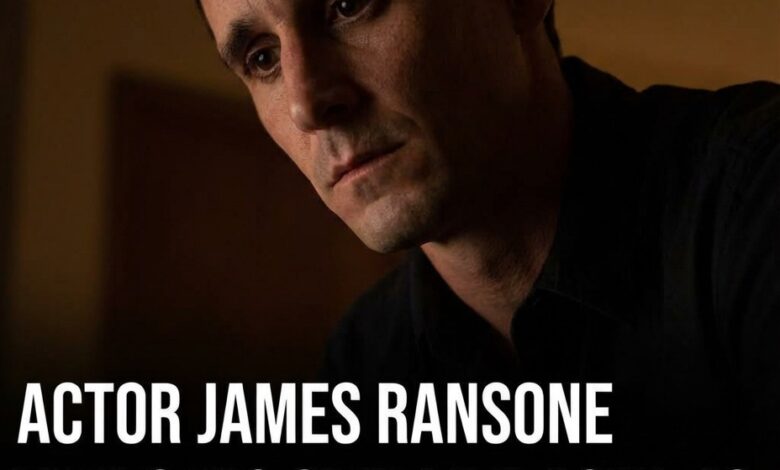
The cinematic landscape of the twenty-first century has been defined by actors who do more than simply inhabit roles; they act as mirrors to the fractured, often overlooked corners of the human condition. James Ransone, a performer of singular intensity and restless intelligence, stands as a testament to the power of authentic, gritty storytelling. On March 12, 2026, as the industry pauses to reflect on his storied career, it becomes clear that his legacy is not merely one of credits on a screen, but of a profound, visceral connection to the audience. From the industrial decay of Baltimore to the supernatural terrors of Derry, Ransone navigated the complexities of the human spirit with a vulnerability that was as unsettling as it was magnetic.
Born and raised in Baltimore, Maryland, Ransone carried the spirit of his hometown into his craft—a certain raw, unpolished honesty that became his professional trademark. This local connection proved pivotal when he was cast in the second season of the seminal HBO series The Wire. In a show populated by sprawling ensembles and systemic critiques, Ransone managed the Herculean task of making Ziggy Sobotka both the most frustrating and the most heartbreaking figure in the narrative. Ziggy was a character defined by inadequacy, a young man desperately trying to fill the oversized shoes of his father and the dock-working legends of his community. Ransone didn’t play Ziggy as a simple caricature of a “screw-up.” Instead, he leaned into the character’s manic energy and profound insecurity, creating a portrait of a man drowning in his own desperation. When Ziggy finally snapped, it wasn’t just a plot point; it was a tragedy that resonated with anyone who has ever felt invisible in their own life. It was this performance that signaled the arrival of a major talent—someone who wasn’t afraid to be unlikable if it meant being true.
Following the success of The Wire, Ransone did not opt for the easy path of the Hollywood leading man. Instead, he sought out projects that challenged the status quo and demanded a high degree of physical and emotional commitment. He reunited with the creators of The Wire for the HBO miniseries Generation Kill, an uncompromising look at the 2003 invasion of Iraq through the eyes of the First Reconnaissance Battalion. Playing Corporal Josh Ray Person, Ransone served as the hyper-articulate, caffeine-fueled heart of the Humvee. His performance provided a necessary counterpoint to the grim realities of war, using sharp wit and rapid-fire dialogue to mask the underlying tension and moral ambiguity of the conflict. It was a role that required precision and stamina, further cementing his reputation as a “director’s actor”—someone capable of handling dense, naturalistic dialogue while maintaining a grounded, relatable presence.
As his career progressed, Ransone’s versatility allowed him to move seamlessly between the prestige of premium cable and the broad appeal of network television. He became a familiar face in the landscape of American crime drama, delivering memorable guest performances in long-running staples like CSI: Crime Scene Investigation and Law & Order. In these roles, he often portrayed individuals living on the margins, bringing the same level of dignity and detail to a single episode that most actors reserve for a series-long arc. He had a unique ability to suggest a whole lifetime of history in a single look or a stuttered line of dialogue, making him one of the most reliable and sought-after character actors of his generation.
The transition to major motion pictures saw Ransone embrace the world of genre filmmaking with a fervor that delighted fans and critics alike. Perhaps his most recognizable film role came in 2019 with It Chapter Two, the conclusion to the massive adaptation of Stephen King’s epic novel. Casting the adult version of the Losers’ Club was a daunting task, but Ransone’s portrayal of the adult Eddie Kaspbrak was widely considered a masterstroke. Not only did he bear a striking physical resemblance to Jack Dylan Grazer, who played the younger Eddie, but he perfectly captured the character’s transition from a fearful child to a high-strung, hypochondriac adult. Ransone channeled the character’s anxiety into a performance that balanced comedic timing with genuine pathos, providing much of the film’s emotional stakes. His chemistry with the ensemble, particularly in the banter-heavy scenes, reminded audiences that horror is most effective when the viewers are deeply invested in the survival of the characters.
Ransone continued to explore the darker side of cinema with his involvement in The Black Phone, a supernatural thriller that once again allowed him to play within the shadows of the human experience. Whether he was appearing in indie darlings like Tangerine—where his performance was lauded for its frenetic, grounded energy—or in high-budget studio horrors, Ransone remained a dedicated student of the craft. He was known among his peers for a rigorous preparation process, often diving deep into the psychology of his characters to find the “why” behind their actions. Directors frequently noted that he brought a level of intellectual curiosity to the set that elevated the material, pushing his co-stars to find deeper levels of honesty in their own performances.
Beyond the specific roles, the “James Ransone style” was characterized by a refusal to settle for the easy emotion. He understood that humans are rarely just one thing; we are contradictions of pride and shame, humor and grief. By leaning into those contradictions, he gave the audience permission to see themselves in his characters. He represented the “everyman” not in the sense of being ordinary, but in the sense of being authentically flawed. In an industry that often prioritizes gloss and artifice, Ransone was a champion of the grit. He was the actor you called when you needed a character who felt like they had walked in off a real street, carrying the weight of a real world.
As colleagues and fans gather to celebrate his life, the conversation inevitably returns to the “Ziggy Sobotka” effect—the ability of an actor to take a character who should be a footnote and turn them into a legend. Ransone’s work across two decades reminds us that there are no small roles, only small imaginations. He treated every script with the same level of reverence, whether it was a five-minute guest spot or a leading turn in a summer blockbuster. His filmography serves as a masterclass in range, moving from the docks of Baltimore to the deserts of Iraq, and into the dark sewers of Maine, all while maintaining a consistent thread of humanity.
The impact of James Ransone’s career will be felt for years to come, particularly by a new generation of actors who see in him a blueprint for a career built on integrity rather than celebrity. He proved that longevity in Hollywood is possible when you prioritize the work above the noise. His performances remain timeless because they are built on the bedrock of truth—a truth that is sometimes uncomfortable, often painful, but always undeniably real. While the screen may be dimmer without his presence, the light he shed on the complex human stories he told will continue to shine, ensuring that James Ransone is remembered not just as a talented performer, but as a vital voice in the history of modern acting. He leaves behind a body of work that invites us to look closer, to feel more deeply, and to remember that even the most troubled souls have a story worth telling.