A former hostage negotiator is now weighing in, and his assessment is chilling, Based on the alleged abduction details emerging in the case of Savannah
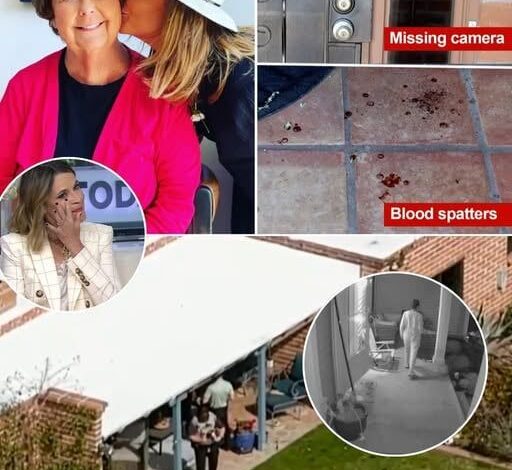
As new details emerge in the disappearance of Nancy Guthrie, the case has taken on a far more ominous tone. What initially appeared to be a baffling missing-person report is now being examined through the lens of a potential abduction, with experts warning that the circumstances suggest planning, coordination, and possibly multiple perpetrators.
A former NYPD hostage negotiator, Wallace Zeins, has publicly weighed in on the developing case, and his assessment is unsettling. Speaking during a televised analysis, Zeins said the combination of physical evidence, technology failures, and a reported ransom demand points toward a crime that was neither spontaneous nor carried out by a lone individual.
Nancy Guthrie, 84, vanished from her rural Arizona home over the weekend. She was last seen Saturday evening after dinner with family, returning home around 9:30 p.m. By Sunday morning, she had failed to appear at church—an absence that immediately raised concern among those who knew her habits well. By noon, her family reported her missing.
When investigators entered her home, they found signs that suggested interruption rather than departure. Blood spatters were visible outside the residence, though authorities have not confirmed whose blood it is. A Ring doorbell camera was missing, torn away from its mounting. Inside, personal belongings were left behind. Her Apple Watch was recovered, and a law-enforcement source indicated that her pacemaker stopped syncing with the device at approximately 2 a.m. Sunday.
That moment—when the last digital connection went silent—has become a chilling marker in the timeline.
According to Zeins, the physical logistics alone raise serious questions. An elderly woman of limited mobility, weighing roughly 150 pounds, would be difficult for a single person to move quickly and quietly in the middle of the night. “I believe the possibility of more than one person,” he said, noting that the scenario suggests coordination and physical assistance. “She’s waking up in the middle of the night, not in the best of health. I would think there’s more than one person involved in this particular crime.”
Compounding those concerns is a purported ransom note that has been reported by multiple outlets. The note allegedly demands a large payment in cryptocurrency, specifically Bitcoin, and implies consequences if the demand is not met. Zeins emphasized that this detail is significant. “That tells you this is some type of group that understands cryptocurrency, social media, and how the system works,” he said. “This isn’t random.”
The method of delivery for the ransom note could also prove critical. If handwritten, it would be subject to forensic handwriting analysis. If typed or transmitted digitally, it opens the door to electronic tracing, metadata analysis, and broader federal involvement. Zeins noted that federal agencies, particularly the FBI, have extensive capabilities when it comes to electronic surveillance and financial tracking, especially in cryptocurrency cases.
Local authorities have confirmed that reports of a ransom note are being taken seriously and forwarded directly to detectives coordinating with federal partners. However, officials have been careful in their public statements. At this stage, they say there is no credible information definitively indicating that Nancy Guthrie was targeted, a position that contrasts with the growing concern among outside experts.
The investigation has drawn national attention in part because Nancy is the mother of Savannah Guthrie, a longtime host of NBC’s Today. For Guthrie, the situation has turned from something she might once have reported on to a deeply personal ordeal unfolding in real time. While she has remained largely private, the visibility of the case has intensified public scrutiny and pressure for answers.
Federal involvement may soon expand further. Donald Trump has publicly stated that he is willing to offer federal assistance in the search and has said he intends to reach out to Savannah Guthrie directly. While such statements do not alter investigative procedure on their own, they underscore the seriousness with which the case is being viewed at the highest levels.
Meanwhile, agents have continued to retrace Nancy Guthrie’s final hours. FBI personnel visited the home of Savannah’s sister, Annie, who was reportedly the last person to see Nancy before she returned home Saturday night. Investigators are examining the narrow window between that return and the early-morning device failure, looking for any movement, communication, or anomaly that could explain what happened.
The combination of missing surveillance equipment, blood evidence, and a possible ransom demand has shifted the tone of the investigation. What once might have been categorized as a disappearance is now being treated as a potential abduction with financial motives. Yet even within that framework, questions remain. If the motive was ransom, why leave such visible signs behind? If the act was targeted, what grievance or connection led to it?
Zeins cautioned against assuming simplicity. In his experience, cases that involve older victims, technology manipulation, and financial demands often unfold in layers. Initial appearances can be misleading. What looks like one crime may conceal another motive entirely.
For the family, the uncertainty is excruciating. Nancy Guthrie requires critical medication every 24 hours, making time a central and unforgiving factor. Each hour without confirmation of her condition raises the stakes. Authorities have acknowledged the urgency, but they have also stressed the need for precision. Premature conclusions can jeopardize recovery efforts.
As search teams continue their work and detectives analyze incoming leads, the case remains suspended between fear and hope. The desert home stands quiet, its broken camera and blood-marked entry offering more questions than answers. The technology meant to provide reassurance instead marks the moment everything changed.
Behind the analysis, the expert commentary, and the national attention lies a simple, devastating truth: an elderly woman is missing, and a family is waiting. Whether the assessment of multiple perpetrators proves correct or not, the facts already known paint a disturbing picture of planning, vulnerability, and urgency.
For now, investigators press forward, federal agencies stand ready, and the public watches closely. The outcome remains unknown, but the direction of the case has undeniably darkened. The next answers, when they come, will determine not only what happened to Nancy Guthrie, but how quickly justice—or rescue—can follow.