Moments before kickoff, Trump issued a statement celebrating the Super Bowl as a uniquely American tradition, wishing both teams well and highlighting the events unity and spirit. His message emphasized respect for the sport and the dedication of players and fans nationwide!
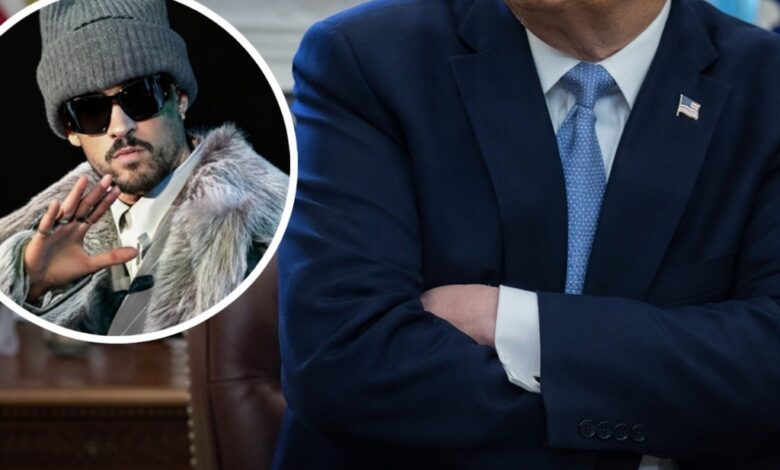
In the high-stakes arena of Super Bowl LX, held on February 8, 2026, the real competition seemed to occur not on the turf of Levi’s Stadium, but across the digital landscapes of social media. Moments before the Seattle Seahawks kicked off against the New England Patriots, Donald Trump released a statement that, on its face, was a quintessential tribute to an American institution. He celebrated the Super Bowl as a uniquely national tradition, offering well-wishes to both franchises and emphasizing the spirit of unity and dedication shared by players and fans alike. However, beneath the veneer of this patriotic greeting lay a complex masterclass in the theater of attention—a demonstration of how modern influence is wielded through strategic presence and calculated absence.
In the contemporary media ecosystem, physical presence at a national ritual is no longer the primary requirement for relevance. For decades, leaders have used the Super Bowl as a stage to affirm shared identity, sitting in high-profile booths to signal their connection to the common man. Trump’s decision to skip the trip to California while remaining the loudest voice in the room digitally reflects a fundamental shift in the nature of leadership. Influence is now measured not in miles traveled, but in moments captured. By staying away while flooding the digital space with commentary, he positioned himself as a figure who exists outside the traditional establishment rituals, yet remains central to the public consciousness. It was a strategy of symbolic participation without physical proximity—a way of saying that the event mattered because he was talking about it, not because he was there.
This “Presence of Absence” was further complicated by his ongoing critique of the halftime entertainment. While Bad Bunny prepared to take the main stage and Kid Rock headlined a rival “All-American” show for Turning Point USA, Trump’s commentary served as a form of cultural navigation. The discourse surrounding his remarks on the halftime performers touches on deep-seated tensions regarding language, representation, and national identity. Rather than engaging in a direct policy debate, the narrative shifted toward cultural signals. In today’s journalism, the “backlash” often speaks for the reporter, using aggregated social media outrage to frame moral judgments. This creates a reactive environment where cultural differences are used as ammunition rather than opportunities for dialogue, further polarizing an audience that is increasingly trained to look for signals of tribal loyalty in every post.
The most telling example of this new “attention economy” was the release of a teaser video in which Trump teased his winner pick, only for the footage to cut off in a cliffhanger before the reveal. To the casual observer, this might seem like a technical glitch or a playful prank; however, through a more analytical lens, it represents the weaponization of uncertainty. In modern politics, suspense has become a form of messaging, and ambiguity has become a brand. Leaders no longer compete solely on the strength of their ideas or the clarity of their visions; they compete for narrative control. By withholding the final outcome of his prediction, he ensured that the conversation stayed focused on his next move, turning political commentary into a form of high-stakes entertainment. It is a microcosm of a society that increasingly rewards intrigue over substance, effectively reshaping public consciousness into a state of perpetual anticipation.
This transition from substance to spectacle reveals a deeper, more unsettling truth about the current state of democracy. Major public events like the Super Bowl have become backdrops against which meaning is negotiated in real-time. The game itself—the grueling physical contest and the strategy of the coaches—becomes secondary to the online reactions it generates. Leadership, in this context, is rebranded as “content.” When citizens are invited to analyze gestures, posts, and tones rather than values and policies, the collective democratic maturity of the nation is weakened. We move into a “distraction economy” where the sheer volume of noise makes it difficult to discern what actually matters. The article documenting these reactions maintains a certain level of restraint, practicing neutrality through aggregation—outsourcing meaning to analysts and critics—but this often leaves the reader to navigate the chaos without a moral compass.
Historically, the attendance of leaders at national rituals served a spiritual purpose: it affirmed collective belonging. Rituals are the glue that holds a community together, transcending law and market forces to provide a sense of shared identity. When a prominent leader rejects these rituals in favor of direct, digital connection, the cohesion of the community begins to fragment. We see a rise in populism that favors authenticity over ceremony, but without the structure of ceremony, the public square becomes a place of performance rather than responsibility. The danger is not found in the skill of the performer, but in the audience’s tendency to mistake visibility for purpose. True leadership is not measured by the timing of a post or the height of a trending topic; it is measured by consistency, moral clarity, and service.
Interestingly, the actual impact of these digital interruptions on the world is often negligible. As the statement noted, the posts did not affect the outcome of the game. The Seahawks won, the Patriots lost, and history proceeded unaffected by the flurry of tweets and Truth Social updates. This is a crucial reminder that much of what feels urgent in the digital sphere is ephemeral. The “illusion of impact” creates a state of constant anxiety, where people search for meaning in symbols because they lack stable moral anchors. Who attended the game, who stayed silent, and who offered a cryptic video become substitutes for deeper, more meaningful engagement with the issues facing the country.
Ultimately, the events surrounding Super Bowl LX show a society addicted to signals. We have been trained to decode every absence and every cliffhanger as a political manifesto. This obsession with performance distracts us from the fundamental responsibilities of citizenship and leadership. While Donald Trump proved himself to be a master of the economy of attention, knowing exactly when to provocate and when to withdraw, the broader lesson is for the audience. When politics is fully consumed by spectacle, the society watching becomes vulnerable. The challenge for the future is to reclaim a space where leadership is defined by accountability and vision, rather than the ability to capture a moment in the theater of attention. As the 2026 NFL championship concluded, the noise of the digital commentary faded, leaving behind the stark reality that while performances garner views, only purpose can build a nation.