Trump destroys Bad Bunnys halftime Super Bowl performance with 5 ruthless words!
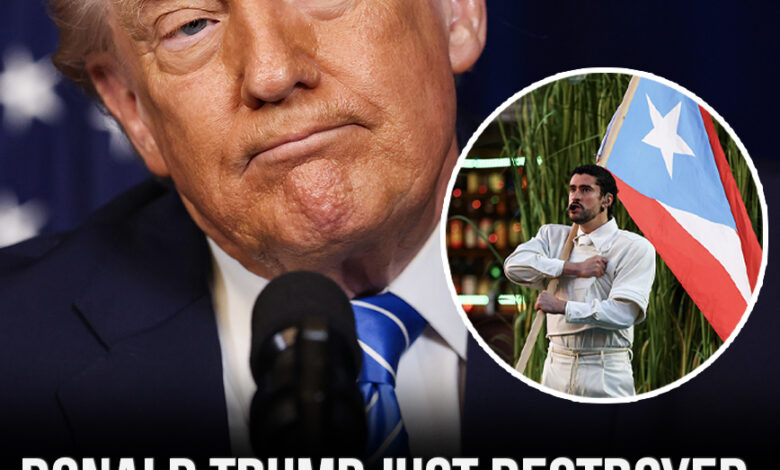
The roar of the crowd at Levi’s Stadium during Super Bowl LX was supposed to be the soundtrack to a historic defensive masterclass. On the evening of February 8, 2026, the Seattle Seahawks executed a clinical dismantling of the New England Patriots, securing a 29–13 victory that solidified their place in the pantheon of NFL dominance. It was a game defined by relentless pressure and suffocating secondary play—a purist’s dream of gridiron strategy. Yet, as the final whistle blew and the celebratory confetti drifted toward the turf, the conversation surrounding the event shifted abruptly. The athletic prowess on display was suddenly eclipsed by a cultural firestorm ignited during the fifteen minutes between the second and third quarters.
The halftime show, headlined by the global phenomenon Bad Bunny, transformed the stadium into a vibrant tableau of Latin heritage. From the moment the first notes rang out, it was clear that this was not merely a musical performance, but a deliberate cultural statement. The stage design featured a lush field of sugarcane, a poignant nod to the agricultural roots of the Caribbean, while surprise appearances by Lady Gaga and Ricky Martin added layers of pop-grandeur to the spectacle. Bad Bunny, a six-time Grammy winner, delivered a high-octane set entirely in Spanish, leaning into his identity with an unapologetic fervor that many attendees described as electric and transformative.
However, the very elements that made the show a triumph for millions also acted as a lightning rod for controversy. As the broadcast reached homes across the globe, the digital sphere became a battleground of conflicting ideologies. While many praised the performance as a beautiful representation of a modern, multicultural America, a vocal segment of the audience expressed frustration. Complaints surfaced regarding the language barrier, with some viewers arguing that a performance on such a massive American stage should cater to an English-speaking majority. Others perceived the thematic choices as inherently political, viewing the celebration of specific cultural roots as a divisive maneuver rather than an inclusive one.
The criticism found its most formidable champion in Donald Trump. From his perspective outside the stadium—having declined to attend due to the travel distance—he took to Truth Social to deliver a scathing appraisal of the night’s entertainment. Trump characterized the halftime show as “absolutely terrible,” describing the selection of the artist and the nature of the performance as a “slap in the face” to the country. His critique was not limited to the music; he pivoted sharply to voice objections over the choreography and the aesthetics of the set, even using the moment to lambaste the NFL’s recent changes to the kickoff rule. Having previously claimed he had “never heard” of Bad Bunny and calling the selection a “terrible choice,” Trump’s reaction served to galvanize his base and solidify the performance as a centerpiece in the ongoing national debate over identity and tradition.
The tension of the night culminated in a series of powerful visual cues. As the set drew to a close, a massive billboard illuminated the stadium with the phrase: “the only thing more powerful than hate is love.” It was a message that hung in the air like a challenge. Moments later, Bad Bunny held up a football for the cameras, revealing four hand-written words: “Together we are America.” To his supporters, these were gestures of profound unity and a call for broader inclusion in the American story. To his detractors, however, the visuals felt pointedly ideological, a subtextual jab at those who felt the traditional American identity was being diluted.
This collision of sports and culture at Super Bowl LX highlights a broader shift in the American landscape. The Super Bowl has long been more than just a game; it is a mirrors of the nation’s soul, a massive stage where commerce, entertainment, and social values intersect. When a halftime show is conducted entirely in a language other than English, it serves as a startling reminder of the changing demographics of the audience. It reflects an evolving definition of what it means to be “American,” an evolution that inherently invites both celebration and significant friction.
The immediate aftermath of the game saw the media landscape split. On one side, rock legends and pop icons stood up in defense of the performance, hailing it as a masterpiece of representation and a necessary step forward for the NFL. On the other side, figures like Kid Rock faced their own share of the spotlight, with his “All-American” counter-responses becoming a separate thread in the cultural tapestry of the weekend. The Seahawks’ victory, despite being a legendary feat of coaching and execution, became secondary to the debate over whether a football game is the appropriate venue for such explicit cultural and linguistic statements.
Ultimately, the reaction to Bad Bunny’s halftime show underscores the reality that in 2026, there is no such thing as “just a performance.” In a world where every public act is interpreted through the lens of political and social alignment, the Super Bowl serves as the ultimate amplifier. The “ruthless” critique from figures like Trump and the defiant messages of unity from the artists are two sides of the same coin—a struggle for the narrative of the country.
Instead of dissecting the Seahawks’ defensive schemes or the Patriots’ inability to find an offensive rhythm, the public was left to grapple with questions of symbolism, language, and belonging. The image of the football held high with its message of togetherness became the defining icon of the night, regardless of whether one viewed it with hope or with skepticism. This phenomenon says as much about the current American moment as it does about the artistry of the performers. As the lights dimmed at Levi’s Stadium, the score was settled on the field, but the cultural contest ignited by those five words and fifteen minutes of music was only just beginning. The Super Bowl had once again proven that while the game ends in four quarters, the conversation it sparks can last a lifetime.