For over a decade, Savannah Guthrie has been the steady, comforting!
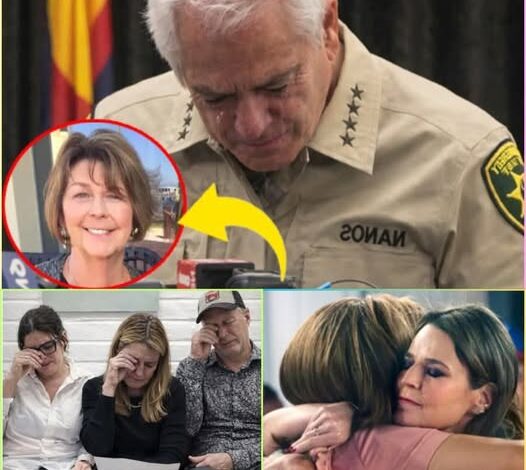
For more than a decade, Savannah Guthrie has been a steady, reassuring presence in millions of homes. Her voice has guided viewers through moments of national crisis, celebration, and uncertainty with calm authority and empathy. Now, that familiar sense of distance between the story and the storyteller no longer exists. The cameras offer no protection when the crisis is personal.
Savannah is no longer simply reporting difficult news. She is living it.
Her 84-year-old mother, Nancy, vanished in Arizona, and what began as a search fueled by hope has gradually shifted into something heavier and far more uncertain. Early optimism has given way to careful language and guarded updates. What once sounded temporary is now framed with caution. The change has been subtle but unmistakable, and it has altered everything.
In the weeks since her mother’s disappearance, Savannah’s life has split into two distinct worlds that rarely touch.
There is the public role: composed, professional, deliberate. The familiar anchor who continues to show up, grounded in responsibility and restraint. And then there is the private reality: a daughter waiting in silence, measuring time by phone calls that have not come, bracing herself for news that could either restore her world or fracture it beyond recognition.
That tension defines every day.
Investigators now speak in technical terms—phrases like “active leads,” “ongoing analysis,” and “persons of interest.” These words are meant to convey diligence and progress, and they do. But beneath them lies a far simpler truth that no amount of professional language can soften: something went wrong, and its full shape is still unknown.
The absence of clarity is its own form of suffering. It stretches days into weeks and turns ordinary moments into exercises in endurance. For families in this position, waiting becomes a constant state of alertness, where hope and fear coexist without resolution.
Through it all, Savannah has responded with quiet resolve rather than public performance. She has not dramatized her pain or leaned into spectacle. Instead, she has used her platform with restraint, choosing to emphasize humanity over attention. Her message has been consistent: her mother is not a headline or a case number. She is a person. A life. Someone who matters.
In doing so, Savannah has widened the lens of the story. She has reminded the public that her mother’s disappearance is not an isolated event, but part of a larger reality faced by countless older adults whose cases often receive little notice. By centering dignity rather than despair, she has reframed the conversation away from curiosity and toward compassion.
Her appeals have been steady and grounded, marked by respect rather than desperation. Those close to her say this is not an act, but a reflection of how she has always handled responsibility—with care, patience, and an awareness of the weight words can carry.
Meanwhile, the search continues.
Across Arizona, volunteers walk desert paths under unforgiving skies. Neighbors leave porch lights on, small gestures meant to signal vigilance and hope. Communities gather quietly, offering prayers, support, and presence rather than noise. The effort is both physical and emotional, driven by the belief that persistence matters, even when certainty does not.
Beyond geography, another kind of vigil has formed.
Viewers who once turned to Savannah for reassurance now return it in silence. They follow updates closely, not out of fascination, but out of shared humanity. Many have experienced their own versions of waiting—missing loved ones, unanswered questions, long stretches of not knowing. In Savannah’s situation, they recognize something deeply familiar.
They wait with her.
This story is no longer just about investigation and evidence. It is about endurance. About what it means to love someone when certainty is gone. About standing upright when answers are delayed and imagination fills the gaps with fear. About choosing hope, again and again, even when it feels fragile.
Savannah continues forward not because the path is easy, but because love leaves no alternative. When someone you love is missing, stopping is not an option. Waiting becomes an act of devotion. Showing up becomes a form of resistance against despair.
Those close to her describe a woman carrying immense weight with quiet strength. There are moments of exhaustion, moments of grief that surface unexpectedly, moments where the future feels too heavy to imagine. And still, she persists—balancing public responsibility with private pain, refusing to let either erase the other.
Behind every official update is a family longing for clarity. Behind every carefully chosen word is a daughter holding onto memory, hope, and the belief that truth will eventually surface. Behind the composed public image is private prayer, whispered and unrecorded.
This is the part of the story that rarely makes headlines: the long, silent hours between updates. The conversations that happen behind closed doors. The recalibration of hope when expectations shift. The strength required to remain present when the outcome is unknown.
Savannah’s situation has exposed the fragile line between public life and private grief. It has shown that even those accustomed to bearing witness to the world’s hardest moments are not shielded from them. It has also shown what grace looks like under pressure—not perfection, but steadiness. Not certainty, but faith.
As the search continues, nothing is resolved. The waiting remains. The questions remain. But so does a stubborn, quiet hope—that a detail will emerge, that a path will clear, that light will break through confusion.
Until that day comes, Savannah stands where she is, carrying both her role and her grief without spectacle. Not retreating. Not collapsing. Simply enduring.
Behind the broadcasts and briefings stands a daughter still searching for her mother. Behind the official language stands a family refusing to give up. And within it all remains the belief that waiting, however painful, is an act of love—and that love, even in uncertainty, is not wasted.