SOTD – Omaha QT Shooting Shock! Officers Ambushed Inside Gas Station
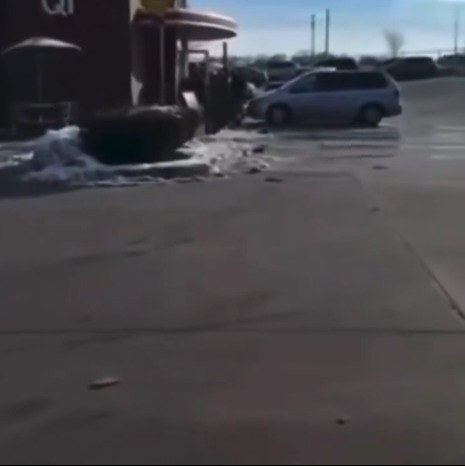
What started as an ordinary afternoon at the QuikTrip near 32nd and L Streets in Omaha escalated into a fast-moving police emergency that left the neighborhood rattled and two officers injured.
By the time flashing lights flooded the parking lot and patrol cars sealed off the area, it was already clear this wasn’t a routine call. Witnesses described a sudden surge of activity, officers moving quickly, and a tense, chaotic atmosphere that spread beyond the gas station into the surrounding streets. For residents nearby, it felt like the kind of incident that turns a familiar corner of the city into a scene they don’t recognize.
Police later confirmed that two officers were shot and transported for medical treatment. Their injuries were described as non-life-threatening, but the situation was still treated as critical while the scene was secured and investigators worked to establish what happened.
The most startling details emerged during a press briefing held near the gas station. According to reporting from WOWT, Omaha Police Chief Todd Schmaderer said the man who died at the QuikTrip was suspected in a separate shooting earlier that day at Phil’s Foodway. In that earlier incident, a man in his 50s was reportedly shot multiple times in the chest around noon.
That earlier shooting set the stage for what unfolded at QuikTrip.
Investigators said officers tracked the suspected shooter to the gas station. At some point, the suspect went into the restroom. Police moved to intercept him there, likely believing they were closing in on someone tied to a violent crime from only hours earlier.
According to the chief’s account, the confrontation happened the moment the suspect exited the restroom. Police said he opened fire on officers immediately. The gunfire injured two officers and triggered a rapid response as additional units arrived to contain the threat and protect the public.
Details about what happened inside the restroom—and the exact sequence of shots fired—remained limited as the investigation continued. Law enforcement typically withholds precise tactical and forensic information early in a case, both to preserve the integrity of witness statements and to avoid releasing information that might later conflict with evidence.
What is known, based on the briefing, is that the encounter was sudden and violent, and that the suspect died at the scene. Police have not released a full breakdown of how the suspect was stopped, what weapon was used, or how long the exchange lasted, though those specifics are generally part of the later investigative timeline.
For people nearby, the fear wasn’t abstract. Gas stations are everyday places—where parents stop with kids in the car, where commuters grab coffee, where people fill up after work. When violence breaks out in a setting that ordinary, it hits differently. It changes how a neighborhood feels, because it turns a familiar routine into something unpredictable.
As the scene unfolded, the immediate priority for authorities was clear: secure the location, ensure medical aid reached the injured officers, and account for everyone who might have been inside the store or near the pumps. Police cordoned off the area, and investigators began collecting evidence, including footage from security cameras that typically monitor both the store interior and the exterior forecourt.
While the press briefing provided an outline, it also highlighted how many unanswered questions remained. Residents wanted clarity on what led the suspect to that location, whether anyone else was involved, and how close the public came to being caught in the crossfire. People living near 32nd and L expressed frustration and anxiety, especially because this incident wasn’t isolated—it was connected to an earlier shooting at another location.
That connection matters because it suggests this was not a random explosion of violence but part of a developing chain of events that started earlier in the day. Investigators will be focused on reconstructing the timeline from Phil’s Foodway to the QuikTrip: where the suspect went, how officers identified him, what information they had at the time, and what factors shaped their decision to confront him at the restroom.
Those details will likely come through a combination of surveillance video, radio communications, witness interviews, and forensic work. In incidents involving police shootings and officer injuries, agencies often face pressure to release information quickly. But cases like this also require careful verification, because early errors or contradictions can damage public trust and complicate prosecutions or internal reviews.
In the meantime, the focus has also been on the two officers who were injured. Even when injuries are described as non-life-threatening, gunshot wounds can still bring serious physical and psychological consequences. Police departments tend to rally around injured officers, and community responses often follow quickly—messages of support, fundraisers, and public statements emphasizing gratitude for first responders.
At the same time, violent incidents involving police inevitably raise broader questions in the community about safety, escalation, and preparedness. People want to know whether warning signs were missed, whether preventive steps could have been taken, and whether the city is seeing an upward trend in shootings or just another high-profile incident in a difficult stretch.
For now, officials have emphasized that the investigation remains active. That means multiple pieces are still being verified: the suspect’s identity, the motive for the earlier shooting, the weapon involved, and the full chain of events that ended in the QuikTrip restroom confrontation. Authorities will also be examining how the suspect moved through the area and whether anyone knowingly assisted him after the first shooting.
As the city waits for more details, the incident has already left a mark. A routine afternoon at a gas station turned into a violent confrontation, two officers were injured, and a suspect linked to an earlier shooting died at the scene. For residents near 32nd and L—and for anyone who passed through that QuikTrip on an ordinary day—it’s the kind of event that doesn’t fade quickly, because it reshapes how safe “normal” is supposed to feel.