I have Been To Cracker Barrel 100s of Times, But Never Knew This
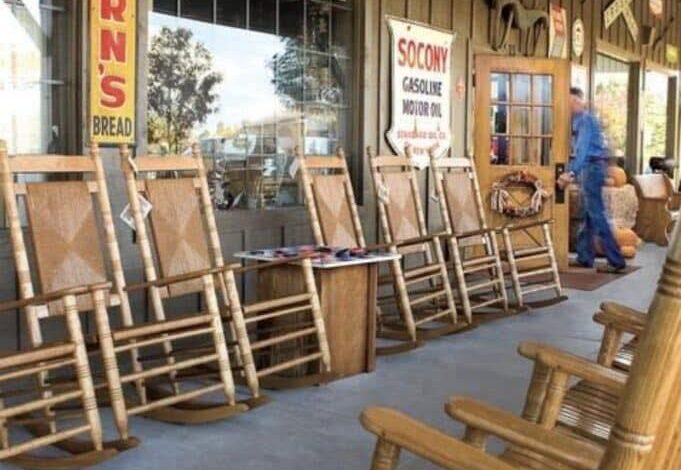
Cracker Barrel has long been one of America’s most recognizable roadside stops—a place where nostalgia, comfort food, and Southern hospitality come together under one roof. Whether you walk into a Cracker Barrel in Tennessee, Oregon, or Maine, the feeling is always the same. The smell of biscuits and bacon, the creak of the wooden floors, the shelves filled with old-fashioned candy and knickknacks—it all feels familiar. That consistency isn’t coincidence. It’s the result of decades of careful planning, attention to detail, and a design philosophy built around a single goal: to make every guest feel like they’ve stepped into a piece of the past.
What most people don’t realize is that every Cracker Barrel location across the country is designed almost identically—not just in layout, but in the objects that fill its walls. The antique tools, vintage advertisements, and rustic decorations aren’t chosen at random or based on local trends. Each one is part of a deliberate, curated system meant to evoke the feeling of a 19th-century American country store. That’s why whether you’re in Florida or Washington State, you’ll see the same washboards, milk jugs, butter churns, and tin signs arranged with striking precision.
Behind that nostalgic charm is a small army of decorators and historians who make it happen. Cracker Barrel employs a full-time design team dedicated to sourcing, cataloging, and arranging thousands of authentic antique pieces that appear in its restaurants. Every store receives roughly 1,000 individual items—from old farming tools and musical instruments to framed photographs, license plates, and quilts. These aren’t cheap reproductions. Many are real antiques purchased from collectors, auctions, and estate sales, then restored to be displayed safely and uniformly across the country.
The process is meticulous. Before a new restaurant opens, the team assembles the entire interior layout in a Tennessee warehouse. There, designers place every piece exactly where it will appear in the finished restaurant, taking photographs of the arrangement from every angle. Those photos are then used as a blueprint for the installation team at the new location. When construction is finished, the items are packed up, shipped, and installed to match the warehouse mockup perfectly. That’s why even the placement of a single horseshoe or lantern looks identical no matter where you go.
The company’s goal has always been consistency—creating a familiar, comforting space that feels like home for travelers. From the start, founder Dan Evins wanted Cracker Barrel to be a place where people could rest, eat well, and experience a bit of Americana on the road. The country-store atmosphere was part of his original vision: a tribute to the simplicity and warmth of rural life. In the 1960s, when the first Cracker Barrel opened off Interstate 40 in Lebanon, Tennessee, the U.S. highway system was booming, and travelers wanted somewhere authentic amid the growing sea of fast-food chains. The formula worked, and the brand’s image of rustic familiarity became its greatest asset.
Every detail, from the wooden rocking chairs out front to the checkerboards on the porch tables, reinforces that identity. Even the retail section inside each restaurant is crafted to feel like a general store from the early 1900s. The products—candies, toys, candles, and home goods—are selected to evoke memories of simpler times. The smell of caramel popcorn, the sound of country music playing softly in the background, the crackle of a fireplace in winter—it’s all part of the illusion of stepping back into a time before cell phones and drive-thrus.
Regulars often say that walking into a Cracker Barrel feels like walking into memory itself. There’s a psychological reason for that. Studies have shown that nostalgia, especially through familiar sights and smells, can reduce stress and increase feelings of comfort. Cracker Barrel has mastered that emotional formula. Every element—from the amber lighting to the wood-paneled walls—is engineered to tap into the human craving for warmth, predictability, and belonging.
Even the food follows this philosophy. The menu has barely changed in decades, anchored by comfort staples like chicken and dumplings, country-fried steak, and biscuits with gravy. Portions are hearty, the recipes traditional, and the presentation intentionally simple. When customers return years later, they find the same dishes tasting exactly as they remember—a form of culinary nostalgia that pairs perfectly with the décor.
What most guests don’t realize, however, is how much thought goes into maintaining that illusion of timelessness. Cracker Barrel’s design team carefully monitors inventory across all locations, ensuring that damaged or missing pieces are replaced with identical ones. When antiques wear out or break, they’re replaced with new finds that match the original aesthetic. Each restaurant essentially functions as a living museum—one that evolves quietly to keep the past alive.
Even the wall arrangements follow subtle storytelling patterns. A corner filled with musical instruments might represent a Tennessee family’s parlor, while a wall of old sports gear could evoke small-town life in the Midwest. Yet these themes are blended so naturally that most diners never notice the narrative threads behind the decorations. The goal isn’t to teach history—it’s to make you feel it.
Cracker Barrel’s commitment to consistency extends far beyond its décor. Employee uniforms, music playlists, even the angle of lighting fixtures are standardized. The company’s designers joke that they can tell if a single lamp is misplaced from across the room. It’s obsessive, yes—but it’s what gives the chain its uniquely cohesive identity.
Still, there’s a touch of individuality hidden in each location. Some stores incorporate regional antiques—an old fishing net near the coast, or a framed photo of a local landmark. These small differences give each restaurant a hint of local personality without breaking the familiar mold. The effect is subtle but intentional: a reminder that while the Cracker Barrel experience is universal, it’s still connected to the land and culture around it.
So next time you find yourself sitting at a Cracker Barrel table, look around. That lantern hanging by the fireplace, the worn banjo on the wall, the framed black-and-white portrait of a long-forgotten family—all of it has been handpicked, restored, and placed with purpose. What feels like a spontaneous slice of Americana is, in truth, a precisely engineered work of storytelling.
That’s what makes Cracker Barrel more than just a restaurant chain. It’s a curated time capsule—one designed to transport you back to a version of America that lives in memory and imagination. And whether you’re eating pancakes in Texas or pot roast in Pennsylvania, that feeling of comfort and recognition follows you everywhere. The charm isn’t in what changes, but in what never does.