Woman comes out as abrosexual after 30-year journey!
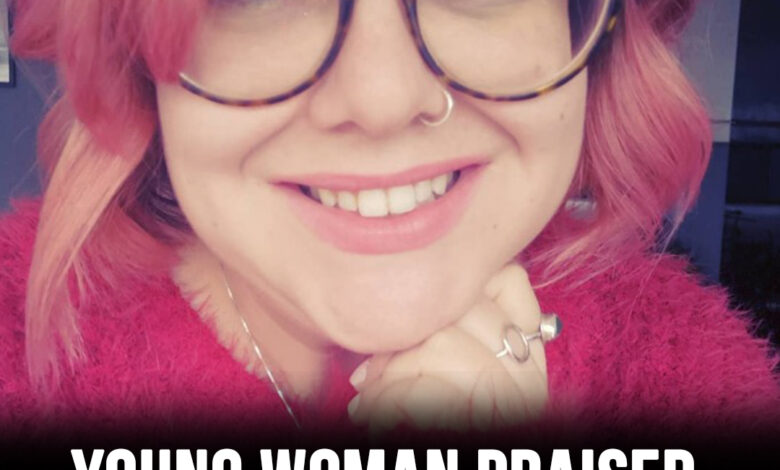
Attraction isn’t a straight line for everyone. For some people, it bends, loops, quiets down, then comes roaring back in a completely different direction. And while most folks are familiar with labels like gay, straight, or bisexual, far fewer know the word that finally helped one woman understand herself after three decades of confusion: abrosexual.
Emma Flint spent most of her life trying to make sense of why her attraction kept shifting. At times she felt fully lesbian. Months later she’d feel drawn to men. Then there were long stretches where she felt nothing at all—no spark, no interest, just a kind of emotional stillness. And each time her attraction changed, she felt like she was betraying her own identity.
For years, she carried that turmoil alone. Flint grew up believing sexuality was supposed to be stable. People around her treated identity like a fixed destination—something you declare once and never revisit. So every time her internal compass spun in another direction, she tried to force herself to “pick a lane,” even when none of them fit for long.
She described those years as feeling lost at sea. Not confused about who she loved, but confused about why the rules she kept hearing didn’t match her reality. One season she felt like a lesbian, the next she felt more bisexual, and sometimes she felt no attraction at all. It wasn’t indecision. It was change. Constant, natural, undeniable change.
Then, one night while scrolling through an online forum, she saw the word that flipped the lights on: abrosexual.
The definition floored her—people whose sexual attraction fluctuates. Sometimes toward specific genders. Sometimes toward all. Sometimes toward no one. Not random. Not fickle. Just fluid in a way most people never talk about.
For the first time in her life, she felt seen.
Abrosexuality is still a relatively unknown identity, even within LGBTQ+ spaces. It doesn’t describe who you’re attracted to. It describes how your attraction moves. It acknowledges that some people simply don’t remain in one category forever. Healthline explains it clearly: abrosexuality means your orientation shifts over time—days, weeks, months, or years.
That shift can show up in dozens of ways.
Some people experience attraction changes overnight—one morning they’re deeply drawn to men, and the next they can’t feel anything toward them but suddenly feel connected to women. Others shift slowly: months of pansexual attraction followed by long phases of being into just one gender. There are people who go through quiet periods where their desire shuts off completely, then reappears later with a different direction. And some experience long-term evolution—believing they’re straight for years before realizing their attraction is widening or reshaping.
There’s no universal pattern. No formula. No timeline. The fluidity itself is the identity.
For Flint, that realization was liberating. Her whole life, she’d been pressured to “make up her mind,” as if sexuality were a contract she was obligated to sign permanently. She also faced people who accused her of being trendy, indecisive, or inconsistent simply because they couldn’t understand her experience. But embracing abrosexuality gave her room to breathe. She no longer had to explain away her shifts or pretend they weren’t happening.
She puts it plainly: she loves people, not their genders. And when she’s in a committed relationship, the fluctuations inside her don’t make her any less faithful—they’re simply part of who she is.
But what she wants people to understand most is this: lack of familiarity doesn’t make an identity invalid. Just because someone hasn’t heard of a label doesn’t mean it isn’t real for the people who live it. Language evolves because human experience is wider than the boxes society tries to stuff it into.
Flint hopes the word becomes normalized—just another part of the vocabulary people use to understand themselves, without judgment or disbelief attached. Sexuality isn’t supposed to be a static concept. Growth is part of being human, and identities can evolve as naturally as personalities, values, and dreams do.
Her story is a reminder of how powerful the right word can be. How many people move through life feeling broken or out of place simply because they’ve never heard a name for what they are. And how validating it is when clarity finally arrives.
You don’t need to understand every identity to respect it. You don’t need to personally relate to someone’s experience for it to be real. For some people, sexuality is stable. For others, it shifts like seasons—and both are equally valid.
Flint’s journey underscores something simple and important: sometimes, language doesn’t just describe us. Sometimes, it frees us.
And for people who have spent years questioning why they don’t fit into one fixed category, discovering a word like abrosexual can feel like finally coming home.