Finally! Trump Promises $2,000 Tariff Dividend for All Americans, Says Opposing Tariffs Is Foolish!
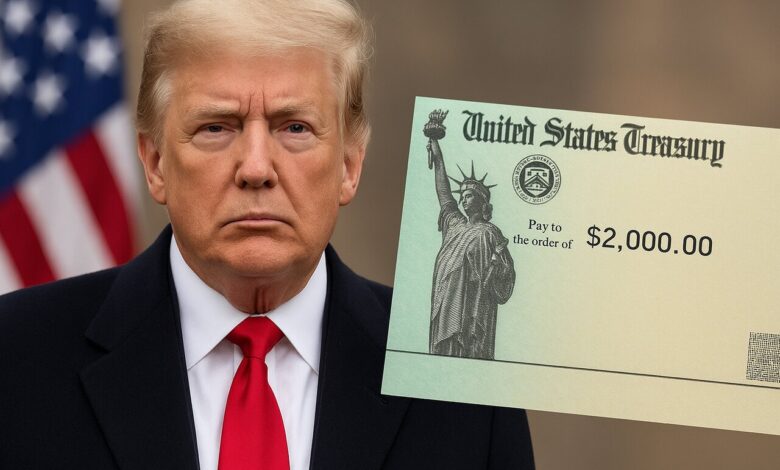
Campaign MerchanFor an entire week, political circles buzzed with speculation about a major economic announcement that could send shockwaves across the country. On Sunday morning, the rumor became reality. President Donald Trump took to Truth Social and declared that he intended to give every American a $2,000 “tariff dividend,” funded by the tariffs his administration has imposed on nations around the world. The statement landed like a grenade — thrilling supporters, unsettling critics, and immediately launching a fierce national discussion about policy, legality, and the real cost of such a promise.
Trump presented the plan as a reward to the American people, money he claimed rightfully belonged to them. Tariffs, he argued, had brought extraordinary revenue into the country, strengthened retirement accounts, and — contrary to what economists had predicted — hadn’t caused inflation. In classic Trump fashion, he blasted opponents as “FOOLS!” and framed the dividend as the logical payoff for years of hardline trade strategy. He also insisted the payments wouldn’t favor the wealthy but would go to “all Americans,” positioning himself as the defender of ordinary citizens in a cost-of-living crisis.
The timing, however, raised eyebrows. Trump’s announcement came only days after the Supreme Court questioned whether his administration had the constitutional authority to invoke emergency powers to impose sweeping tariffs across nearly every trading partner. If the Court strikes down those emergency tariffs, the government may be forced to refund billions. The uncertainty adds a thick layer of political drama to the entire proposal, leading observers to wonder whether the announcement was a preemptive political move or a calculated show of strength.
Treasury Secretary Scott Bessent tried to temper expectations during an interview on ABC’s This Week. He acknowledged the proposed $2,000 might not arrive as physical checks. Instead, Americans could receive the dividend through tax relief. The shift from direct cash to tax credits may signal the administration is still searching for a legally viable path to fund the distribution. Bessent’s explanation did little to cool public debate. If anything, it widened the divide — supporters insisted tax credits were still meaningful, while critics accused the administration of vague messaging and overpromising.
The numbers fueling the conversation are massive and contested. Between April and October, U.S. import duties generated about $151 billion. Supporters point to projections suggesting increased tariffs could bring in over $500 billion annually. Critics argue those figures are exaggerated, selective, or unsustainable. To put the dividend into perspective, the pandemic-era $2,000 checks cost roughly $464 billion — nearly half a trillion dollars. For Trump’s dividend to be feasible, tariff revenues would have to match or exceed that cost every year, a scenario many economists consider unrealistic.
Still, the idea of a tariff-funded payment is not new. Trump has floated variations of the concept before. What sets this moment apart is the political climate. Republicans are coming off a bruising week marked by Democratic victories in key blue-state races, where voters cited frustration with rising living expenses. A bold promise of immediate financial relief offered a strategic rallying point, shifting the national conversation back to economic populism — Trump’s strongest lane.
But not everyone is convinced. Ohio Senator Bernie Moreno dismissed the idea outright, pointing to the nation’s $37 trillion debt. Economists warn that even if tariff revenue spikes, relying on it for universal payments could destabilize trade relationships, raise consumer prices, and distort key sectors of the economy. Others note the legal limbo surrounding Trump’s emergency tariff powers, which the Supreme Court will rule on by June. If the Court rules against the administration, billions might need to be refunded, further straining resources that were supposed to fund the dividend.
Despite the uncertainties, some tariffs — particularly those on steel, aluminum, and automobile imports — appear safe from legal challenges. These duties have long played a role in Trump’s foreign policy tactics, used as pressure points during negotiations with China, Mexico, and European nations. For Trump, tariffs represent more than revenue streams: they are tools of influence and symbols of national strength. That symbolism is central to the dividend proposal, which he frames not just as a fiscal measure but as proof that America can profit from protecting its own industries.
The broader response reflects the country’s economic mood. Many families feel squeezed by rent, groceries, utilities, and medical bills. A $2,000 windfall — no matter how theoretical — speaks directly to their financial anxiety. To them, the dividend represents more than policy; it represents acknowledgment and relief. On the other hand, people wary of the plan see it as another oversized promise built on shaky ground, designed to energize supporters but unlikely to survive legislative or judicial scrutiny.
Whether the dividend materializes or not, Trump’s announcement forces a larger conversation about how the country handles its wealth, its trade strategy, and its ballooning debt. It highlights the tension between headline-grabbing promises and the complex machinery of government finance. It also underscores how easily political messaging can overshadow the slow, intricate work required to turn ideas into law.
For Americans navigating economic uncertainty, the debate hits close to home. Will they actually see $2,000? Will it come through tax reductions, a debit card, or not at all? Will the Supreme Court’s ruling derail everything? These questions remain unanswered, leaving citizens caught between hope and skepticism.
Yet one thing is certain: the proposal struck a nerve. It reignited discussions about fairness, opportunity, and the role of government in redistributing national wealth. It brought back Trump’s signature economic message — that the country’s prosperity should flow directly to its people, not to foreign nations or wealthy elites. And it reminded the public that in modern politics, a single announcement can change the entire national conversation overnight.
The $2,000 tariff dividend sits now at the intersection of ambition and uncertainty — inspirational to some, troubling to others, impossible to ignore. Whether it becomes a defining economic policy or remains a provocative headline, it has already reshaped the political landscape and rekindled a debate the nation won’t silence anytime soon.dise