Breaking – When payment could occur!
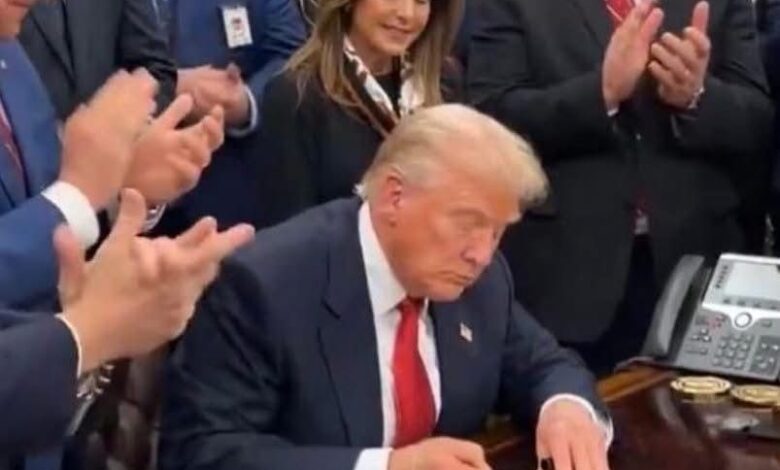
President Donald Trump has rolled out a sweeping proposal on Truth Social, pitching a national dividend funded entirely by tariffs. His promise is blunt: every eligible American would receive a minimum of $2,000, with high-income earners excluded. It’s the kind of headline-grabbing pledge that taps into frustration over rising costs and stagnant wages, but the mechanics behind it raise more questions than answers.
Trump frames the strategy in simple terms—tax foreign imports, generate massive federal revenue, and send part of that money directly back to Americans. In his view, tariffs aren’t just an economic tool; they’re leverage. He insists the country has regained wealth, respect, and strength under his philosophy, calling anyone who opposes tariffs a “fool.” To him, taxing imports isn’t a burden on consumers—it’s a path toward national prosperity and financial relief for everyday families.
The idea plays well rhetorically: foreign companies pay more to sell goods in the United States, and that revenue becomes the fuel for a universal dividend. But the details surrounding distribution are still a fog. A structured system doesn’t exist yet. There are whispers of potential models—tax rebates deposited during filing season, direct credits applied to healthcare costs, or even a brand-new federal payment program—yet none have been finalized or officially outlined.
What’s clear is that Trump is betting big on tariffs as the foundation for a domestic cash-back model. Imported goods, whether consumer electronics, vehicles, textiles, or raw materials, would carry heavier taxes. That money would flow into federal coffers at a scale he believes could sustain the dividend. Supporters see it as a nationalist economic reset, a shift that puts American households ahead of foreign producers. Critics warn that tariffs tend to circle back to consumers through higher prices, reducing the very financial cushion the dividend aims to provide.
Still, Trump presents the plan as a win-win. He argues that the financial hit taken by foreign exporters outweighs any temporary price increases at home, and that the dividend would more than compensate for any added cost. He maintains that America, under strong tariff policies, is flush with resources, enjoying record market performance and historically low inflation. Whether those claims hold up to economic scrutiny is a separate battle, but his message resonates with voters who feel squeezed by global competition and disconnected from economic gains they see on paper but not in their bank accounts.
The timing of payments remains one of the biggest unknowns. Without a finalized mechanism, no calendar can exist. The idea of quarterly payouts has been floated by some policy commentators; others envision an annual lump sum modeled loosely on the Alaska Permanent Fund. A healthcare-based credit system could distribute benefits monthly. But all of these scenarios remain speculative until Trump or his advisers produce specifics.
For now, the plan exists as a bold, attention-grabbing promise. It reflects Trump’s long-held belief that tariffs are a weapon the U.S. has failed to use to its full advantage—a way to pressure foreign governments, tilt trade deals, and raise revenue without touching American taxpayers directly. Whether the math behind a universal $2,000 dividend actually works is something economists, political opponents, and even allies will debate intensely in the coming months.
But Trump’s supporters hear something different: a straightforward offer. Tax foreign imports. Fill the treasury. Pay Americans directly. Simple, forceful, and designed to hit home for millions of voters who feel the economy hasn’t rewarded them in years.
As the discussion grows, one thing is certain—this proposal has shifted the landscape. It forces policymakers, economists, and everyday Americans to confront a question that blends politics with pocketbook reality: Is a tariff-funded national dividend feasible, or is it a high-stakes promise without a roadmap?
Until a detailed plan emerges, the only solid part of Trump’s announcement is the message he’s hammering out to the country: foreign producers will pay more, Americans will receive more, and tariffs will become the engine powering a new kind of national income. Whether the execution will match the ambition remains to be seen, but the debate is already well underway, and the promise of a direct payout has ensured the nation is paying attention.