What is the Reason Behind Painting Trees White?
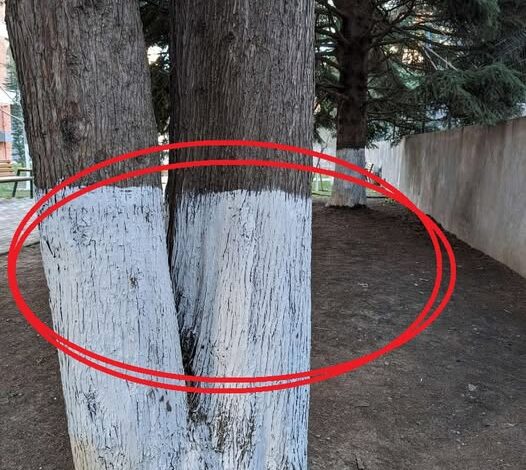
I used to walk past trees with white-painted trunks and never think much about it—maybe it was tradition, maybe decoration, maybe something gardeners did for show. I didn’t realize there was an actual purpose behind it, a practical one that many people overlook because it seems too simple to matter. It wasn’t until a conversation with a local arborist that I finally understood: that white paint can be the difference between a tree surviving winter or splitting open under the stress of the cold.
If you’ve ever noticed those white lower trunks and wondered why anyone would bother painting a tree, you’re not alone. But there’s logic behind the technique, and the more you learn about it, the more it makes sense.
Most markings on trees communicate something about their condition or their future. Orange dots often mean a tree is scheduled for removal. Blue spray paint can indicate survey boundaries. Purple marks serve as a warning: private property, no trespassing. These are straightforward signals to people. But white paint isn’t meant to communicate anything to us. It’s meant to protect the tree itself.
The problem begins in winter. Trees endure some of the harshest weather conditions on Earth, and contrary to what people think, cold alone isn’t what damages them. The real threat is fluctuation. On bright winter days, the sun heats the tree’s bark, causing it to expand slightly. As temperatures plummet at sunset, the bark contracts quickly. This sudden shift—warm to frozen in a matter of minutes—creates stress fractures known as “sunscald.” The bark splits open in long vertical cracks that look harmless at first but eventually weaken the tree, making it vulnerable to insects, bacteria, fungus, and permanent structural damage.
Sunscald is especially common in young trees, trees with thin bark, and fruit trees that are often planted in open areas with full sunlight. It’s the botanical equivalent of a sunburn mixed with frostbite.
And this is where the white paint comes in.
White paint reflects sunlight, keeping the bark from overheating during the day. By controlling the surface temperature of the trunk, it slows down the rapid expansion and contraction cycle that causes cracking. You can think of it as sunscreen for trees—simple, unglamorous, but extremely effective.
The technique has been around for generations. Farmers, orchard owners, and city arborists all use it, especially in areas with harsh winters. It’s not a random splash of paint but a deliberate coat that covers the lower two to three feet of the trunk, the part most exposed to temperature swings and direct sunlight during winter months.
But it isn’t just any paint. Water-based white latex paint is the standard because it adheres well, breathes, and doesn’t suffocate the bark. It’s usually diluted—one gallon of paint mixed with one gallon of water—so the coating is light enough to protect the tree without sealing it off or causing harm. Too thick a layer prevents moisture exchange and can trap pests beneath it. Too thin, and it won’t reflect enough sunlight.
The application is simple. Gardeners typically use a wide brush and apply the mixture in smooth, even strokes. Professionals working in orchards sometimes use sprayers, especially when dozens or hundreds of trees require treatment. Once applied, the paint dries quickly, forming a protective barrier that lasts through the season. It only needs to be reapplied once a year for most climates, though extremely cold regions may require touch-ups.
People often assume trees are completely self-sufficient. They grow, survive storms, withstand snow, and live for decades without human intervention. But young trees, especially, are more fragile than they look. Their bark is thin, their roots shallow, and they haven’t yet developed the internal strength that older trees rely on. A single harsh winter can stunt growth or kill a sapling outright. The white paint is a small step, but one that dramatically increases their chance of survival.
Even in cities—where trees face pollution, limited soil space, and heat reflected from buildings—painted trunks can offer stability during cold snaps. Urban trees often deal with more extreme and unpredictable temperature swings because concrete absorbs and radiates heat differently than natural ground. A painted trunk can help offset some of that shock.
Many people mistakenly assume the paint is toxic. Modern arborist-approved latex paint is not harmful when used correctly, and the dilution ensures the tree can still breathe. It isn’t about aesthetics; in fact, most tree care specialists will tell you it’s purely functional. If it looks odd or too bright, it’s still doing its job.
There’s also cultural familiarity. In some countries, especially in Eastern Europe, parts of Asia, and Latin America, painting tree trunks white has been a longstanding tradition. While the reasons vary—sometimes it’s for pest control, sometimes for protection from grazing animals, sometimes for visibility along dark roads—the logic remains the same: the paint acts as a barrier between the tree and the elements.
Learning all this changed the way I see those white trunks. What once felt like an odd landscaping choice suddenly made perfect sense. Now, whenever I pass a painted tree, I understand the care behind it. Someone wanted that tree to make it through the winter. Someone took the time to give it a fighting chance.
Nature is tough, but sometimes a small human effort can make it tougher.
And next time winter arrives with its freezing nights and deceptively warm afternoons, and you see the sunlight bouncing off a white-painted trunk, you’ll know exactly why it’s there. That coat of paint isn’t decoration or tradition. It’s protection—a simple shield against the forces that can quietly cripple a tree long before spring ever arrives.
Sometimes the smallest interventions end up making the biggest difference.