The Man Who Visited My Wife Grave! A Heart-Touching Secret!
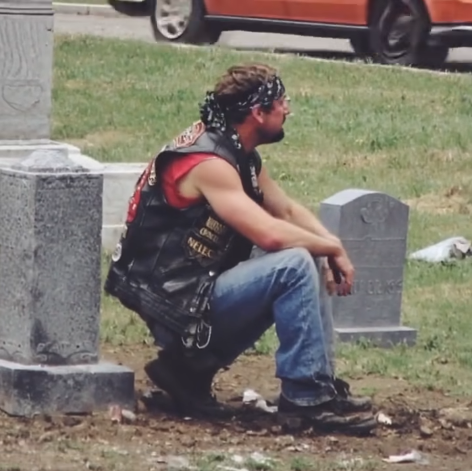
For months, I noticed a man visiting my wife’s grave. Always the same time — Saturday, 2 p.m. He’d arrive quietly, carrying a small bouquet, stand before her memorial for a while, then sit nearby in silence. No phone, no distractions, no theatrics — just quiet reflection. He never overstayed, never spoke to anyone. And yet, every week, he returned.
At first, I assumed he was just another mourner visiting a nearby plot. But as the weeks passed, it became obvious — he came for her. My wife, Sarah.
Sarah had been gone for nearly a year, and I was still learning how to live with the absence she left behind. I visited her every Sunday, unable to face the empty house right after. She was more than my wife — she was my anchor, my best friend, and the heart of every room she entered. Losing her had hollowed me out in ways I still didn’t have words for.
So when I saw this stranger standing before her stone every week, something stirred in me — part curiosity, part protectiveness, part pain. Who was he? How did he know her?
Sarah had been a nurse for more than twenty years. She had this way of making people feel seen — even when she barely knew them. I’d watch her comfort patients’ families, hold the hands of people in pain, remember birthdays and small details that most would forget. That was Sarah. She cared deeply, instinctively. Maybe this man had been one of her patients. Or maybe she’d cared for someone he loved.
For weeks, I watched from a distance. He never noticed me — or maybe he did and simply chose to give me space. Either way, his presence wasn’t intrusive. It was reverent. But I couldn’t shake the need to understand.
Finally, one quiet Saturday, I decided to approach him.
When I reached her grave, he turned, standing respectfully. He looked to be in his late forties, with a calm face and hands that trembled slightly as he held the flowers.
“Hello,” I said. “I couldn’t help but notice you visit my wife’s grave often. I’m her husband — Michael.”
He nodded slowly. “I know who you are,” he said gently. “Your wife… helped my daughter.”
We stood in silence for a few moments before he continued. “My daughter was in the hospital last year. Stage IV lymphoma. She was only seventeen.” His voice caught, and he looked down at his hands. “Sarah was her nurse. I don’t think I’ve ever met anyone so kind.”
He smiled faintly, the kind of smile built from grief and gratitude intertwined. “She didn’t just treat my daughter. She treated us. When I couldn’t keep it together, Sarah would sit beside her bed and talk to her about college, music, boys — anything that made her feel normal. My daughter told me that Sarah made her feel safe when the world felt cruel.”
His eyes glistened as he went on. “She passed a few months later. But before she died, she made me promise I’d thank Sarah again — for being the light in that dark place. I didn’t get the chance. When I heard Sarah had passed, I started coming here instead.”
He placed the flowers down and added quietly, “I guess this became my way of keeping that promise.”
I couldn’t speak for a moment. My throat burned. The weight of his words pressed against something in me that had long gone numb.
Sarah had never told me about his daughter. That was just like her — to give everything she had without ever mentioning it, as if kindness needed no audience.
I asked him, “What was your daughter’s name?”
“Lily,” he said. “She loved sunflowers.” He smiled again, softer this time. “Sarah used to sneak her little sunflower stickers to put on her IV stand. Said it made the medicine look less scary.”
I laughed — and for the first time in months, it didn’t feel hollow. “That sounds like her,” I said.
We talked for nearly an hour. He told me stories about Lily, about how Sarah had brought comfort into their darkest days. I told him about the woman she was at home — the way she’d hum while cooking, how she danced barefoot in the kitchen, how she always believed the world could be better if people simply tried a little harder to be kind.
When the sun began to dip, Ben — that was his name — said, “Your wife changed my life, even in those few months. I thought maybe visiting here would help me remember what good looks like.”
I nodded. “She did that for a lot of people,” I said quietly. “Including me.”
We stood together for a while, the kind of silence that doesn’t need filling. Then he said goodbye, promising to return the next Saturday — not out of grief anymore, but gratitude.
After he left, I stayed. For the first time, I didn’t feel alone beside her grave. I realized that the love Sarah gave hadn’t vanished with her — it had scattered like seeds, quietly taking root in people’s lives long after she was gone.
In that moment, I understood something I hadn’t been able to grasp before. Death might end a life, but it doesn’t end what that life creates.
Sarah’s kindness lived on — in the memories of her patients, in a father’s weekly visit, in the peace she brought to a broken family. And, maybe most of all, in me — learning, finally, that grief and gratitude can share the same space.
When I left the cemetery that day, the ache in my chest was still there — but it felt different. Softer. Less lonely. Because now, I knew that the love we give doesn’t disappear when we do. It lingers, it grows, and it finds its way back — sometimes in the quiet form of a stranger who shows up with flowers, keeping a promise made in the shadow of loss.
And maybe that’s the closest thing to forever any of us ever get.