The Little Boy In This Photo Grew Up To Be One Of Americas Most Evil Men!
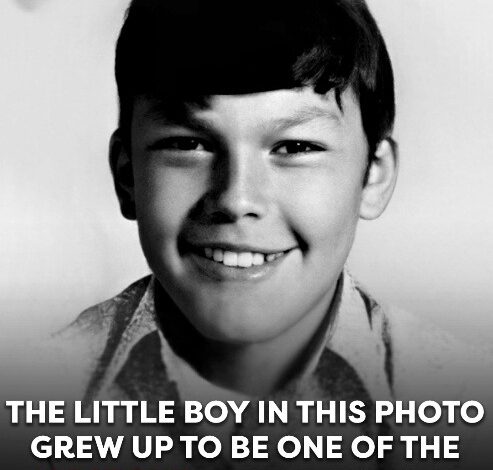
At first glance, the little boy in that faded photograph could have been anyone’s son — a shy smile, dark eyes, and a softness in his face that spoke of innocence. No one could have predicted that he would one day become one of the most terrifying figures in American criminal history.
He was born on February 29, 1960, in El Paso, Texas — a leap-year baby and the youngest of five children in a Mexican immigrant family. His father, a former Juárez police officer turned railway laborer, worked long, grueling hours. The family practiced Catholicism and appeared, from the outside, to be an ordinary working-class household. But inside those walls, the boy’s life was defined by fear and pain.
His father was a violent alcoholic whose temper could ignite without warning. Beatings were common. By age six, the boy had suffered multiple head injuries — often knocked unconscious, sometimes left bleeding for hours. These injuries later led to temporal lobe epilepsy, a condition that would alter his brain and possibly his ability to control impulses.
The abuse didn’t stop at physical violence. When enraged, his father would drag him to a cemetery at night, tie him to a makeshift crucifix, and leave him there until morning. Alone among gravestones, the terrified child learned that the world was a place of cruelty and silence.
By the time he turned ten, he was already using marijuana and alcohol to dull the chaos at home. It was the start of a lifelong addiction — not only to drugs, but to escape.
A Violent Awakening
The boy’s life took an even darker turn on May 4, 1975. He was fifteen when his older cousin Miguel, a decorated Vietnam veteran, returned from war with a warped mind and a collection of disturbing trophies — Polaroids of women he claimed to have assaulted and murdered overseas.
Miguel became his role model. He taught the boy how to stalk, how to shoot, and how to dominate. Then, one night, the boy witnessed Miguel’s brutality firsthand. During an argument with his wife, Jesse, Miguel pulled a gun and shot her in the face, killing her instantly — all while the teenager watched.
Most would have been shattered by such horror. The boy barely reacted. He grew quiet, detached, and cold. Miguel was found not guilty by reason of insanity and institutionalized. The boy, emotionally numb, dropped out of Jefferson High School shortly afterward.
He moved in with his sister Ruth and her husband Roberto, a voyeur who introduced him to another layer of perversion. Together, they would sneak around neighborhoods at night, spying through windows at unsuspecting women. When Miguel was released from the mental hospital two years later, he sometimes joined them.
It was a grotesque apprenticeship — one that twisted an already broken child into something darker.
Downward Spiral
By 1982, now twenty-two, he left Texas for California. He drifted between San Francisco and Los Angeles, surviving on petty theft and burglaries. He used cocaine constantly, sleeping in cheap motels and abandoned buildings. His addiction fueled his crimes, and his crimes fed his addiction.
But soon, stealing wasn’t enough.
On April 10, 1984, in San Francisco’s Tenderloin district, he claimed his first known victim: nine-year-old Mei Leung. He lured her into a basement, assaulted her, strangled her, and stabbed her before hanging her body from a pipe. The case would go unsolved for decades — until DNA evidence in 2009 finally identified him as the killer.
Two months later, on June 28, 1984, he struck again — this time murdering 79-year-old Jennie Vincow in her Los Angeles apartment. She was stabbed repeatedly in her sleep, her throat slit so deeply she was nearly decapitated.
And then, for nine months, nothing. Until the killings began again — random, senseless, and increasingly savage.
The Night Stalker Emerges
Between March 1985 and August 1985, California lived in terror. The killer crept through windows and doors in the dead of night, attacking anyone he found — men, women, the elderly, even children.
His methods were as erratic as they were brutal. Some victims were shot; others were bludgeoned with hammers or tire irons. Many were sexually assaulted. He left behind pentagrams scrawled in lipstick, forced survivors to swear allegiance to Satan, and demanded they “love the devil.”
One of his most infamous crimes came when he killed 64-year-old Vincent Zazzara and his 44-year-old wife, Maxine. After murdering Vincent, he mutilated Maxine’s body, carving an inverted cross into her chest and removing her eyes as a souvenir.
In another attack, he assaulted two elderly sisters with a hammer, then electrocuted them with a lamp cord. Before leaving, he drew pentagrams on their thighs. Both women later died.
Reporters called him “The Night Stalker,” a name that sent shivers through every California household.
The Hunt
The investigation was one of the largest in state history. Detectives Frank Salerno and Gil Carrillo led the task force, connecting murders across multiple jurisdictions that shared the same nightmare-like signature: forced entry, Satanic symbols, and sheer brutality.
The break came from a brave 13-year-old boy named James Romero III. Late one August night in Mission Viejo, he heard suspicious noises outside his home and saw a strange man lurking. When the intruder fled, James took note of his car — an orange Toyota — and memorized part of the license plate.
Four days later, that same stolen Toyota was found abandoned in Los Angeles. Inside, police discovered a single fingerprint on the rearview mirror. It matched a drifter named Richard Ramirez — a man with a history of theft, drugs, and violence.
On August 29, 1985, his mugshot was released to the public.
“We know who you are now,” police announced. “And soon everyone else will.”
The Fall of the Night Stalker
The next morning, Ramirez took a bus to Tucson, Arizona, unaware that his face was on every newspaper and television in California. When he returned to Los Angeles the following day, people recognized him immediately.
At a convenience store in East L.A., a group of women pointed and screamed, “El matador! The killer!” Realizing he was exposed, he fled.
He ran through the streets, attempted to carjack a woman, and was chased by angry residents. One man struck him with a metal bar. By the time police arrived, a mob had surrounded him. The monster who once stalked the night was caught by the very people he had terrorized.
Trial and Death
Ramirez’s trial began in July 1988. From the start, it was chaos. He flashed a pentagram on his palm and shouted, “Hail Satan!” in court. He wore dark sunglasses, sneered at witnesses, and attracted a cult of admirers who believed he was some kind of dark prophet.
In 1989, he was convicted of 13 murders, 5 attempted murders, 11 sexual assaults, and 14 burglaries. When sentenced to death, he smirked and said, “Big deal. Death always went with the territory. See you in Disneyland.”
The judge described his crimes as “cruelty, callousness, and viciousness beyond any human understanding.”
He never showed remorse.
Ramirez spent 24 years on death row at San Quentin State Prison. In 1996, he married one of his obsessed followers, journalist Doreen Lioy. He continued to boast about his crimes, claiming he had killed more than 20 people.
On June 7, 2013, at age 53, Richard Ramirez died of B-cell lymphoma while awaiting execution. He died alone, his body unclaimed, later cremated without ceremony.
When you look again at that old photograph — the small boy from El Paso, his future still unwritten — it’s almost impossible to reconcile the face of innocence with the monster he became. But his story is a grim reminder: evil is not born in the dark. It is shaped there — one scar, one choice, one moment at a time — until the boy who once feared the night becomes the thing everyone else fears within it.