My Fiance Tried to Exclude My Daughter from Our Wedding, Her Shocking Confession Made Me Call It off Instantly
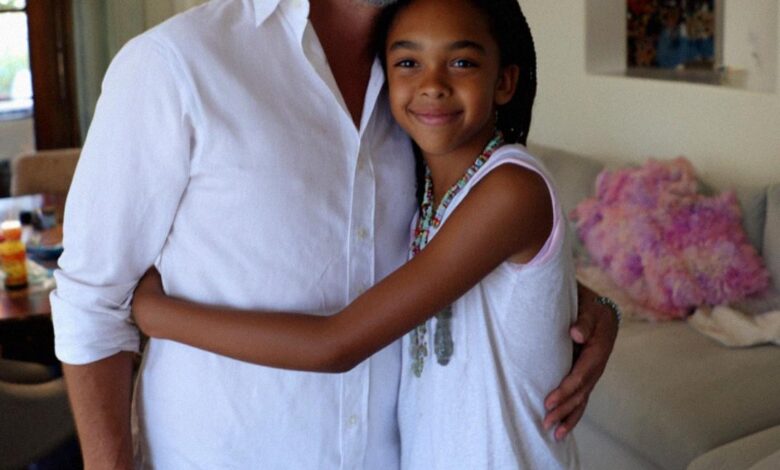
I never thought planning a wedding would mean defending my daughter’s place in my life. I assumed the hard parts would be choosing the right cake or arguing over music—not fighting for my child’s inclusion.
I’m forty-five, divorced, and father to the best person I know—my eleven-year-old daughter, Paige. She’s smart, quick-witted, and tougher than most adults. Her mother and I separated years ago on good terms. My one unbreakable rule since then has been simple: Paige never comes second.
Then I met Sarah. For four years, she seemed perfect—kind, funny, good with Paige. The three of us shared dinners, movie nights, and laughter until the house echoed with it. Paige loved her. So when I proposed, and Sarah said yes—tears, applause, the whole thing—it felt like we were just formalizing a family that already existed.
Wedding planning began fast. Sarah threw herself into it—venues, florals, Pinterest boards, spreadsheets. I followed her lead, happy to let her take charge. For a while, it was fun watching her excitement—until the day it wasn’t.
We were sitting on the couch, surrounded by magazines and fabric swatches, when she said, “I want my niece to be the flower girl. She’ll look adorable in white lace.”
“Perfect,” I said. “Paige can walk with her.”
Sarah’s smile faded. “Actually, I don’t think Paige fits the part.”
I blinked. “What does that mean?”
“It’s my wedding,” she said. “The wedding party should reflect that.”
“She’s my daughter,” I said slowly.
Sarah crossed her arms. “I just think it’s better if she watches instead of being in the photos.”
That was it. The line I didn’t know existed until she crossed it.
“If Paige isn’t part of the wedding,” I told her quietly, “there won’t be a wedding.”
I left before I said something worse. I took Paige for ice cream instead. She swung her legs under the booth and told me how excited she was for the wedding, how she’d wear whatever dress Sarah picked. I smiled and nodded while my chest burned.
That night, I texted Sarah that I needed time to think. Ten minutes later, her mother sent me a message: You’re overreacting. Your daughter doesn’t need to be in your wedding. Stop being dramatic.
That was when everything I’d believed about our “family” started to crack.
The next morning, I came home to find Sarah sitting at the kitchen table, coffee untouched, her mother’s car idling in the driveway.
I didn’t sit. “Why don’t you want Paige in the wedding?” I asked.
Sarah’s fingers tightened around her mug. “Because I was hoping,” she said softly, “that after we got married, you could just be a holiday-visit dad.”
The words didn’t land at first. It was like hearing a foreign language. “A what?”
She avoided my eyes. “I didn’t want her in all the pictures if she wasn’t going to be around much. It would look… confusing.”
“Confusing?” My voice was flat.
“I just thought once we started our life together, you’d see things differently,” she said. “You’d want to focus on us. Let go a little.”
It hit me then—she wasn’t just excluding Paige from the wedding. She wanted to erase her from the life that followed.
“She’s not a phase,” I said, my voice shaking. “She’s my child.”
I pulled off the ring and placed it on the table between us. The small clink of metal against wood was louder than anything else in the room.
“Don’t do this,” she whispered. “I can change. We can still get married.”
“No,” I said. “You showed me who you are. I won’t marry someone who treats my daughter like an inconvenience.”
Her mother appeared in the doorway, eyes blazing. “You’re being unreasonable,” she snapped. “Sarah’s offering you a real future, and you’re throwing it away for a child who’s going to grow up and leave anyway.”
I opened the door. “Get out.”
“You’ll regret this,” she hissed.
“The only thing I’d regret,” I said, “is staying.”
That evening, Paige was at the table coloring. She looked up and beamed when she saw me. “Want to see?” she said, holding up her drawing—two stick figures, one tall, one small, a big red heart floating above them.
“It’s perfect,” I said, sitting beside her. “Hey, honey, I need to tell you something.”
“About the wedding?”
“There isn’t going to be one.”
She tilted her head. “Because of me?”
“Absolutely not.” I tucked a loose strand of hair behind her ear. “Because Sarah doesn’t understand that you’re part of me. If someone can’t love both of us, they don’t get either of us.”
She was quiet for a second, then said softly, “So it’s just us again?”
“Just us,” I said. “Always.”
Her smile returned, small but certain. “I like that better.”
“So do I,” I admitted. “In fact, I was thinking—remember that honeymoon trip we booked? Sun, beach, hotel with the infinity pool?”
She nodded.
“We’re still going. You and me. We’ll make it our own trip—snorkeling, pancakes for dinner, and every flavor of ice cream we can find.”
She gasped, then jumped into my arms, nearly knocking me backward. “Best honeymoon ever!”
I laughed, holding her tight. “You bet it is.”
That night, after she fell asleep, I sat in the quiet house, thinking about how close I’d come to building a life on lies. Sarah didn’t want a marriage—she wanted control. She wanted a picture-perfect life, no messy edges, no real attachments. I would’ve been another prop. Paige would’ve been a problem to phase out.
The realization hurt, but it also felt freeing.
The next morning, I canceled the wedding, booked two tickets to Bora Bora, and called the resort to confirm. Paige helped me pack later that day—stuffing her swimsuit and sketchbook into a small pink suitcase. On the cover page of her notebook, she wrote in big letters: Daddy-Daughter Moon and drew another red heart beside it.
Before bed, she looked at me, suddenly serious. “You promise it’s forever, right? Just you and me?”
I smiled. “Forever,” I said. “Always.”
The wedding ring was gone, the plans were ashes, but what mattered had never changed.
Because the truth is simple: you can find another partner, another job, another house—but you only get one chance to show your kid that they come first.
Sarah thought love meant possession. I know better. Love is loyalty. Love is showing up. Love is saying, “You belong,” even when life falls apart.
Paige and I spent ten days in Bora Bora. We snorkeled, read on the beach, built sandcastles, and watched stars until we fell asleep in hammocks. On our last night, she handed me a seashell. “For the next time you forget what matters,” she said, smiling.
I haven’t forgotten since.
The venue, the flowers, the vows—none of that ever meant anything. The only promise that’s ever mattered was the one I made the day my daughter was born: that she’d never have to fight for her place in my heart. And that’s one vow I’ll keep until my last breath.