These are the consequences of sleeping with the See more
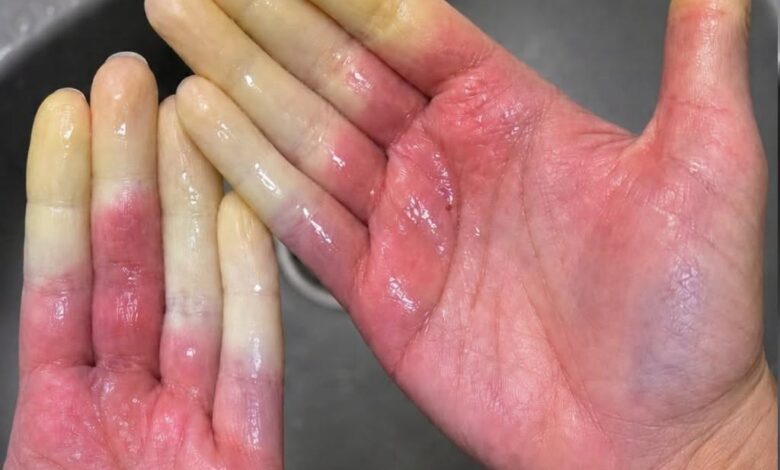
Fingers that suddenly turn white, blue, or red may be reacting to more than ordinary cold weather. Dramatic color changes can occur when blood circulation to the fingers temporarily decreases. One possible explanation is Raynaud’s phenomenon, a condition in which small blood vessels narrow and reduce the flow of blood to affected areas.
During an episode, fingertips may first become pale or white. They can then appear blue before turning red as circulation returns. The hands may feel cold, numb, painful, or tingly. Although the colors can look alarming, the sequence reflects changes in blood flow rather than something that can be understood simply from the skin’s surface.
Cold temperatures are a common trigger. Stepping outside on a chilly day, holding a cold drink, or reaching into a freezer may be enough to begin an attack. Emotional stress can also play a role. The frequency and severity vary greatly: one person may experience mild symptoms a few times a year, while another may have recurring episodes that interfere with daily routines.
Doctors generally distinguish between primary and secondary Raynaud’s. Primary Raynaud’s occurs on its own and is often less serious. Secondary Raynaud’s can be associated with another medical issue, including autoimmune disease, connective-tissue disorders, or vascular problems. That distinction is one reason repeated color changes deserve professional attention rather than an assumption based on a photograph.
Most people with the condition are able to manage it, but prolonged reductions in blood flow can become more serious. Severe cases may lead to sores or tissue damage. Symptoms that are frequent, painful, worsening, limited to one side, or accompanied by wounds should be discussed with a healthcare professional. A doctor can consider whether Raynaud’s is likely or whether another circulation-related condition needs investigation.
Practical steps can help reduce episodes. Keeping hands and feet warm is important, especially in cold weather. Gloves can be useful not only outdoors but also when handling frozen food. Avoiding sudden temperature changes may help some people, and managing stress can reduce another potential trigger.
Smoking is particularly unhelpful because it can narrow blood vessels further. Anyone receiving medical advice or treatment for frequent attacks should follow that plan rather than relying on appearance alone. The right approach depends on the individual, the pattern of symptoms, and whether another condition is involved.
Occasionally cold hands are common, and not every change in skin color signals disease. The warning sign is a repeated or pronounced pattern: fingers becoming clearly white, blue, or red, especially with numbness, tingling, coldness, or pain. Paying attention to when it happens, how long it lasts, and what triggers it can provide useful information during an evaluation.
The circulating image may invite a quick or frightening conclusion, but a diagnosis cannot be made from a picture. The useful lesson is to recognize that striking color changes can reflect temporary narrowing of blood vessels. Early attention to recurring symptoms can help identify whether the cause is primary Raynaud’s, a secondary form linked to another condition, or a different circulation issue entirely.
Keeping a simple record may help clarify the pattern. A person can note the temperature, activity, stress level, colors observed, sensations, duration, and whether both hands were affected. A photograph taken during an episode can also give a clinician information that may not be visible once normal circulation returns.
It is equally important not to confuse education with self-diagnosis. White or red fingers can have more than one cause, and treatment for one person may not be appropriate for another. Professional evaluation becomes especially valuable when episodes begin suddenly, grow more severe, produce sores, or occur alongside other unexplained symptoms.
The overall message is balanced: many cases are manageable, yet the body’s repeated warning signs deserve attention. Warmth, sensible avoidance of triggers, and medical guidance can help people protect their hands without panic. Recognizing the pattern early turns a startling visual change into useful information rather than a reason for unsupported conclusions.