MourningSchool bus accident, 32 children lost! See more
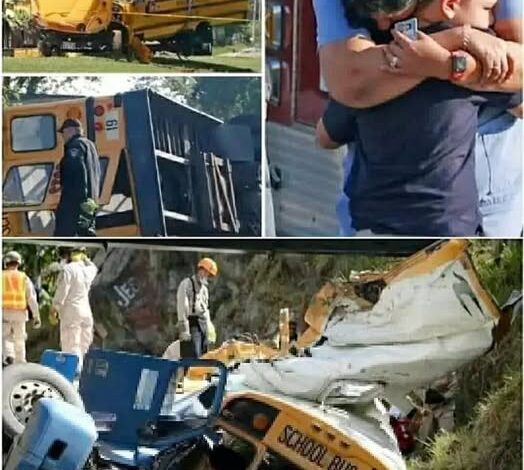
Eight years have passed since one of the darkest days in Tanzania’s history—the Karatu school bus tragedy that claimed the lives of 32 children, two teachers, and a driver. The morning of May 6, 2017, remains etched in the nation’s memory, a day when joy turned to horror and an entire country mourned its future cut short.
The students of Lucky Vincent Primary School in Arusha had woken up that morning full of excitement and pride. They were traveling to the town of Karatu to take a mock national exam—an important milestone that would prepare them for their final primary school tests. For many, it was the first time they had been allowed on a long academic trip. Their teachers described the atmosphere on the bus as lighthearted and full of laughter. It was supposed to be a day that marked progress, not tragedy.
As the school bus navigated the winding roads of the mountainous Karatu district, rain began to fall. The narrow roads became slick with mud, and visibility dropped. Witnesses later said the driver slowed down but soon lost control on a sharp curve. The bus veered off the road and plunged into a deep ravine. The impact was devastating. When rescuers reached the site, what they found was beyond comprehension—a tangle of metal, backpacks, and broken dreams.
News of the accident spread rapidly. Radio stations cut their programming. Television anchors struggled through tears as they reported live from Arusha. Newspapers ran front-page headlines declaring a national tragedy. Within hours, President John Magufuli announced a period of national mourning. Flags flew at half-mast, and people across Tanzania gathered in churches, mosques, and public squares to pray for the victims and their families. The air was heavy with grief.
But amid the devastation, a faint light emerged. Three children—Wilson, Sadia, and Doreen—were found alive in the wreckage. Badly injured but breathing, they were pulled from the debris by rescuers who called their survival nothing short of miraculous. Their recovery became a symbol of resilience and hope in a country overwhelmed by loss. After initial treatment in Arusha, the government and charitable organizations arranged for the three survivors to be flown to the United States for specialized medical care. Their story captured the world’s attention, and people around the globe followed their progress as they underwent surgeries and rehabilitation.
For the families of the children who didn’t make it home, grief became a permanent companion. The community of Arusha was never the same. Parents who once watched their children play in the schoolyard now visited their graves instead. Teachers who had once filled classrooms with laughter faced empty chairs and silence. Every May since that day, memorial services have been held to honor the young lives lost. At the site of the crash, a stone monument now stands bearing the names of each victim. Families and teachers visit year after year, laying flowers, singing hymns, and whispering prayers for the souls of the children who should have grown into doctors, artists, and engineers.
The tragedy sparked a national reckoning over road safety and public transportation. Tanzania, like many developing nations, faces ongoing challenges with infrastructure and vehicle maintenance. The Karatu disaster prompted widespread calls for reform. The government pledged to improve rural road conditions, strengthen oversight of driver training and certification, and enforce stricter safety measures for school transport. For a while, there was momentum—roads were inspected, transport ministries held reviews, and driver regulations were rewritten. Yet progress has been uneven. Some changes took hold; others faded under bureaucracy and resource limitations. Even so, Karatu remains a painful reminder of what can happen when safety is neglected.
The survivors, now teenagers, have become symbols of endurance and faith. Wilson dreams of becoming a doctor, inspired by the people who helped save his life. Sadia has spoken publicly about using education to honor her lost classmates. Doreen, who once could barely walk again after the crash, has become an advocate for children’s safety and speaks about hope and perseverance. Their strength continues to inspire not just Tanzanians but anyone who has faced loss and kept moving forward.
Communities around Arusha have kept the memory alive in quiet ways, too. Each year, students at Lucky Vincent Primary School participate in a candlelight ceremony. They read poems written by the victims’ siblings and share stories about the importance of kindness and caution. Parents tell their children the story not just as a tragedy, but as a lesson—to value life, to look out for one another, and to demand safety where it’s due.
Eight years later, the grief has softened but never disappeared. Many parents still visit the memorial with tears in their eyes, touching the engraved names as if to keep their children close. The pain has been transformed into a collective determination to make sure such a day never happens again. The survivors’ story serves as a living bridge between what was lost and what remains possible.
The Karatu disaster didn’t just reveal the fragility of life—it revealed the strength of community. Strangers donated blood. Volunteers worked day and night at the crash site. Teachers counseled grieving parents while grieving themselves. Faith leaders across denominations led joint prayers, uniting the nation in compassion. In a country often divided by politics or class, that moment of unity stood out as something sacred.
Today, flowers still appear at the base of the Karatu memorial stone. Some are placed by family members; others by people who never knew the children but feel connected through shared humanity. Tourists who visit the region sometimes stop to pay respects, surprised by the quiet dignity of the site. The rain still falls over the hills where the tragedy happened, washing through a landscape that remembers everything.
When Tanzanians speak of Karatu, they don’t just talk about loss—they talk about resilience, responsibility, and the enduring value of every child’s life. The story continues to shape how people think about safety, empathy, and collective accountability. The children’s names—once printed in obituary columns—now live on as a call to do better.
As the nation marks eight years since that terrible morning, there’s still sadness, but also gratitude. Gratitude for the lives that were saved, for the lessons learned, and for the compassion that rose from tragedy. The Karatu disaster changed Tanzania forever, but it also revealed something unbreakable within its people: a capacity to mourn deeply, to remember faithfully, and to hope fiercely even after the unthinkable.
The flowers at the memorial will keep being placed, the prayers will keep being said, and the promise to never forget will continue to echo across generations. Because in remembering the 32 children, two teachers, and their driver, Tanzania remembers the power of unity, the weight of loss, and the unwavering belief that from grief, healing can still grow.