My Wife Left Me Alone With Our Twin Girls and Her Cryptic Note Led Me To A Dark Secret in My Own Mother Desk
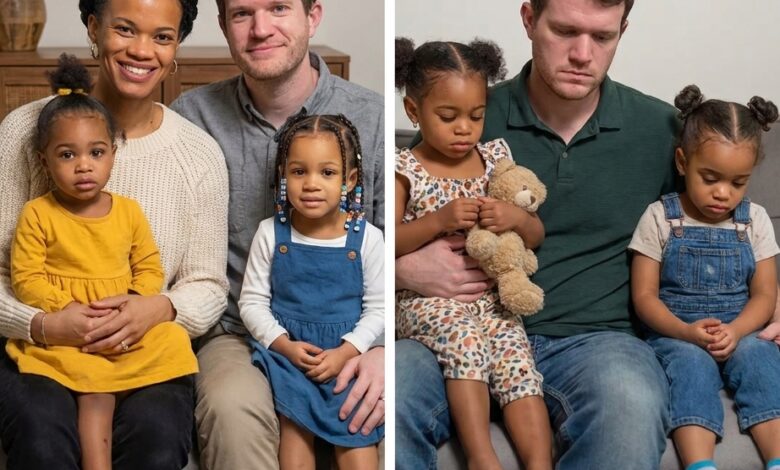
I was exactly fifteen minutes late getting home that rainy evening. In a household with six-year-old twin daughters, fifteen minutes was a lifetime. It was more than enough time for the girls to grow restless and hungry, long enough for my wife, Jyll, to send her usual playful text asking where I was, and long enough for our nightly routine to start slipping out of sync. But as I pulled into the driveway, the very first thing I noticed was the absolute, suffocating stillness that hung over our property. The lawn was entirely clear of the usual childhood clutter. There were no backpacks dumped carelessly on the front steps, no chalk drawings decorating the concrete, and no jump ropes tangled in the grass. Even the porch light, which Jyll religiously switched on at six o’clock every evening, was completely dark.
I checked my phone, expecting a flurry of missed calls or frustrated text messages, but the screen was entirely blank. A heavy sense of unease settled behind my eyes as I stood on the porch, my collar still damp from the cold rain. The only sound in the neighborhood was the distant hum of a lawnmower several blocks away. When I finally turned the key and stepped inside, the atmosphere felt fundamentally wrong. The television was dark, the kitchen lights were switched off, and a pot of macaroni and cheese sat cold on the stove, left behind as if someone had walked away in the middle of preparing dinner.
I called out for Jyll and the girls, tossing my keys onto the entryway table. The silence that answered me was deafening. Hurrying into the living room, I stopped dead in my tracks when I saw our babysitter, Mikayla, standing awkwardly by the armchair with her phone in her hand. Her face was a mask of concern and hesitation. She looked up at me, explaining that she was just about to call my phone. When I frantically asked where my wife was, she pointed toward the sofa. There, curled tightly against one another with their shoes still on and their school backpacks discarded on the carpet, were my six-year-old twins, Emma and Lily.
Mikayla explained that Jyll had called her in a panic around four o’clock, pleading with her to come over immediately because she had something urgent to take care of. Assuming it was a standard run of errands, Mikayla had rushed over, only to find my wife already walking out the door with her bags packed. I knelt down in front of my daughters, my heart hammering against my ribs, and asked them what had happened. Emma blinked back tears and whispered that Mommy had hugged them tightly, cried for a very long time, and said goodbye forever, adding that I would explain everything to them.
Panic surged through my veins as I ran toward our master bedroom. Sliding the closet doors open, the barren shelves confirmed my worst fears. Jyll’s entire wardrobe was gone. Even her favorite fluffy blue sweater was missing from its hanger, alongside her makeup vanity, her laptop, and the small framed photograph of our family at the beach last summer. Returning to the kitchen in a daze, my eyes caught a folded piece of paper resting on the counter beside my coffee mug. Opening it with trembling hands, I read Jyll’s heartbreaking words. She wrote that I deserved a fresh start with the girls and begged me not to blame myself. But the final sentence delivered the true shock, instructing me that if I wanted real answers, I needed to ask my mother.
Determined to unravel the mystery, I immediately called the twins’ aftercare program to see if anyone had seen Jyll. The school secretary informed me that while Jyll had called to authorize the babysitter, my mother, Carol, had actually visited the school the previous day. My mother had aggressively demanded copies of the girls’ pickup records and tried to alter their emergency contact forms, a request the school had flatly denied. The puzzle pieces began to lock into place with terrifying speed.
Without wasting another second, I packed the girls into the car and drove directly to my mother’s house. Throughout the quiet drive, my mind raced as I thought about my mother’s overbearing presence in our lives. Carol had never simply helped; she controlled, criticized, and kept score of every perceived failure. She had publicly labeled Jyll as ungrateful and selfish for wanting to return to work, and when Jyll had courageously sought therapy to cope with postpartum depression after the twins were born, my mother had aggressively inserted herself into the sessions, ultimately manipulating Jyll into stopping her treatment. I had foolishly assumed Jyll was managing fine, mistaking her quiet survival for emotional stability.
When we arrived at my mother’s house, Carol opened the door and feigned complete shock at our sudden arrival. My aunt Diane was quietly working in the kitchen, her eyes widening in apprehension the moment she saw my furious expression. After settling the girls at the kitchen table with juice boxes, I followed my mother into the den and confronted her with Jyll’s parting letter. Carol sighed heavily, smoothing her robe with practiced calm, and instantly began painting Jyll as an unstable, fragile woman who had finally abandoned her family. She insisted that she had only stepped in to provide the structure and control that our household desperately needed while I worked grueling twelve-hour shifts.
But I refused to buy into her toxic narrative any longer. Pushing past my mother’s attempts to block me, I marched over to her home office desk and began yanking open the drawers. Deep inside, my hands brushed against a thick manila folder labeled in bold letters: Emergency Custody Protocol. As I flipped open the pages, my stomach churned with pure disgust. Inside were notarized contingency forms detailing a guardianship plan to strip Jyll of her maternal rights in the event of emotional instability. At the bottom of the petition, my own signature had been crudely forged in my mother’s handwriting. When I confronted her about the forgery, Carol defensively claimed it was a necessary precaution to protect the girls from an unfit mother.
I refused to argue further. I grabbed the forged documents, gathered my daughters, and walked out of her house forever. That night, as I lay in bed clutching my sleeping girls, the gravity of my own silence over the years crushed me. I had allowed my mother’s overbearing voice to drown out my wife’s quiet cries for help. The following morning, I discovered Jyll’s hidden journal in her dresser drawer, filled with devastating entries detailing how Carol had relentlessly bullied her, threatened her with custody battles, and systematically isolated her from her support systems until she felt entirely erased.
I immediately hired a aggressive family lawyer, officially revoking my mother’s access to the school, flagging the forged legal documents, and drafting a formal, legally binding no-contact order. That evening, I dialed Jyll’s number. When she answered in a soft whisper, I poured my heart out, weeping as I apologized for my blindness and promising her that my mother was permanently cut out of our lives. Jyll quietly thanked me for finally choosing her and the girls, explaining that she deeply loved us but needed time away in a safe space to rebuild her shattered sense of self. I promised her that we would wait for her as long as it took. Three days later, a package arrived in the mail containing toys for the girls and a photograph of Jyll smiling brightly on a quiet beach, serving as a beautiful promise of the healing journey that lay ahead for our family.