The Night My Dead Sister Returned to Save Her Son From a Monster
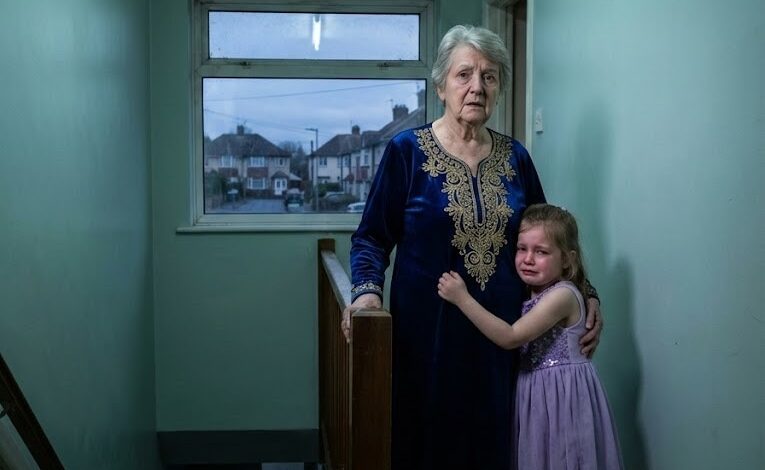
The rain didn’t just fall that night; it hammered against the windows like a warning I wasn’t ready to hear. It was a Tuesday in April, the kind of quiet midnight where the only sound is the hum of the refrigerator and the distant hiss of tires on wet pavement. I was halfway through a book I’d read three times before, clinging to the familiar because the rest of my life felt so hollow. Then came the knock. It wasn’t the hesitant tap of a neighbor or the frantic rhythm of an emergency. It was heavy, official, and cold.
When I pulled back the heavy oak door, the damp air rushed in, smelling of ozone and asphalt. Two figures stood on the porch, their badges catching the porch light in a way that made my stomach drop. Detective Pierce and Officer Reyes looked like they had been through a war zone. They didn’t ask to come in. Instead, Pierce held out a hand to steady me before he even spoke. He told me they had found a child wandering near the old industrial docks, a boy who shouldn’t have known my name, yet he had repeated it like a prayer.
I laughed, a sharp, nervous sound that died in my throat. I told them they had the wrong house. I had spent my life in a state of quiet solitude, a woman who had never married and never had children. My world was small, contained, and entirely devoid of little boys. But then Reyes reached into his pocket and pulled out a small, grainy photograph taken on a digital camera.
In the photo was a boy, perhaps seven years old, with hair the color of wheat and eyes that looked like they had seen the end of the world. He was pale and shivering in a police blanket, but his gaze was steady. He looked exactly like a ghost. Specifically, he looked like the ghost of the only person I had ever truly loved.
They told me the boy’s mother had given him a specific set of instructions: Find Elaine. When I asked for the mother’s name, the detective’s voice dropped to a whisper. He said the name Mari.
My sister, Marianne, had been dead for six years. Or so the world had told me. There had been a car accident on a jagged cliffside in a storm much like this one. There had been a recovery effort, a closed casket, and a mountain of legal paperwork that I had signed with a shaking hand. I had lived through the grief, processed the silence, and eventually buried the memory of her laughter under layers of mundane routine. Now, standing in my doorway with the rain misting my face, the reality I had built began to crumble.
The officers finally stepped inside, bringing the chill of the night with them. They spread documents across my kitchen table—the very table where Marianne and I used to share coffee and secrets. There was a birth certificate dated five years ago. There was a recent surveillance image of a woman standing in the shadows of a grocery store parking lot. It was her. Older, thinner, her hair cropped short and dyed a dark, muddy brown, but the set of her jaw was unmistakable.
My sister wasn’t a memory. She was a fugitive.
The Detective explained the situation with a clinical detachment that made my blood run cold. For years, Marianne had been living under the thumb of a man named Raymond Hale. I recognized the name instantly—he was a man from our past, someone we thought had moved away shortly before her supposed death. He hadn’t moved. He had taken her. He had orchestrated a disappearance so complete that even the local precinct had been fooled by the charred remains found in that car six years ago.
Raymond Hale wasn’t just a kidnapper; he was a collector of lives. He had kept Marianne in a state of perpetual fear, moving her from town to town, house to house, always staying one step ahead of a world that believed she was buried in a cemetery three towns over. But Marianne had done the unthinkable. She had brought a child into that nightmare and somehow, against every imaginable odd, she had kept the boy’s existence a secret from the world until she could find a way to set him free.
The boy had been found clutching a small, laminated card. Pierce handed it to me. It was my old library card from college, something I hadn’t seen in a decade. On the back, in the frantic, looped handwriting I would know anywhere, were three words: Run to Elaine. She had given her son the only map she had left—the memory of a sister she hoped was still waiting in the same house.
Suddenly, the house didn’t feel like a sanctuary anymore. The Detective glanced at his watch and then at the window. He told me that Hale was likely on the move. He had realized the boy was gone, and he knew exactly where the boy would lead the police. My address wasn’t just a destination for her son; it was a target for a monster.
We didn’t have time to pack. Reyes grabbed my coat while Pierce radioed for backup. They moved me through the back of the house, staying low beneath the line of the windows. We moved through the overgrown garden, the thorns catching at my sleeves, until we reached an unmarked black SUV parked half a block away. Just as the door clicked shut, a set of headlights turned onto my street. The vehicle didn’t slow down; it accelerated, swerving toward my driveway with a predatory intent that made me scream.
As we sped away, I watched through the rear window as blue and red lights converged on my home. Later, they would tell me that Hale had been intercepted just yards from my front door, armed and desperate. He hadn’t come for the boy. He had come to finish the job he started six years ago. He wanted to erase the last witness to his crimes.
At the police station, the air was thick with the smell of floor wax and stale coffee. I was tucked into a small interrogation room, not as a suspect, but for my own protection. A female officer brought me a cup of water, her eyes full of a pity I didn’t want. I sat there for hours, the adrenaline fading into a hollow, aching exhaustion.
Finally, the door opened. It wasn’t the detective. It was the boy.
He was smaller than he looked in the photo. He was wearing an oversized sweatshirt and holding a plastic cup of apple juice like it was the most precious thing in the world. He stopped in the doorway, his eyes scanning my face with an intensity that felt far too old for a child. He didn’t cry. He didn’t run. He simply walked over to me, reached into his pocket, and pulled out a crumpled piece of paper.
It was a drawing of two stick figures standing in front of a house with a yellow sun. Underneath, in messy crayon, it said: Mommy says you are the brave one.
I pulled him into my lap and finally, the tears I had held back for six years came rushing out. I wept for the sister who had lived in darkness so her son could see the light. I wept for the time we had lost and the terrifying journey this small person had taken just to find me.
The authorities still haven’t found Marianne. They found the cabin where Hale had kept them, hidden deep in the woods, but she was gone by the time they arrived. Some think she fled to lead Hale away from the boy. Others think she’s still out there, watching from the shadows, waiting for the right moment to emerge from the grave.
I don’t have the answers yet. I don’t know if I’ll ever see my sister again or if the law will ever truly find justice for what was stolen from us. But as I look at the boy sleeping on my sofa, his hand gripping the edge of a blanket, I know one thing for certain. The secret is out. The lie is dead. And for the first time in a very long time, the door is open, and we are no longer waiting for the knocking to start. We are ready to live.