The Son My Parents Stole From Me Is Now My Next Door Neighbor
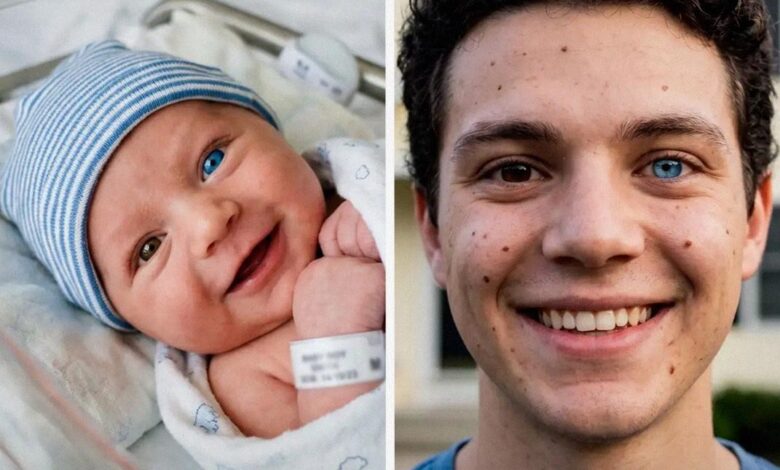
For twenty-one years I lived in a world where the stars had gone out and the ground was made of glass. I am thirty-eight years old now and my life is a quiet study in professional competence and private grief. I have a respectable job and a house with a guest room currently occupied by my father, a man whose body is failing him even as his conscience remains remarkably intact. From a distance I look like a woman who has moved on. I look like someone who survived a teenage tragedy and came out the other side with nothing but a lingering sadness in her eyes. But the truth is that I was living a lie scripted by people who valued their reputation more than my soul.
When I was seventeen, my world was controlled by wealth and the suffocating weight of social expectation. My parents were pillars of the community, the kind of people who believed that a scandal was a fate worse than death. When I told them I was pregnant, they didn’t scream. Screaming would have been a relief because it would have meant they were feeling something. Instead, they got efficient. They treated my pregnancy like a business problem to be solved with NDAs and quiet transfers. I was spirited away to a private clinic in a distant town, a place they told our neighbors was a health retreat for my nerves.
I was a prisoner in a sterile room. I wasn’t allowed visitors or phone calls. My mother would sit by my bed and speak in a voice like chilled silk, telling me that this was all for the best and that I would understand when I was older. When labor finally came, it was a blurred nightmare of pain and isolation. I remember a nurse who wouldn’t look me in the eye, a woman who moved with a frantic, guilty energy. And then, through the haze of exhaustion, I heard it. A thin, sharp, beautiful cry. The sound of life.
I tried to sit up, desperate to see the tiny human I had carried in secret for nine months. “Is he okay? Please let me see him,” I begged. No one answered. The silence that followed was heavier than the pain. A few minutes later, my mother walked into the room wearing a cream-colored coat, looking as composed as if she were stepping into a gala. She looked at me with a practiced pity and said, “He didn’t make it, Claire.”
There was no doctor to explain the medical cause of death. There was no tiny body to hold, no funeral to plan, and no grave to visit. When I screamed that I had heard him cry, they told me I was hallucinating from the stress. They sedated me, and when I woke up, the world was empty. I had nothing left of my son except a small blue blanket I had knitted in secret, decorated with tiny yellow birds. I had hidden it in my suitcase, a silent promise to a child I thought was gone.
The night before they forced me to leave, the nervous nurse slipped into my room. She took a note I had scribbled—one sentence that said, “Tell him he was loved”—and the blue blanket. She whispered that she would send them with him to wherever babies go when they don’t stay. I thought she meant the afterlife. My mother later told me she had burned the blanket to help me move on. I spent two decades believing my son was ashes and my memories were a fever dream.
Everything changed last week when a moving truck backed into the driveway next door. I was in my garden, my hands stained with dirt, when a young man jumped out of the cab. He was carrying a floor lamp, and for a heartbeat, the earth stopped spinning. He had my dark curls. He had my sharp cheekbones. He had the exact set of my chin. He walked over with a smile that felt like a mirror, introduced himself as Miles, and chatted about the chaos of moving day. I stood there like a ghost, unable to breathe, watching my own face talk back to me from a stranger’s body.
When I went inside and told my father that the new neighbor looked like me, he dropped his tea. The porcelain shattered, and the tea scalded his hand, but he didn’t even flinch. He went pale, a sickly grey color that told me everything I needed to know. He tried to dismiss it, calling me paranoid, but the panic in his eyes was a confession.
Two days later, Miles invited me over for coffee. My father tried to stop me, his voice trembling with a desperate, sudden frailty, but I ignored him. I stepped into the house next door and stopped dead. There, draped over the arm of a chair in the sunlight, was a knitted blue blanket with yellow birds. My stitches. My wool. My heart.
I grabbed the doorframe to keep from collapsing. “Where did you get that?” I whispered. Miles looked at me, confused and concerned. He explained that he had been adopted at three days old. He said his parents told him his birth mother had left him with nothing but that blanket and a note that read, “Tell him he was loved.”
The world tilted on its axis. The twenty-one years of grief I had carried felt like a physical weight suddenly doubled. I wasn’t just a grieving mother; I was a victim of a monstrous theft. Before I could find my voice, my father appeared in the doorway behind me. He had followed me, driven by the realization that his secrets had finally run out of room to hide.
I turned on him, my voice a low, dangerous hiss. “Tell me the truth.”
The story came out in a pathetic, stuttering rush. My mother had orchestrated the entire thing. She had bribed a clinic administrator and a lawyer to forge death certificates and adoption papers. She had told the staff the baby died, and told the adoptive parents that I was a young girl who wanted no contact and no trace. My father had known. He had watched me cry myself to sleep for years, watched me struggle to build a life on a foundation of false tragedy, and he had chosen silence to protect the family name.
“I thought it was too late to tell you,” he whimpered. “After your mother died, I wanted to, but I was afraid you’d hate me.”
I didn’t hate him. I felt something much colder than hate. I looked at Miles, who was standing there clutching the blanket, his world fracturing just as quickly as mine. I told him the truth. I told him I never gave him up. I told him I was told he was dead. I told him about the yellow birds and why I chose that specific shade of wool—because I wanted him to be brave during storms.
Miles looked down at his hands, his thumb tracing the same stitches I had labored over in the dark twenty-one years ago. He told me he still hated storms. It was a small, fragile connection, a bridge built of yarn and shared DNA across a canyon of lies.
We aren’t a family yet. You can’t undo two decades of state-sanctioned kidnapping over a cup of coffee. There are DNA tests pending and lawyers to consult, and my father is no longer welcome in my home. But yesterday, Miles knocked on my door. He didn’t call me Mom, and I didn’t expect him to. He just handed me a coffee and said that while things were overwhelming, coffee was a start. As I sat on my porch watching my son—my living, breathing son—walk back to his house, I realized that for the first time in twenty-one years, the sun had finally come back up.