Tragedy In Paris International Film Star Found Unconscious In Pool Before Heartbreaking Passing
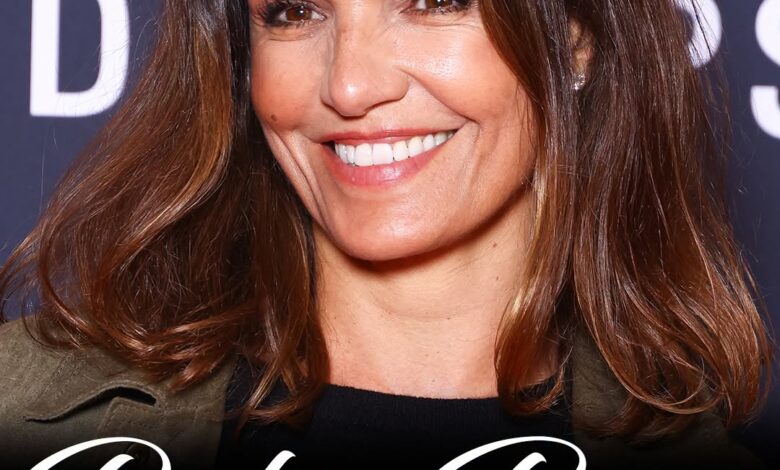
The world of international cinema is currently draped in a heavy veil of mourning following the sudden and tragic loss of a performer whose talent knew no borders and whose presence illuminated every frame she occupied. The news of Nadia Farès passing at the age of 57 has sent a shockwave through the cultural landscape of France and beyond, leaving fans, colleagues, and a heartbroken family to grapple with the departure of a woman who was much more than just a face on a screen. For decades, Farès had navigated the demanding world of entertainment with a rare combination of grit and grace, building a legacy that was rooted in authenticity. Her death, occurring under circumstances that felt like a surreal scene from one of her own thrillers, has served as a poignant reminder of the fragility of life, even for those who appear to be at the pinnacle of their strength.
The sequence of events that led to this somber moment began on a quiet day in Paris, April 11. Farès, a woman known for her dedication to both her craft and her physical well-being, was found unconscious in a swimming pool at a private gym in the heart of the city. The initial reports were harrowing: she had suffered a sudden cardiac arrest while in the water. Emergency responders worked fervently to stabilize her before rushing her to the prestigious Pitié-Salpêtrière Hospital. There, she fell into a deep coma, her life hanging by a thread as a team of specialists fought to bring her back. For nearly a week, the film community held its collective breath, hoping for a miracle that would defy the clinical odds. Sadly, on April 17, the thread finally snapped. Authorities have since opened a standard investigation into the incident, though preliminary findings suggest that no foul play was involved. It appears to have been a catastrophic medical event—a silent, internal failure that occurred in a place of supposed health and vitality.
To understand the depth of this loss, one must look back at the journey of a girl born in Morocco who dared to dream of the grand stages of Europe. Farès did not just enter the French film industry; she commanded it. Her breakout role in the 2000 atmospheric thriller The Crimson Rivers, directed by Mathieu Kassovitz, was a turning point. In a film dominated by heavyweights, her performance was a standout, marked by an intensity that was both chilling and deeply human. It was this role that served as her passport to the international stage, leading to appearances in high-octane projects like War and the visceral horror of Storm Warning. She was an actress who never shied away from the dark or the difficult, often choosing roles that required her to peel back layers of emotional trauma and resilience.
However, Farès was not a woman who could be confined to a single medium. As the landscape of entertainment evolved, she pivoted toward the burgeoning world of prestige television. Between 2016 and 2018, she starred alongside the legendary Gérard Depardieu in Marseille, one of the first major forays into high-budget French-language streaming content. In the role, she displayed a seasoned maturity, proving that her talent had only sharpened with age. She was a bridge between the classic era of French cinema and the new, digital frontier of storytelling, respected by the old guard and admired by the new generation of creators.
What makes her passing even more tragic is the creative horizon she was just beginning to touch. At 57, Farès was not looking toward retirement; she was preparing for a rebirth. She had spent months meticulously developing an action-comedy project that was scheduled to begin filming in September 2026. This wasn’t just another acting job; it was to be her directorial debut and her first major credit as a screenwriter. She was ready to step behind the camera, to take full control of the narrative, and to prove that her decades of experience had given her a unique voice that deserved to be heard. That project, full of her notes, her vision, and her passion, now remains an unfinished testament to a career that was still climbing.
While the public mourns an artist, two young women are mourning a mother. Her daughters, Cylia and Shana Chasman, released a statement through AFP that cut through the clinical details of the news reports with the sharp edge of personal grief. They described France’s loss as a loss of art, but their own loss as a loss of identity. In the days following the announcement, Cylia took to social media to share a tribute that resonated with anyone who has ever looked up to a parent as a North Star. She spoke of a bond that had grown even deeper in the final months of her mother’s life—a period of mutual understanding and shared confidence that makes the current silence even harder to bear. For Cylia, Nadia Farès was not the “film star” found in a pool; she was the role model, the confidante, and the best friend who understood her better than anyone else in the world.
In retrospect, the medical details of her passing carry a quieter, more somber context. Farès had been a survivor long before this final event. In 2007, she had undergone a grueling brain surgery following the diagnosis of an aneurysm—a condition she herself described as a “ticking time bomb” inside her head. She had also navigated multiple heart surgeries throughout her life, living with a constant, underlying awareness of her own mortality. These health struggles, which she faced with the same stoicism she brought to her film roles, suggest a woman who lived every day with an intentionality that most people only find in a crisis. She knew her heart was fragile, yet she lived a life that was incredibly robust, filled with demanding physical roles and the high-stress environment of film sets.
As Paris moves forward and the gym where she was found resumes its daily routines, the film industry is left to figure out how to fill the void she left behind. A seat at the director’s table remains empty, a script remains unshot, and a family remains shattered. The investigation will eventually conclude, providing a technical explanation for why her heart stopped on that April morning, but no report can quantify the impact she had on the people who loved her.
Nadia Farès was a reminder that the strongest people are often the ones fighting the most invisible battles. She carried the weight of her medical history while carrying the weight of her characters, never allowing the “time bomb” in her head to stop her from creating art. Her legacy is found in the quiet intensity of her gaze on screen, the unfinished pages of her screenplay, and the strength she instilled in her daughters. In the end, it is not the tragic nature of her death that will define her, but the vibrant, cross-cultural, and deeply resilient nature of her life. She was a mother first, an artist second, and a survivor always—a star who burned brightly across two continents and left a trail of inspiration that will light the way for future performers for years to come.