From Troubled Child to Infamous Killer, The Dark Path That Shocked the World Forever
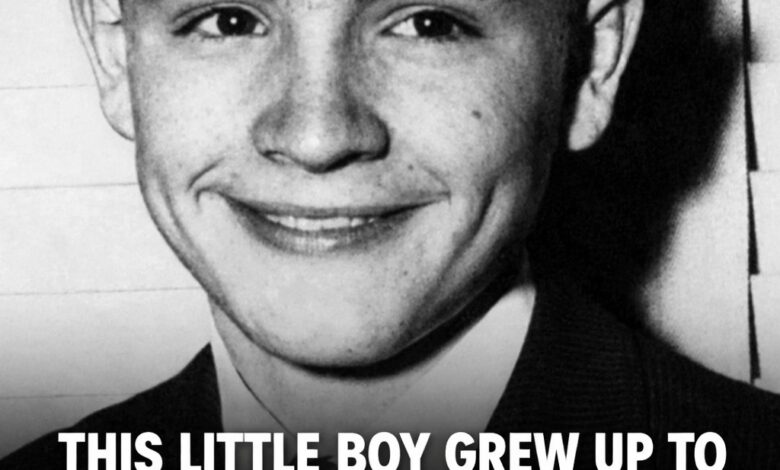
Some stories are difficult to confront—not because they are unclear, but because they force us to look at how something deeply disturbing can take shape over time. The life of Charles Manson is one of those stories. It is not just about crime or notoriety. It is about how instability, manipulation, and influence can converge into something devastating.
Manson was born in 1934 in Cincinnati, Ohio, into circumstances that offered little stability from the beginning. His mother was just sixteen years old at the time, and his father was absent. There was no consistent structure, no reliable foundation, and no clear sense of security in his early life.
Instead, his childhood was marked by movement and uncertainty.
He was passed between caregivers, relatives, and temporary living situations. Discipline varied, often harsh and inconsistent. Emotional support was limited. At a critical stage of development, when stability matters most, his environment offered the opposite.
When his mother was imprisoned for robbery during his early years, the situation became even more fragmented. He was placed in the care of others, but these arrangements were rarely permanent or nurturing. According to accounts and records, his behavior began to shift early—truancy, petty theft, and defiance becoming recurring patterns.
By the time he reached his preteen years, trouble was no longer occasional.
It was consistent.
Reform schools and juvenile detention centers became part of his routine. These institutions were intended to correct behavior, to redirect young people toward a more stable path. But in Manson’s case, they appeared to reinforce the very traits they were meant to change.
He learned how to adapt—not by conforming, but by manipulating.
Psychological evaluations during his youth pointed to antisocial tendencies, difficulty respecting authority, and a growing ability to exploit situations to his advantage. These were not isolated observations. They were patterns forming early, becoming more defined over time.
As he entered adulthood, those patterns solidified.
Incarceration became a constant.
He was convicted of various offenses, including theft, fraud, and assault. Much of his young adult life was spent in prison, moving in and out of confinement with increasing frequency. But prison, in his case, did not simply serve as punishment.
It became a place of development.
During his time behind bars, Manson studied.
Not in a traditional sense, but in a way that allowed him to construct something else—an identity built on influence. He explored religious texts, philosophical ideas, and elements of popular culture. He didn’t follow these sources as they were intended. Instead, he reassembled them, blending fragments into a belief system that would later become central to his control over others.
More importantly, he observed people.
He learned how to read them.
He identified vulnerabilities—emotional, psychological, social—and developed a way to use those weaknesses to his advantage. Fellow inmates noted his ability to persuade, to position himself as someone with answers, someone who understood things others did not.
That skill would become his most dangerous trait.
By the late 1960s, after his release, Manson began gathering a group of followers in California. What started as a loose collection of individuals eventually became known as the “Manson Family.” They lived communally, often isolated from broader society, including time spent at Spahn Ranch outside Los Angeles.
Within this group, Manson’s influence intensified.
He presented himself not just as a leader, but as a figure with insight, someone who could interpret the world in ways others could not. His ideology drew from distorted interpretations of various sources, including music, religion, and social tensions of the time.
Central to this belief system was what he called “Helter Skelter.”
He claimed it predicted an impending societal collapse—a race war that would reshape the world. This interpretation bore no relation to its original context, but within the closed environment of his group, it became a powerful narrative.
His followers, many of them young and searching for identity or belonging, became deeply committed.
The line between belief and control blurred.
And eventually, it disappeared.
In August 1969, that influence turned into action.
Members of the group carried out a series of brutal murders in Los Angeles. Among the victims was actress Sharon Tate, who was killed along with four others in her home. The following night, two more victims, Leno and Rosemary LaBianca, were murdered.
The violence shocked the nation.
It was not only the brutality of the crimes that captured attention, but the nature of the control behind them. Manson did not physically carry out the killings, but prosecutors demonstrated that he orchestrated them—directing his followers through manipulation, ideology, and psychological influence.
In 1971, he was convicted of first-degree murder and conspiracy.
Initially sentenced to death, his punishment was later commuted to life imprisonment when California abolished capital punishment in 1972.
He would spend the remainder of his life in prison.
Even while incarcerated, his notoriety persisted. Interviews, writings, and continued public interest kept his name in circulation. Yet throughout those years, he never expressed genuine remorse for the crimes committed under his influence.
He died in 2017.
But his story did not end with his death.
It remains studied—not for fascination alone, but for what it reveals.
About manipulation.
About coercive control.
About how individuals seeking connection or purpose can become vulnerable to influence when it is presented with certainty and intensity.
The case also reshaped public perception of the 1960s. An era often associated with peace, change, and cultural evolution was suddenly viewed through a darker lens. The contrast between idealism and violence became impossible to ignore.
Yet one of the most important aspects of this story lies in what it does not simplify.
There is no single cause.
Childhood instability does not inevitably lead to violence.
Exposure to hardship does not excuse it.
Instead, the life of Charles Manson stands as a convergence of factors—environment, personality, influence, and choice.
And at the center of it all are the victims.
Their lives, their names, and their stories remain essential in understanding the full weight of what occurred. Because while Manson’s name became synonymous with infamy, it is the loss suffered by others that defines the true impact of his actions.
In the end, this is not a story about how someone became known.
It is a reminder of how dangerous influence can become when it goes unchecked.
And how the search for belonging, when met with the wrong voice, can lead to consequences that extend far beyond imagination.