The Hidden Reason Your Dog Wont Stop Sniffing You, What Your Pet Is Actually Trying to Tell You!
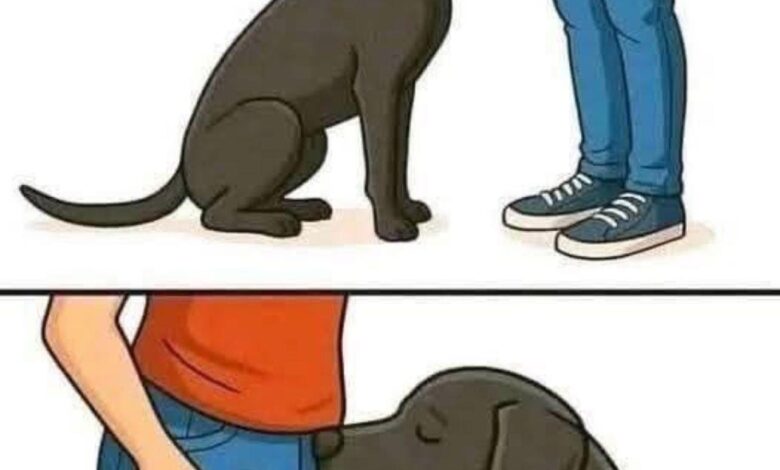
For most dog owners, the experience is as universal as it is mortifying. You are standing in the kitchen or welcoming a guest into your foyer when your canine companion lunges forward with surgical precision, burying their nose in a place that social etiquette dictates should be strictly off-limits. The dreaded “crotch sniff” is perhaps the most socially awkward behavior a pet can exhibit, often leaving owners stammering apologies while their guests awkwardly recoil. However, what feels like a catastrophic breach of privacy to a human is actually a sophisticated, data-driven greeting in the animal kingdom. To understand why your dog is obsessed with your personal space, you have to look past the embarrassment and dive into the fascinating world of canine biology.
The primary culprits behind this behavior are the apocrine glands. Unlike the eccrine glands that cover most of a human’s body to regulate temperature through sweat, apocrine glands are specialized scent markers that produce pheromones. In humans, these glands are most heavily concentrated in two specific areas: the armpits and the groin. These chemical signals act as a biological ID card, carrying a wealth of information about an individual’s gender, age, mood, health status, and even reproductive cycle.
Because dogs live in a world defined by scent rather than sight, they are hardwired to seek out these high-density data centers. From a dog’s perspective, sniffing your genital area is the professional equivalent of reading a resume, shaking a hand, and asking for a home address all at once. Since the average dog cannot easily reach a standing human’s armpits, they naturally gravitate toward the most accessible source of information. It isn’t a perversion or a sign of “bad” behavior; it is an innate, biological drive to understand the creatures they live with.
However, understanding the science doesn’t necessarily make the act any less cringeworthy when you have company over for dinner. If you find yourself constantly blushing at your pet’s investigative techniques, you are not helpless. Because this is a non-verbal species attempting to communicate, you can effectively “re-program” the greeting through consistent redirection and positive reinforcement. Training your dog to offer a different behavior upon meeting someone—such as sitting or offering a paw—can bridge the communication gap. By using high-value treats and firm commands like “sit” or “stay,” you can teach your dog that while their curiosity is natural, there are more socially acceptable ways to say hello in a human household.
Beyond the humor and the awkwardness, this behavior highlights the profound sensory difference between our two species. While we rely on small talk and eye contact to build trust, a dog relies on the invisible chemical traces we leave behind. They aren’t trying to be rude; they are trying to know you on a molecular level. They are seeking a connection in the only way their evolution has taught them. So, the next time your dog decides to conduct a “security sweep” of your personal space, remember that they aren’t trying to humiliate you. They are simply checking in on their favorite person, reading the latest updates on your health and happiness, and confirming that you are exactly who they thought you were. By turning that awkward energy into a training opportunity, you can maintain your social dignity while respecting the incredible, nose-first world your best friend inhabits.