Trump Just Dropped a Bombshell, Cuba Could Be Americas Next Military Target, Chaos Is Brewing
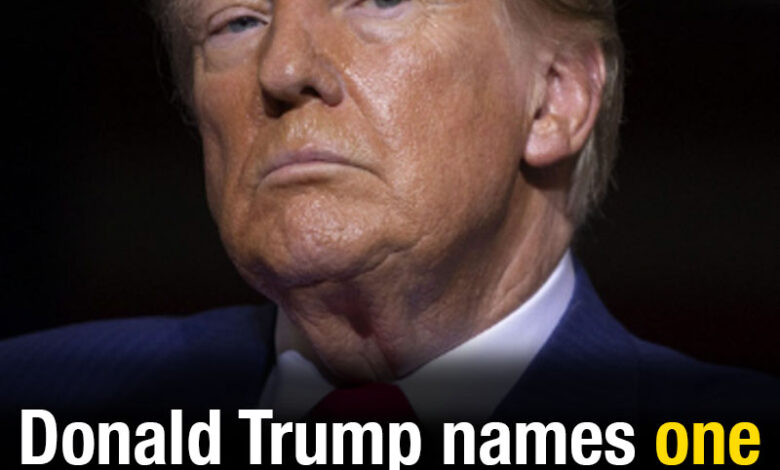
President Donald Trump has ignited a geopolitical firestorm by openly declaring that “Cuba is next” after the United States’ recent military campaigns in the Middle East and Latin America. In a blunt, high‑profile speech delivered at an investment forum in Miami, Trump didn’t just tease deeper U.S. involvement in foreign affairs — he essentially telegraphed that the island nation 90 miles from Florida could be the next focus of American force or pressure. The remark immediately sent shockwaves through diplomatic circles, stunned regional leaders, and turned what was already a tense situation into a full‑blown international crisis. (Reuters)
Trump’s announcement came on March 27, when he stood before a crowd of investors and world leaders at the Future Investment Initiative in Miami, where he spent much of his speech toasting what he described as decisive U.S. actions against Venezuela and Iran. Then, almost casually, he dropped the line that lit the fuse. “I built this great military,” he said. “I said, ‘You’ll never have to use it.’ But sometimes you have to use it. And Cuba is next.” Then, in the same breath, he added, “But pretend I didn’t say that.” The halting qualifiers did nothing to calm nerves; if anything, they underscored how seriously his words were being taken. (ThePrint)
What made the comment explosive wasn’t just the blunt suggestion that Cuba could be a military focus, but the context in which it came. The United States has already launched aggressive operations this year: U.S. forces toppled Venezuelan President Nicolás Maduro and captured him in a high‑stakes strike in January, and they have been actively engaged in conflict with Iran. Those operations have reshaped power dynamics across both regions and left America’s adversaries on notice. Trump’s proclamation suggests that Washington is not done pushing its strategic edge — and that Cuba could be next in line. (PBS)
For decades, U.S.–Cuba relations were frozen in a Cold War posture of sanctions, embargoes, and diplomatic freeze‑outs. Barack Obama’s administration managed a historic detente in 2015, opening embassies and loosening travel, but Trump reversed much of that progress immediately after taking office, hardening U.S. policy toward Havana and reinstating strict isolation measures. Those efforts have devastated the Cuban economy, cutting it off from key oil imports that are essential to powering homes, hospitals, schools, and transportation. This strategy — a blend of sanctions, pressure, and political brinksmanship — helped destabilize the island’s fragile infrastructure and set the stage for Trump’s latest remarks. (Reuters Connect)
The economic picture in Cuba is dire. After Venezuela’s new government, under pressure from the U.S., stopped exporting oil — historically Cuba’s lifeblood — the island plunged into energy shortages that triggered rolling blackouts, crippling public services and straining daily life. Hospitals and schools have faced intermittent power, fuel queues snake around city blocks, and ordinary citizens shoulder the fallout of an economic collapse largely driven by external pressure. It’s the perfect storm: an embattled government, dwindling supplies, and a president in Washington openly discussing a potential American intervention. (Wikipedia)
Yet Trump’s rhetoric goes beyond economic pressure; he has hinted on multiple occasions that he could take Cuba “in some form,” suggesting a possible regime change or even military action. At previous events, he mused about having the “honor” of doing so, framing such a move in grand, almost ceremonial language. At one point he admonished Cuba’s leaders to “make a deal before it’s too late,” signaling that the United States might prefer a negotiated concession but remains ready to escalate if necessary. (NBC4 Washington)
Policy hawks within Trump’s own administration have amplified the drumbeat. Secretary of State Marco Rubio, a long‑time critic of Cuba’s communist leadership, has urged dramatic reforms and suggested that any substantial improvement in relations hinges on a change of system in Havana. Earlier this year, Trump’s administration even threatened tariffs against nations that continue to supply oil to Cuba, part of a broader effort to starve the government of vital resources. That campaign of pressure has pushed Cuba into a corner — and sparked fears that the island might be on the brink of an incredibly volatile confrontation with the United States. (NBC4 Washington)
Behind the scenes, however, there’s another layer to the story. Despite Trump’s firebrand talk, diplomatic channels between the U.S. and Cuba have not completely shut down. Senior Cuban officials have acknowledged ongoing discussions with Washington aimed at avoiding outright conflict and negotiating relief or compromise. At least one avenue of communication has even included intermediaries like the Catholic Church, harkening back to earlier eras of back‑channel diplomacy. But such talks are fraught with mistrust, given the history of hostility and the current climate of punitive sanctions. (Wikipedia)
The global reaction has been swift. Allies in Europe and Latin America have expressed unease, warning that escalating tensions near the U.S. mainland could destabilize the broader region. Russia, a key supporter of Cuba, has seized on the situation to criticize U.S. policy and bolster its own strategic footprint in the Caribbean. A Russian oil tanker recently reached Cuban ports — nearly 730,000 barrels of crude — despite U.S.-led blockade policies, highlighting how external powers are maneuvering amid the crisis. The delivery was framed by Moscow as humanitarian aid, but it punctuated the geopolitical stakes at play: Cuba is increasingly a battleground not just between Havana and Washington, but amid broader global rivalries. (NBC4 Washington)
Cuban leaders, for their part, have struck a defiant tone. Havana has warned that it is prepared to defend itself against any incursion, and public officials have rebuffed suggestions that the government is on the verge of collapse. Ordinary citizens, already battered by years of economic hardship, now face the very real possibility that their country could become the flashpoint for a new U.S. military campaign. That fear is compounded by memories of past U.S. interventions in the region and decades of mistrust. (Reuters)
What exactly Trump meant by “Cuba is next” remains unclear. He offered no concrete plans, specific strategy, or timeline. But words matter — especially when they come from the leader of the world’s most powerful military. Whether it signals a prelude to direct action, a strategy to squeeze Cuba into political concessions, or simply high‑stakes political signaling, the phrase has already reshaped the conversation around U.S. foreign policy in the Western Hemisphere. Analysts now warn that even ambiguous threats can have real consequences, pushing adversaries closer to desperate measures and triggering ripple effects far beyond Havana. (Havana Times)
In the end, Trump’s “Cuba is next” pronouncement has done more than provoke headlines. It has exposed the fractures in U.S. foreign policy, fueled fears of conflict on America’s doorstep, and forced global powers to reposition themselves in response. For the people of Cuba, it has cast a long shadow over an already fragile future. And for the world, it raises an unsettling question: if the next target has already been named, what comes after that? (ThePrint)
Here are the latest news sources shaping this story: