Hollywood Mourns, The Quiet Powerhouse Actress You Did Not Realize Shaped Decades of Film Is Gone
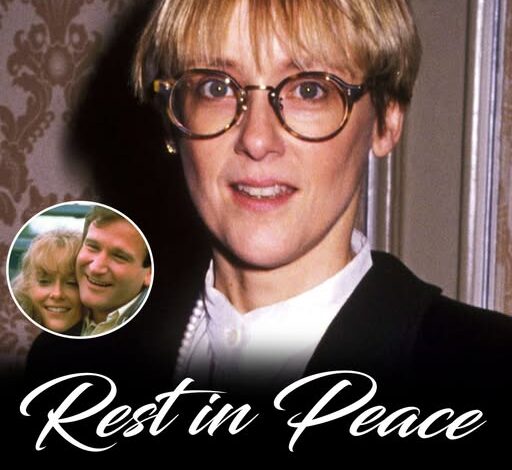
The film and theater world has lost a presence that never needed to shout to be unforgettable. Mary Beth Hurt, a Tony-nominated actress whose work quietly defined generations of performances on stage and screen, has passed away after a long and difficult battle with Alzheimer’s disease.
The news was shared by her daughter, Molly Schrader, in a deeply personal message that reflected both grief and relief. She spoke of a woman who had worn many roles in life—actress, mother, wife, sister, friend—and carried each one with a blend of grace and quiet strength. After more than a decade of living with the disease, her family now finds comfort in knowing her suffering has ended.
For those who knew her only through her performances, Hurt’s passing feels like the loss of something subtle but essential. She was never the loudest presence on screen, never the one demanding attention. Instead, she drew people in with something more enduring—authenticity.
Her story began far from the bright lights of Hollywood.
Born on September 25, 1946, in Marshalltown, Iowa, Hurt’s early life offered no obvious signs of the career that would follow. Yet even then, the seeds were there. As a child, she created her own performances, pulling in siblings and friends to act out scenes she imagined. It wasn’t ambition in the traditional sense—it was instinct.
Interestingly, one of her early connections to the world of acting came through Jean Seberg, who once babysat her. It was a small detail at the time, but in hindsight, it feels like a quiet thread connecting her future to her present.
Her formal journey into acting began with studies at the University of Iowa and later at New York University. It was there that she began shaping her craft, not as someone chasing fame, but as someone searching for truth in performance.
Her stage debut came in 1974 with the off-Broadway production More Than You Deserve. From that moment forward, it became clear that she belonged in that world. Over the next decade, she earned three Tony Award nominations, a testament to her ability to bring complexity and depth to every role she touched.
Unlike many performers, Hurt never seemed drawn to the spotlight itself. She wasn’t interested in being the center of attention simply for the sake of it. What fascinated her were the layers beneath the surface—the details that made characters feel real.
That approach carried seamlessly into her film career.
Her breakthrough came with her role in Interiors (1978), directed by Woody Allen. Playing Joey, the middle daughter in a fractured family, Hurt delivered a performance that was both restrained and emotionally powerful. It wasn’t dramatic in the traditional sense, but it lingered. It resonated.
The role earned her a BAFTA nomination for Most Promising Newcomer, marking the beginning of a career that would unfold quietly but consistently over decades.
She went on to appear in a range of films that showcased her versatility. From the introspective tone of Chilly Scenes of Winter (1979) to the layered storytelling of The World According to Garp (1982), where she starred alongside Robin Williams, Hurt demonstrated an ability to adapt without losing her signature authenticity.
Her later work included appearances in The Age of Innocence (1993), Six Degrees of Separation (1993), and Autumn in New York (2000), each performance adding to a body of work defined not by volume, but by substance.
She also became a familiar face on television, appearing in series such as Law & Order, Thirtysomething, and Saturday Night Live. No matter the format, her presence carried the same quiet intensity.
Behind the scenes, her personal life was equally intertwined with the world of film. She was married to William Hurt from 1971 to 1982, and later to Paul Schrader, a writer and director known for shaping some of cinema’s most iconic works, including Taxi Driver. Together, they built a life that blended art, family, and collaboration.
Despite her accomplishments, Hurt remained refreshingly honest about her relationship with acting.
In a 2010 interview, she admitted something that might surprise many: she preferred supporting roles over leading ones. For her, the pressure of being at the center of a story felt limiting. Supporting roles, on the other hand, offered freedom—room to explore nuance, to find the small details that made a character feel human.
She didn’t see those roles as secondary.
She saw them as more interesting.
It was a perspective that defined her entire career. She wasn’t chasing attention. She was chasing authenticity. She was drawn to characters with quirks, contradictions, and imperfections—the kinds of people who feel real because they are not polished.
That philosophy is what made her performances endure.
Even when she wasn’t the focal point of a scene, she often became the element that grounded it. The quiet force that made everything around her feel more believable.
In her final years, Hurt lived in an assisted living facility in Jersey City, New Jersey, after spending much of her life in Manhattan. Alzheimer’s gradually took hold, reshaping her world in ways that those closest to her could only witness with heartbreak.
And yet, even as the disease progressed, the legacy she built remained untouched.
Her passing marks more than the loss of an actress. It marks the end of a chapter defined by subtle brilliance, by performances that didn’t demand attention but earned it.
She leaves behind a family who knew her beyond the roles, a body of work that continues to inspire, and a quiet but powerful reminder of what acting can be at its best.
Not loud.
Not exaggerated.
But deeply human.
In an industry often driven by spectacle, Mary Beth Hurt stood for something different. Something lasting.
And that is why her absence will be felt—not in headlines alone, but in every performance that strives to capture the same honesty she brought to the screen and stage.
Her story doesn’t end with her passing.
It lives on in the characters she shaped, the audiences she moved, and the countless moments where her work reminded us what it means to truly see another person.
And that kind of legacy doesn’t fade.