The Autumn Tea That Lasted a Lifetime, Why a Woman Who Married for Peace Instead of Love Ended Up with a Miracle
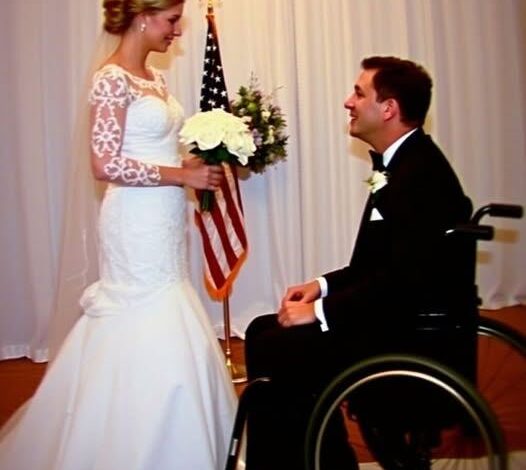
At forty, I had officially given up on the cinematic version of romance. My youth had been a series of high-stakes heartbreaks, empty promises, and dramatic betrayals that left me exhausted rather than inspired. So, when my mother suggested I look at James Parker—a quiet neighbor with a limp and a modest wooden house in Burlington, Vermont—I didn’t see a soulmate. I saw a safe harbor. “Sarah, stop chasing perfection,” she had urged. “James is a good man.”
I agreed to marry him not out of passion, but out of resignation. I traded the fire of my twenties for the quiet predictability of a man who spent his days repairing old televisions and radios. Our wedding had no white gown or swelling orchestra; it was just a hushed ceremony performed to the rhythmic drumming of an autumn rainstorm. I told myself that peace was a fair substitute for love.
That first night, the shift began. James entered our room with a slight limp and a steady hand, carrying a glass of water for me. He didn’t demand the traditional expectations of a wedding night. Instead, he turned his back to give me space and whispered, “You can sleep, Sarah. I won’t touch you—not until you’re ready.” In that moment of profound respect and patience, I realized I had been given something far rarer than a fairy tale: I had been given safety.
The following morning, I found a tray with a warm sandwich and a note on the nightstand. James had gone to work but left instructions for me to stay warm. For twenty years, I had cried because men had left me; that morning, I wept because someone had stayed. That evening, as the scent of solder and machine oil clung to him, I invited him to sit beside me. I told him I didn’t just want to share a roof—I wanted to share a life. That was the quiet moment love finally entered the room, unannounced but undeniable.
The next decade was a collection of “ordinary miracles.” We lived by the seasons, our lives measured in the morning scent of baking bread and the steam from James’s signature “autumn tea”—a blend of orange peel and cinnamon that he claimed should taste like home. His limp, which once seemed like a flaw to be pitied, became to me a symbol of his quiet strength. We never felt the need for grand declarations; every repaired radio and every shared walk was a silent “I love you.”
When a heart condition threatened to take him from me, the terror I felt was far more intense than any heartbreak of my youth. Watching him recover from surgery, I realized a fundamental truth: I wasn’t grateful I had met him late. I was grateful I hadn’t met him sooner. Had I met James in my twenties, I would have been too shallow to appreciate his depth. I needed to be broken by the world before I could recognize the beauty of a man who knew how to fix things.
In our final autumn together, the tea tasted different—sharper, more precious. James passed away peacefully, leaving me with the scent of cinnamon and the legacy of a love that arrived late but stayed forever. Today, I still brew two cups every morning. I place his on the porch, the steam rising into the crisp Vermont air. People often ask if I regret the timing of our lives, and I always tell them the same thing: True love isn’t about the fire of the beginning; it’s about the light that stays on until the very end. James didn’t just give me a marriage; he gave me a home.