Beyond the Surface, What Your Face, Your Body, and Your Instincts Are Actually Trying to Tell You
The human experience is a complex tapestry woven from physical traits, intentional self-expression, and the lingering echoes of spiritual connection. Often, we look in the mirror or observe our surroundings without fully grasping the narratives written in our anatomy or the subtle ways we remain tethered to those we have lost. From the creases that frame our smiles to the intentional modifications of our bodies, every mark and sensation serves as a storyteller, bridging the gap between our physical presence and our inner identity.
Consider the nasolabial folds, more affectionately known as smile lines. These parallel creases, stretching from the edges of the nose to the corners of the mouth, are often unfairly maligned as mere “signs of aging.” In reality, they are a biological record of a life lived with emotion. While factors like genetics, sun exposure, and skin elasticity play a role in their depth, these lines are primarily the result of frequent facial expressions. They are the physical residue of laughter, joy, and the thousands of smiles that have defined a person’s journey. Far from being imperfections to be erased, these “laugh lines” are signatures of an expressive life, proving that beauty is often found in the evidence of happiness.
Similarly, dimples offer a fascinating look at how a biological “variation” can become a universal symbol of charm. Anatomically, a dimple occurs due to a split in the zygomaticus major muscle. When a person smiles, this bifurcated muscle pulls the overlying skin inward, creating the characteristic indentation. While scientifically classified as a minor anatomical quirk, dimples have been celebrated across cultures as hallmarks of beauty and good luck. Like smile lines, they remind us that our individuality is often rooted in the unique way our bodies are constructed, turning what could be seen as a deviation into a cherished personal trait.
Our capacity for expression extends beyond natural biology into the realm of intentional body modification. The practice of tongue piercing, for example, is frequently misunderstood as a modern trend, yet its roots reach back to the sacred rituals of the Aztecs and Mayans. For these ancient civilizations, piercing the tongue was a profound act of devotion and a means of communicating with the divine. In a contemporary context, the choice to undergo such a modification is rarely superficial; it is an assertion of autonomy, a marker of personal transformation, or a bold statement of cultural identity. While it requires rigorous hygiene and care to maintain, a piercing serves as a lasting symbol of the courage it takes to define oneself on one’s own terms.
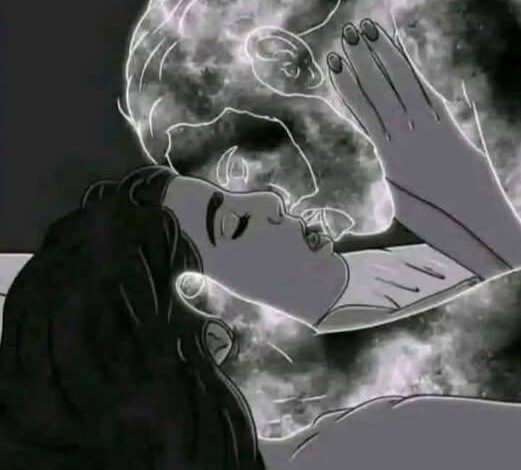
However, the most profound expressions of the human spirit are often the ones that cannot be seen. Following the loss of a loved one, many individuals report the distinct sensation of a “presence”—a sudden wave of warmth, a familiar scent caught on the wind, or a quiet feeling of being watched over. While these experiences lack scientific proof, their impact is undeniably real for those who feel them. These moments of connection often arrive during times of significant emotional need, acting as a supportive bridge between the physical and the spiritual. They suggest that love is not a force that ends with a final breath, but a persistent energy that continues to offer comfort and reassurance.
Ultimately, whether it is a line on a face, a deliberate piercing, or an intuitive feeling of a spirit nearby, these elements remind us that existence is about more than just perfection. Our bodies and spirits are maps of where we have been and who we have loved. By embracing the meaning behind these marks and experiences, we find a deeper appreciation for the messy, beautiful, and deeply personal story of being human.