Who could be drafted? Inside US draft rules if global war breaks out!
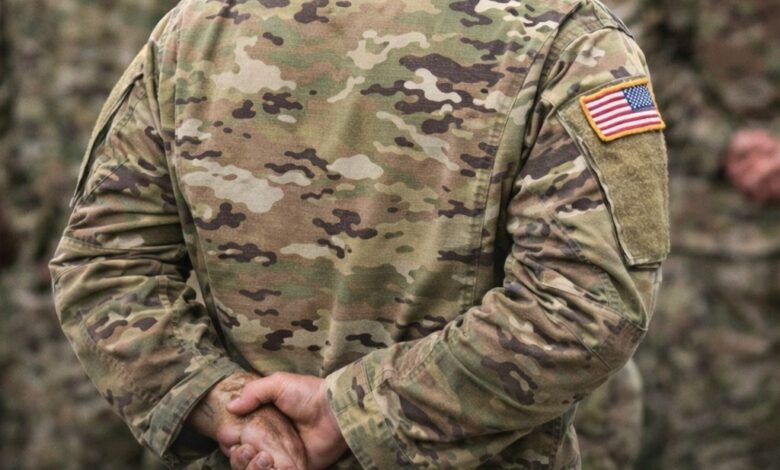
Growing global tensions and political rhetoric have once again pushed a familiar question back into public conversation: who could actually be drafted into the U.S. military if a large-scale conflict were to break out? The topic, which many Americans have never had to think seriously about, has resurfaced as speculation grows around international instability and the possibility—however uncertain—of a broader war.
Despite the concern, the United States does not currently operate under an active military draft. Since 1973, following the end of the Vietnam War, the country has relied entirely on a volunteer military force. However, what many people don’t realize is that the legal framework for conscription has never disappeared. It still exists, embedded in federal law, ready to be activated if the government determines that national security requires it.
At the center of this system is the Selective Service System, an independent federal agency responsible for maintaining a database of individuals who could be called upon in the event of a draft. Even during peacetime, this system operates quietly in the background, ensuring that the country has a mechanism in place for rapid mobilization if needed. (Wikipedia)
Currently, nearly all male U.S. citizens and male immigrants between the ages of 18 and 25 are required by law to register with the Selective Service. This includes natural-born citizens, permanent residents, refugees, asylum seekers, and even undocumented immigrants living in the country. (USAGov) Registration does not mean someone will be drafted—it simply ensures that their information is on file should the need ever arise.
There are some exceptions. Individuals who are continuously institutionalized, certain non-immigrant visa holders, and specific categories such as ministers or elected officials may not be required to register. However, for the vast majority, registration is mandatory, and failing to do so can carry consequences. While criminal prosecution is rare, penalties can include fines, potential legal issues, and loss of eligibility for certain federal benefits or employment opportunities. (Social Security Administration)
In recent developments, the system itself is evolving. Beginning in late 2026, a significant change is expected to take effect: automatic registration. Instead of requiring individuals to sign up themselves, the government will use existing federal databases to identify and register eligible men between 18 and 26. (Wikipedia) This shift reflects an effort to ensure more complete coverage and eliminate gaps in the system, but it does not mean a draft is imminent. Activation would still require approval from both Congress and the President.
If a draft were ever reinstated, the process would likely follow a structured and phased approach. The first step would be a national lottery system, similar to the one used during the Vietnam era. Birthdates would be randomly selected, determining the order in which individuals are called for evaluation. (FOX 11 Los Angeles)
Under current planning models, those called first would typically be men turning 20 during the year of the draft. From there, the system would expand to include 21-year-olds, then older individuals up to age 25, and eventually younger groups—19- and 18-year-olds—if additional personnel were needed. (Military.com) This sequence is designed to balance readiness with fairness, prioritizing those considered most immediately eligible.
However, being selected in a lottery does not guarantee military service.
Those chosen would undergo a series of evaluations to determine their eligibility. These include physical, medical, and psychological assessments, as well as background checks. Individuals may be deferred or exempted for various reasons, including health conditions, family hardship, or conscientious objection based on moral or religious beliefs. (U.S. Department of War)
In reality, not everyone who is eligible on paper would qualify for service. Studies and military estimates suggest that a significant portion of the eligible population may be disqualified due to factors such as health issues, lack of required education, or other criteria. (Military.com) This means that even in the event of a draft, the number of individuals ultimately inducted could be smaller than many assume.
Another important aspect of the discussion involves gender.
Under current law, only men are required to register for the Selective Service. Women are not included in the system, though the topic has been debated in Congress in recent years. Any change to include women would require new legislation, and as of now, no such requirement has been implemented.
The idea of a draft can feel abstract, especially for younger generations who have grown up in a time when military service has been entirely voluntary. For many, it exists more as a concept than a lived reality. Yet the infrastructure behind it remains intact, maintained as a contingency rather than an active policy.
In practical terms, activating a draft would not happen overnight.
Even after legal authorization, the process would take time to implement. According to current planning, the first individuals would not be inducted into service immediately but would follow a timeline that includes notification, evaluation, and classification. (Social Security Administration) This delay reflects the complexity of mobilizing a large number of people while ensuring fairness and proper screening.
It is also important to separate speculation from reality.
Public concern often increases during periods of geopolitical tension, especially when political leaders make statements about military action or strategic expansion. However, discussions about potential conflict do not automatically translate into the activation of a draft. Decisions of that magnitude involve multiple layers of government approval and are influenced by a wide range of factors, including military readiness, international relations, and domestic policy considerations.
For now, the United States continues to rely on its volunteer military, supported by recruitment efforts rather than conscription. The Selective Service system exists as a backup—a framework designed for scenarios that, while possible, are not currently in effect.
Understanding how the system works helps reduce uncertainty.
It clarifies who would be affected, how the process would unfold, and what conditions would need to be met before any draft could take place. While the idea of conscription can be unsettling, the reality is more structured and controlled than many assume.
In the end, the draft is not an immediate reality, but a contingency plan—one that reflects the broader principle of preparedness. It exists not because it is certain to be used, but because the possibility of needing it has never been entirely removed.