My Husband Pushed Me to Adopt 4-Year-Old Twins for Months – A Month Later, I Overheard His Real Reason and Went Pale!
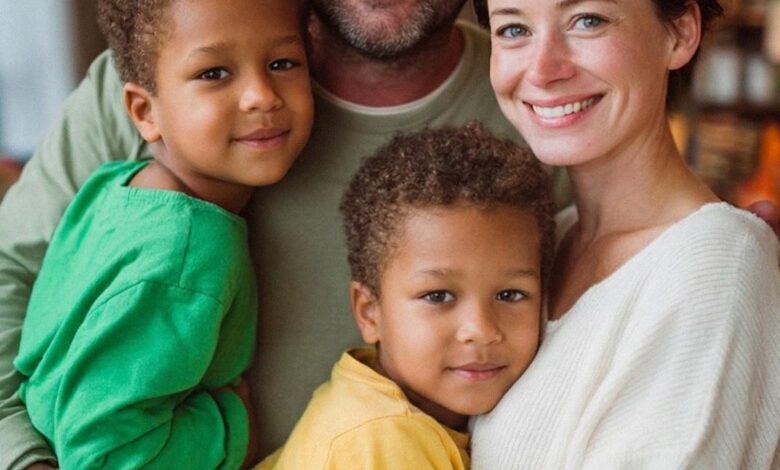
For years, I believed my husband’s sudden desire to adopt children came from love—from a quiet, aching need to fill the space we had learned to live with. We had spent a decade making peace with the idea that we would never have kids. It wasn’t easy, but it was something we had accepted together. Or at least, that’s what I thought.
I built my life around work. It gave me structure, distraction, and a sense of purpose when the house felt too quiet. My husband, Joshua, filled his time differently. He took up hobbies, spent long hours fishing, and rarely spoke about what we had lost. We had created a kind of balance—fragile, but functional.
Then, almost without warning, everything changed.
One afternoon, as we passed a playground near our home, Joshua stopped walking. He stood there, watching children run, climb, and laugh in a way that felt distant from our lives.
“Remember when we thought that would be us?” he said.
I nodded, unsure where the conversation was going.
He didn’t move. “Does it still bother you?”
There was something in his voice—something I hadn’t heard in years.
A few days later, he placed an adoption brochure in front of me at the breakfast table.
“Our house feels empty, Hanna,” he said. “I can’t pretend it doesn’t. We could still have a family.”
I hesitated. “We made peace with that.”
“Maybe you did,” he replied. “But I didn’t.”
He asked me to try again. To believe in something we had already let go of.
When I brought up my job, he brushed it aside. “It would help if you were home,” he said. “We’d have a better chance.”
He had never begged me for anything before.
That should have been enough to make me pause.
Instead, a week later, I handed in my resignation.
When I came home that day, he held me so tightly it felt like he was afraid I might disappear.
We threw ourselves into the process. Paperwork, interviews, home studies—our evenings were consumed by it. Joshua was focused in a way I had never seen before, as if every detail mattered more than anything else.
Then one night, he found them.
“Four-year-old twins,” he said, turning his laptop toward me. “Matthew and William.”
They looked small in the photo. Not just physically, but emotionally—uncertain, guarded.
“They look scared,” I said.
He took my hand. “Maybe we can change that.”
Something in me shifted.
“I want to try,” I said.
We met them soon after.
Joshua knelt down to their level, offering a small sticker, speaking gently. Matthew barely responded, staying close to his brother. William watched everything carefully, as if trying to decide whether we could be trusted.
“He talks for both of us,” William said quietly.
I knelt beside them. “That’s okay. I talk a lot for Joshua.”
Joshua laughed—a real laugh, one I hadn’t heard in a long time.
It felt like something was beginning.
The day they moved in, the house came alive again. It wasn’t perfect—nothing about it was easy—but it was full. Toys scattered across the floor, laughter in the hallways, small voices calling out from room to room.
For a few weeks, it felt like we were living inside something fragile but beautiful.
Bedtime stories. Pancakes for dinner. LEGO towers that never quite stayed standing.
The boys began to trust us, slowly, cautiously.
One night, as I tucked them in, Matthew opened his eyes.
“Are you coming back in the morning?” he asked.
“Always,” I said.
William reached for my hand and held it until he fell asleep.
But somewhere along the way, Joshua began to disappear.
At first, it was subtle.
He stayed late at work. Took calls behind closed doors. Ate dinner with us, then retreated to his office before the night was over.
I told myself it was stress.
Adjustment.
But it didn’t feel right.
One evening, after another long day, I asked him directly.
“Are you okay?”
“I’m just tired,” he said.
“Are you happy?”
He closed his laptop too quickly. “Of course I am. This is what we wanted, right?”
I nodded, but something inside me twisted.
Then one afternoon, everything unraveled.
The boys were napping, and for once, the house was quiet. As I walked past Joshua’s office, I heard his voice.
Low.
Strained.
“I can’t keep lying to her,” he said.
I stopped.
“She thinks I wanted a family with her…”
My breath caught.
I moved closer, unable to stop myself.
“I didn’t adopt the boys because of that,” he continued, his voice breaking. “I just… I didn’t want her to be alone when I’m gone.”
Gone.
The word hit harder than anything else.
“How long?” he asked. “A year?”
I felt the world tilt.
He wasn’t talking about leaving.
He was dying.
I stepped back, my body barely holding me upright. Everything we had built—the decision to adopt, the life we were creating—it had all been shaped by something he never told me.
He had known.
And he had chosen not to share it.
Instead, he built a future for me that he didn’t plan to be part of.
I packed that night.
Clothes for me. Clothes for the boys. Their toys, their books—anything that made them feel safe.
I left him a note.
“Don’t call. I need time.”
At my sister Caroline’s house, I finally broke.
I didn’t sleep. I couldn’t.
The next morning, I searched for answers and found them—medical records, test results, confirmation of what I had overheard.
Lymphoma.
Advanced.
I called his doctor.
“Is there anything left to try?” I asked.
“There’s a trial,” he said. “But it’s risky. And expensive.”
“I’ll find a way,” I said.
When I returned home, Joshua was sitting at the kitchen table.
“You let me build a life around something you knew you might not be part of,” I said.
“I wanted you to have a family,” he whispered.
“No,” I replied. “You wanted to decide my future without me.”
He broke down.
“I thought I was protecting you.”
“You weren’t,” I said. “You were protecting yourself.”
But I didn’t leave.
Not completely.
“I’m here because those boys need their father,” I said. “And because if there’s time left, it won’t be spent in lies.”
We told our families.
We signed the papers.
We started the treatment.
Days blurred into hospital visits, sleepless nights, and small moments that felt heavier than they should have.
One night, I found him recording a message for the boys.
“If I’m not here…” he began.
I couldn’t listen to the rest.
But the boys did something I didn’t expect.
“Don’t die, Daddy,” Matthew said one night, like it was a simple request.
William placed a toy in his hand. “So you can come back and play.”
And somehow, that became the reason to fight.
Months passed.
And then, one morning, the call came.
“The results are clear,” the doctor said. “He’s in remission.”
I dropped to the floor.
Two years later, our home is loud again.
Backpacks on the floor. Crayons on the table. Laughter in every room.
Joshua calls me the bravest one in the family.
But I always answer the same way.
“Being brave isn’t staying silent. It’s choosing truth before it’s too late.”
For a long time, I thought he wanted to give me a family so I wouldn’t be alone.
In the end, the truth almost destroyed us.
It was also the only thing that gave us a chance to survive.