After I Became a Kidney Donor for My Husband, I Learned He Was Cheating on Me With My Sister – Then Karma Stepped In!
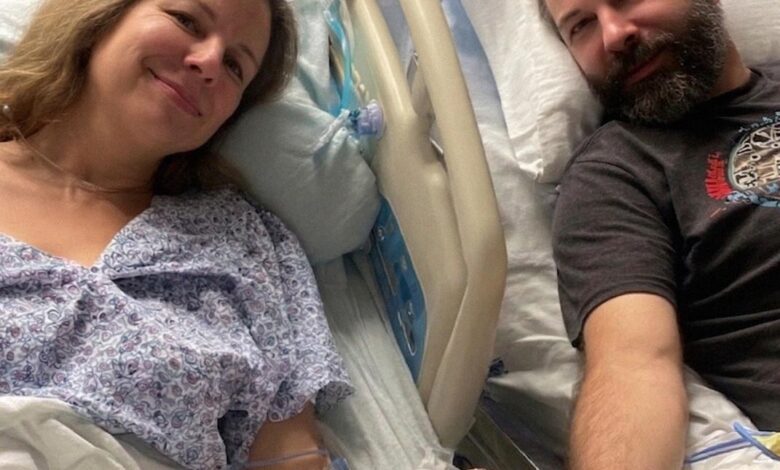
I used to believe that the hardest thing I would ever do for my husband was give him a part of my body. Back then, that felt like the ultimate act of love—the kind of sacrifice that proved commitment beyond words. I didn’t know that the real test of my strength would come later, in a way I never could have prepared for.
My name is Meredith. I’m 43 now, and until recently, I would have described my life as stable. Not perfect, but solid enough to trust. I met Daniel when I was 28. He had a way about him—thoughtful, attentive, the kind of man who remembered small details, like how you took your coffee or the exact line from your favorite movie. He made you feel seen.
We married two years later. Life moved forward the way it’s supposed to. We had two kids, Ella and Max. We bought a house in the suburbs, built routines, filled our days with school schedules, grocery runs, and quiet evenings. It wasn’t glamorous, but it felt real. It felt safe.
For years, I believed we were building something that would last.
Then everything changed.
It started subtly. Daniel was always tired. At first, we blamed work, stress, the usual things people say when they don’t want to assume the worst. But the fatigue didn’t go away. It got worse. A routine checkup led to more tests, more questions, and eventually a diagnosis that shifted everything: chronic kidney disease.
I remember sitting in the specialist’s office, staring at diagrams of organs on the wall while the doctor explained that Daniel’s kidneys were failing. Words like dialysis and transplant suddenly became part of our vocabulary. It all felt unreal, like we had stepped into someone else’s life.
When the doctor mentioned the possibility of a transplant from a family member, I didn’t hesitate.
“I’ll do it,” I said immediately.
Daniel tried to push back, tried to tell me we didn’t know enough yet, but I didn’t need time to think. I had watched him deteriorate, watched the fear in our children’s eyes when they asked if their father was going to die. There was no decision to make. If I could help him, I would.
The tests confirmed it. I was a match.
The day we found out, we both cried. He held my face in his hands and told me I was giving him a second life. He promised—quietly, seriously—that he would spend the rest of his life making it up to me. At the time, those words felt like something sacred.
The surgery itself passed in a blur. Cold hospital air, bright lights, nurses asking the same questions again and again. We were side by side before going into separate operating rooms, holding hands, both scared but holding onto the same belief: we were doing this together.
Recovery was harder than I expected.
He came out of it with a second chance. I came out of it with a scar and a body that felt like it had been through something irreversible. We moved slowly through those weeks, supporting each other, adjusting to a new reality. Friends brought food, the kids drew little hearts on our medication charts, and at night, we reassured each other that we were stronger for having gone through it.
“We’re a team,” he would say.
I believed him.
Eventually, life settled again. Work resumed. The kids went back to school. The urgency of illness faded into routine. If this were a different kind of story, that would have been the ending—the point where everything falls back into place.
But something shifted.
At first, it was easy to ignore. Daniel was on his phone more often, staying late at work, distant in a way I couldn’t quite explain. When I asked if he was okay, he brushed it off. Said he was tired. Said he needed space.
I told myself it made sense. He had been through something major. Maybe he was trying to process it all.
So I gave him space.
And he kept drifting.
The night everything fell apart, I thought I was fixing things. The kids were away for the weekend, and I wanted to bring us back to each other. I cleaned the house, set everything up, tried to recreate a sense of closeness we had lost. At the last minute, I ran out to pick up dessert.
I was gone maybe twenty minutes.
When I got back, his car was already in the driveway. I smiled, thinking maybe he had surprised me. But as I approached the door, I heard laughter inside.
Not just his.
A woman’s.
And I knew that voice.
My sister.
I opened the door, my mind trying to find some explanation that made sense, but my body already knew the truth. The house was dim, the hallway quiet except for the sound coming from our bedroom. My heart was pounding so hard it felt like it might stop.
When I opened that door, everything ended.
There are moments in life where time seems like it should stop, but it doesn’t. It keeps moving, indifferent to what you’re losing. I saw them. I understood instantly. There was no confusion, no misunderstanding, no explanation that could undo what I was looking at.
I didn’t scream. I didn’t throw anything. I didn’t even cry.
I just walked away.
I drove without knowing where I was going, my hands shaking, my phone lighting up with calls and messages I couldn’t bring myself to answer. Eventually, I stopped in a parking lot and called my best friend. Saying the words out loud made it real in a way I couldn’t avoid.
Everything unraveled after that.
The confrontation, the explanations, the excuses. He said he felt trapped, said he didn’t know who he was after the surgery, said it “just happened.” But nothing about it felt accidental. It had been going on for months—through holidays, through family dinners, through moments that now felt like lies layered on top of each other.
I filed for divorce the next morning.
I didn’t look back.
What followed was painful, but it was clear. I focused on my children, on rebuilding something honest, something that didn’t depend on someone else’s choices. I told them only what they needed to know—that this was about adults, not them, and that they were still loved.
Then, slowly, things shifted again.
Not back to what they were—but forward.
News surfaced about Daniel’s job. Investigations. Financial misconduct. His name attached to something serious. It wasn’t something I celebrated, but it felt like a kind of balance—like consequences finally catching up to choices.
By the time his story made headlines, mine had already moved on.
The divorce was finalized. I kept the house, primary custody, and the ability to rebuild without him. It didn’t feel like victory. It felt like closure.
I still think about everything sometimes—the hospital, the promises, the moment I thought I was saving our future. But I don’t regret what I did.
I regret who I did it for.
Because the truth is, my choice came from love.
His choices came from who he was.
And those are not the same thing.
Now, when people talk about karma, I don’t point to what happened to him. I point to myself.
I walked away with my health, my children, and my sense of self intact.
I lost a husband.
I lost a sister.
But in the end, I didn’t lose myself.
And that’s what matters.