She Demanded a DNA Test to Question My Son, The Results Exposed Her Own Secret Instead!
The first time I met my mother-in-law, Patricia, she didn’t look at me with curiosity or warmth; she examined me with the clinical suspicion of someone deciding whether a stray object belonged in her pristine home. At our wedding reception, she offered my husband, Dave, a brief, perfunctory hug before turning her gaze toward me. She studied me from head to toe, pausing only to offer a sharp comment on the color of my dress. It was white—a choice she apparently felt should have been reserved for her alone that day. In that single, chilling interaction, I understood exactly what the next decade of my life would look like.
Patricia was not a woman of grand outbursts or dramatic scenes. She was far more precise, preferring the surgical strike of a subtle insinuation over the blunt force of a direct confrontation. When she visited our house, she would move through the rooms with a quiet, regal air, dragging a single finger along the tops of bookshelves and doorframes to check for dust. If she found any, she never uttered a word; she would simply offer a thin, tight smile. That smile was far more devastating than any verbal complaint could have been.
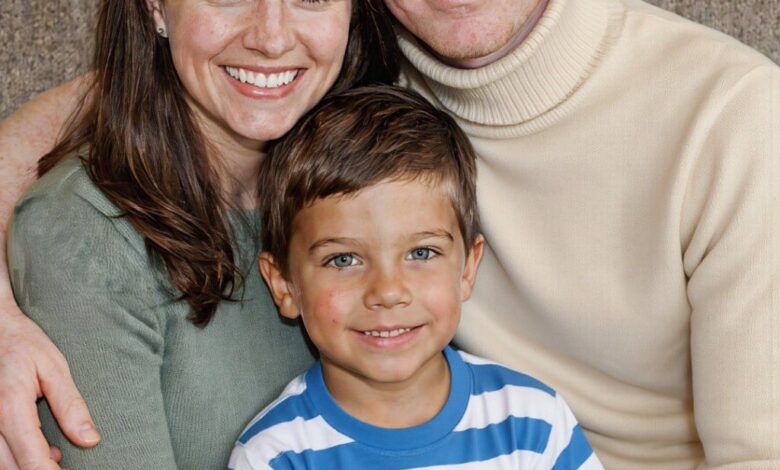
However, her true devotion—the hobby she returned to at every family barbecue, every holiday dinner, and every birthday celebration—was planting seeds of doubt regarding my son, Sam. By the time Sam was five, he was a bright, energetic boy with dark curls, olive skin, and wide brown eyes—traits he clearly inherited from my side of the family. Dave, by contrast, looked like a model from a Scandinavian travel catalog, with fair skin, blond hair, and striking blue eyes. Anyone with even a rudimentary understanding of genetics knows that heredity is not always a carbon copy, but Patricia chose to weaponize this difference.
At family gatherings, Patricia had a singular talent for making her accusations sound like casual observations. She would lean forward just enough for the entire table to hear and remark on how Sam didn’t look a bit like Dave, or she would tilt her head and wonder aloud if anyone was “quite sure” about the conception timeline. For five years, I swallowed my pride. I did it for Dave, who adored his father, Robert—a quiet, genuinely kind man who spent most of his life staying out of the crossfire of Patricia’s games. I bit my tongue and remained polite, until the day the stakes shifted from petty insults to a cold, calculated threat.
When Robert received a terminal diagnosis, the atmosphere of our family gatherings changed. Conversations that once revolved around the mundane shifted toward treatment plans, medication, and the finite nature of time. It was during this period that Patricia’s casual insinuations hardened into a deliberate crusade. Robert had spent decades building a highly successful manufacturing company, and as discussions about his substantial estate began to circulate, Patricia became obsessed with what she called “protecting the family legacy.”
One afternoon, I overheard her pulling Dave into the next room. She argued that before Robert’s will was finalized, the family needed absolute “clarity.” She insisted that they had to be certain Sam was Robert’s biological grandson. I didn’t wait for her to finish; I walked into the room and met her gaze. Without flinching, she told me that if I had nothing to hide, a DNA test shouldn’t be a problem. When Dave called the suggestion ridiculous, Patricia leveled her real ultimatum: if Dave refused the test, she would ensure Robert reconsidered the terms of the inheritance.
That was the moment my patience finally evaporated. Five years of swallowed anger and polite silence reached their limit. Threatening my son’s future was an unforgivable line to cross. I told her calmly that we would do it. Dave was shocked, but I was resolute. What Patricia didn’t realize was that I had no intention of ordering a basic paternity test. Instead, I ordered a comprehensive, multi-generational DNA analysis—the kind that maps biological relationships across entire family lines, comparing parents, children, and grandparents. I had no doubt about Dave’s paternity, but I wanted a document so irrefutable that Patricia would never be able to breathe a word of doubt again.
The results arrived two weeks later. I read the report three times in the silence of my bedroom before putting it back in the envelope. Patricia insisted that the “reveal” take place at Sunday dinner with the whole family present. She wanted an audience for her victory. The dining room that evening was a stage set for my humiliation; the oak table was polished to a mirror finish, and in the center, on a silver platter, sat the white envelope.
Sam sat beside me, blissfully unaware of the tension, focused on drawing a dinosaur on a napkin. Robert, looking thinner and moving with measured effort, watched the room with the weary peace of a man who had seen too much to be surprised by anything. Patricia eventually reached for the envelope with a theatrical sigh of reluctance. She put on her reading glasses and scanned the page.
Her expression was a rapid-fire sequence of emotions: first, a smug satisfaction, then confusion, and finally, a deep, blooming alarm. Her face turned a violent shade of red as she stammered that the results made no sense and that the lab must have made a mistake. Before she could hide the paper, Robert reached across the table and took it from her. He read it in a silence that seemed to stretch for an eternity.
When he finally spoke, his voice was quiet and steady. He told Patricia she had dug her own grave. He handed the report to Dave and told him to read the highlighted section. Dave scanned the page, his expression shifting from confusion to a dawning, stunned realization. He looked up and confirmed what I already knew: the test proved Sam was his son. But then he kept reading. He looked at Robert, then back at the paper, and finally at his mother.
According to the extended analysis, which compared all three generations, Robert was not Dave’s biological father.
The room went cold. Patricia went pale, whispering that the test was absurd and proved nothing. Robert didn’t raise his voice. He simply asked her how long she had known. When she didn’t answer, he asked again, his tone unyielding. Patricia’s lips trembled as she finally admitted it was “a long time ago.” Dave pushed his chair back, his face a mask of disbelief. He looked at the woman who had spent five years accusing his wife of the very betrayal she had committed herself. She had carried a secret for decades, and in her fear and guilt, she had projected that shadow onto me.
Robert stood up slowly. He apologized to me, saying I should never have been treated with such suspicion in his home. Then he turned to Sam, ruffled his hair, and declared that regardless of what a piece of paper said, he was family. Sam, looking up from his dinosaur, simply asked if he could still have dessert. For the first time in weeks, someone laughed.
Robert passed away four months later. In his final days, he spent every moment he could with Sam, watching him draw with a look of total contentment. He had decided long ago that family wasn’t about biology; it was about who showed up. He had shown up for Dave every day of his life, and that didn’t change because of a silver platter or a lab report. Patricia’s attempt to destroy my place in the family only succeeded in uncovering the truth about her own past, proving that the things we are most certain of are often the things we understand the least. I used to think of myself as the woman Patricia looked down on, but now I know I am the daughter of the man who chose to love the people in front of him, and that is a legacy worth protecting.