Tsunami alert after 7,6 quake hits major travel destination!
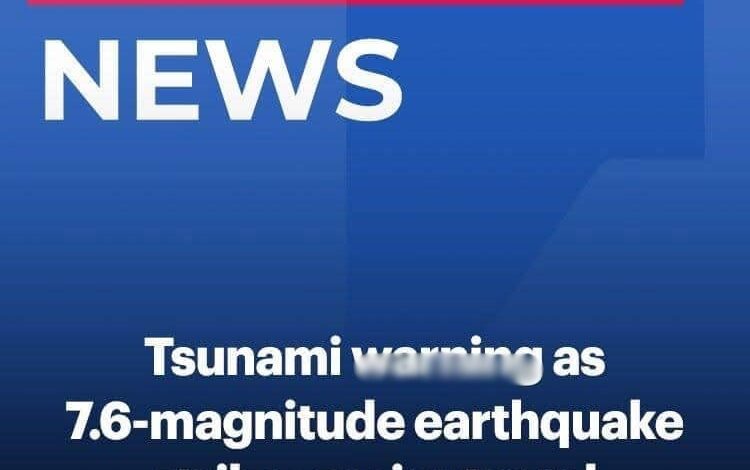
The Caribbean region was recently thrust into a state of high alert following a powerful 7.6 magnitude earthquake that struck the waters between Honduras and the Cayman Islands. This seismic event, occurring in the evening hours, sent shockwaves across the Caribbean Sea and triggered immediate tsunami advisories for several nations and territories. According to the United States Geological Survey (USGS), the earthquake hit at approximately 6:23 p.m. local time, with an epicenter located roughly 20 miles north of the Honduran coast and 130 miles southwest of the Cayman Islands. The sheer scale of the tremor marks it as the most significant seismic activity to affect the region since the catastrophic 7.2 magnitude earthquake that devastated Haiti in 2021, underscoring the persistent tectonic volatility of the Caribbean basin.
As the earth settled, the immediate focus shifted to the potential for a secondary disaster: a tsunami. The Pacific Tsunami Warning Center and various local agencies moved rapidly to assess the risk of displaced seawater. In the Cayman Islands, the Hazard Management Agency issued an urgent bulletin to the public, declaring a formal tsunami threat. Residents living in low-lying coastal areas were strongly encouraged to move inland immediately. The government’s instructions were specific and dire, urging citizens to evacuate harbors, bays, and marinas, and to stay out of the water until an official “all clear” could be given. The sight of receding water or unusual wave patterns is often the first sign of an approaching tsunami, and authorities worked to ensure that the population remained vigilant in the face of such a high-magnitude event.
The geographical reach of the earthquake meant that multiple jurisdictions had to coordinate their emergency responses simultaneously. In Puerto Rico and the U.S. Virgin Islands, the National Weather Service (NWS) initially placed the territories under a tsunami advisory. However, after further analysis of the sea-level data and the nature of the tectonic shift, the NWS officially canceled the advisory for these areas. Despite the cancellation, the agency issued a cautionary statement on social media, warning that “strong and unusual currents may continue.” Even without the threat of a massive inundation, the energy released by a 7.6 magnitude quake can create hazardous conditions for swimmers and small craft for several hours following the initial event. The NWS emphasized that beachgoers and mariners should continue to exercise extreme caution near the shoreline.
Further updates from the NWS detailed the specific threats remaining for other Caribbean nations. By 8:23 p.m., reports indicated that a significant tsunami threat persisted for Cuba, where waves were projected to reach between 1 and 3 meters above the normal tide level. In Honduras and the Cayman Islands, the projected wave heights were slightly lower, estimated to reach between 0.3 and 1 meter above the tide. While these projections were lower than the catastrophic heights seen in major historical tsunamis, even a one-meter surge can cause significant damage to coastal infrastructure, flood inland roads, and overwhelm local drainage systems. The unpredictability of wave behavior in enclosed bays and narrow channels means that a surge of any size remains a serious concern for local emergency management teams.
The United States mainland, meanwhile, remained largely unaffected by the threat. While the earthquake was felt across the Caribbean, the NWS confirmed that no tsunami threats or alerts were issued for the U.S. coastline. However, the event served as a stark reminder of the interconnectivity of the region’s geological health. The Caribbean plate is bordered by several major fault lines, and an event of this magnitude can often lead to a series of aftershocks. Seismologists have noted that aftershocks following a 7.6 magnitude quake can be powerful enough to cause further damage to buildings already weakened by the primary tremor, or even trigger smaller, localized tsunamis if they occur under the seafloor.
The comparison to the 2021 Haiti earthquake provides a grim context for the current situation. The 2021 quake resulted in immense loss of life and property, highlighting the vulnerability of the region’s infrastructure to sudden seismic shifts. While the 7.6 magnitude quake occurred underwater—which often mitigates direct structural damage compared to an inland epicenter—it significantly increases the displacement of water. This tectonic event was a strike-slip fault movement, which generally produces less vertical displacement of the seafloor than a subduction zone quake, but the sheer force involved was enough to keep the entire Caribbean on edge for several hours.
Emergency services across the impacted areas have been praised for their rapid communication. In the age of digital information, the ability of the USGS and the NWS to provide real-time data allowed for targeted evacuations and the prevention of unnecessary panic in areas where the threat was minimal. By utilizing platforms like X (formerly Twitter) and local emergency broadcast systems, authorities were able to reach residents in remote coastal villages as well as major tourist hubs. For many in the Cayman Islands and Honduras, the night was spent in shelters or on higher ground, waiting for the sea to prove it had settled.
As the threat levels began to subside, the long-term process of damage assessment and geological monitoring commenced. Local governments in Honduras and the Cayman Islands began surveying coastal defenses and searching for any signs of structural failure in piers and seawalls. Seismologists continue to analyze the data from the event to better understand the stress distribution along the fault lines in the Caribbean Sea. This data is crucial for refining tsunami modeling and improving future warning times for a region that is a major global travel destination, home to millions of residents and a vital part of the international maritime economy.
The 7.6 magnitude earthquake stands as a powerful testament to the restless nature of the Earth beneath the Caribbean. It serves as an invitation for all coastal communities to review their emergency protocols and for travelers to familiarize themselves with local alert systems. While the immediate danger of a devastating tsunami may have passed for some, the memory of the ground shaking remains fresh, reminding the world that in the face of such immense natural forces, preparation and rapid communication are the most effective tools for survival. The resilience of the Caribbean people, coupled with the sophisticated monitoring of the USGS and NWS, ensured that this event, while terrifying, was met with a structured and informed response.