Emergency Preparedness Experts Urge Families Worldwide To Keep At Least 72 Hours Of Essential Supplies Ready As Rising Global Tensions!
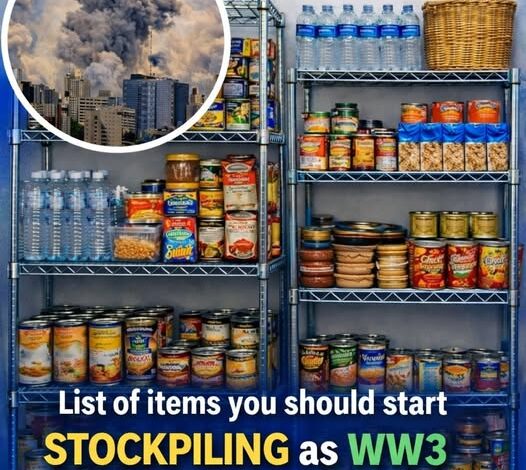
In the rapidly shifting landscape of 2026, the concept of home has evolved beyond mere shelter; for many, it has become a fortress of self-reliance. As global headlines increasingly feature reports of infrastructure vulnerabilities, unpredictable geopolitical tensions, and sudden systemic disruptions, the fragility of the networks we depend on—electricity, clean water, and digital communication—has moved from the realm of theory into daily conversation. Within the specialized community of tiny house enthusiasts and minimalist living advocates, the philosophy of “living small” is now being paired with the high-stakes discipline of emergency preparedness. Experts worldwide are issuing a clear, urgent directive: every household must maintain a minimum of 72 hours of essential supplies to navigate the critical window when modern services may abruptly fail without warning.
The “72-hour rule” is not a new invention of the current era; it is a battle-tested guideline forged from decades of disaster management experience. From the aftermath of historic hurricanes and seismic events to the modern complexities of large-scale power grid failures, emergency planners have consistently observed a specific pattern in the wake of a crisis. During the first three days, formal emergency services—police, fire, and medical rescue—are typically stretched to their absolute breaking point. They are forced to prioritize life-threatening catastrophes, such as structural collapses or major fires, leaving the general population to manage their own immediate needs. When a family is prepared to function independently for these first 72 hours, they are not just protecting themselves; they are actively assisting the broader community by allowing first responders to focus on the most dire emergencies.
Understanding the necessity of this 72-hour buffer requires a look at the “interdependency of systems” that defines 2026 life. We live in a world of invisible threads. Our water treatment plants require electricity to pump and purify; our communication networks require that same electricity to keep towers and servers operational; and our transportation systems require functional digital payment gateways to dispense the fuel that keeps supply chains moving. When one of these threads is cut—whether by a localized equipment failure or a larger systemic shock—the others can unravel with startling speed. A significant power outage is rarely just about “sitting in the dark.” It can quickly translate into dry taps, silenced cell phones, and empty grocery store shelves as “just-in-time” delivery models seize up.
For those living in tiny houses or apartments with limited square footage, the challenge of preparedness is one of efficiency rather than volume. The cornerstone of any survival strategy is, undeniably, clean drinking water. The physiological reality is that the human body can only function for a few days without hydration, yet water is often the first service to fail when the grid goes down. Experts recommend a minimum of one gallon per person per day for drinking and basic sanitation. In a 72-hour scenario, this means a family of four needs twelve gallons of water—a manageable amount to store even in the most modest of dwellings if one utilizes vertical space or under-furniture storage.
Beyond hydration, the “survival pantry” should consist of high-calorie, non-perishable foods that require little to no preparation. In 2026, the market for freeze-dried and shelf-stable nutrition has expanded significantly, offering options that are far more palatable and nutrient-dense than the rations of the past. The goal is to maintain energy levels and morale without the need for a functional stovetop or microwave. Accompanying these food stores should be a reliable source of light—LED lanterns and headlamps have largely replaced candles due to fire safety concerns—and a dedicated stock of spare batteries.
[Image illustrating the “Rule of Threes” in human survival: three minutes without air, three days without water, three weeks without food]
Information is the second most critical resource during a blackout or communication failure. When the internet disappears and cell towers lose backup power, the void of information is often filled by panic and rumor. A battery-powered or hand-crank emergency radio remains the most reliable link to the outside world. These devices can receive National Oceanic and Atmospheric Administration (NOAA) weather alerts and local emergency broadcasts that bypass the fragile fiber-optic and cellular networks. Knowing the status of the crisis—and more importantly, knowing when services are expected to return—is the most effective way to maintain psychological resilience during an uncertain period.
Resilience, however, is not solely about physical supplies; it is about a shift in mindset. Preparedness is often misinterpreted as “expecting the worst,” but in reality, it is a practical acknowledgment of the world as it currently exists. In the same way that a tiny house inhabitant carefully audits their possessions to maximize utility, an emergency-ready household audits their risks to minimize vulnerability. This proactive stance transforms a potential victim into an active participant in their own safety. Simple acts, such as keeping a small stash of physical cash (since digital payment systems fail during outages) and maintaining a basic first-aid kit, can change the entire trajectory of a family’s experience during a 72-hour disruption.
The current global climate, marked by infrastructure risks and geopolitical volatility, serves as a persistent reminder that the “off-grid” lifestyle isn’t just a design trend—it is a survival skill. Whether you are living in a 300-square-foot architectural marvel or a traditional suburban home, the principles of the 72-hour rule remain identical. It is about creating a margin of safety. By securing the basics of water, light, nutrition, and information, you are building a bridge over the initial chaos of a crisis.
As we navigate the complexities of 2026, the “Tiny House Zone” philosophy of intentionality becomes more relevant than ever. Living with less doesn’t mean having less when it matters most. It means knowing exactly what you have and ensuring it serves a vital purpose. The 72-hour supply kit is the ultimate expression of this intentionality—a compact, high-utility insurance policy against a world that is increasingly prone to “unplugging” without warning. By taking these small, practical steps today, families can ensure that if the lights go out tomorrow, they aren’t left in the dark, but are instead waiting in a position of calm, prepared readiness.