BREAKING NEWS – US officials! Russia is giving Iran?
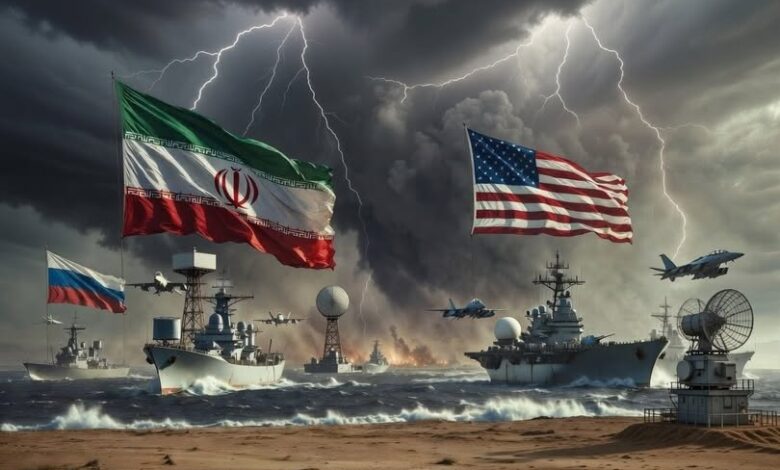
The geopolitical landscape of the Middle East has entered a period of heightened volatility following reports from senior United States officials that Russia is actively providing Iran with sensitive intelligence regarding the movements and locations of American military assets. This development, first detailed by sources within the defense and intelligence communities, suggests a significant shift in the strategic partnership between Moscow and Tehran. According to the reports, the shared data specifically targets the positioning of U.S. warships, aircraft carriers, and sophisticated radar systems operating throughout the region. This flow of information is designed to bolster Iran’s situational awareness, effectively helping Tehran identify and potentially target American forces with a degree of precision that was previously unattainable.
The intelligence provided is reportedly highly granular, encompassing real-time or near-real-time coordinates of U.S. naval vessels and the flight patterns of American aircraft. For Iran, which has long relied on its own reconnaissance capabilities and regional proxies to monitor U.S. activity, this Russian assistance acts as a force multiplier. By utilizing Russian satellite imagery and signal intelligence, Iran can bypass some of the electronic warfare and stealth measures that the U.S. employs to mask its operations. This collaboration significantly lowers the barrier for Iranian forces to conduct provocative maneuvers or plan potential strikes, as it eliminates much of the guesswork regarding where U.S. defenses are most concentrated or where they might be vulnerable.
Analysts suggest that this level of cooperation indicates that Russia may be moving toward a role of indirect involvement in Middle Eastern conflicts. While Moscow has not officially commented on these allegations and maintains that it is not a direct combatant in the ongoing regional skirmishes, the provision of actionable intelligence is viewed by Washington as a hostile act of proxy warfare. By enabling Iran, Russia can exert pressure on U.S. foreign policy and force a diversion of American resources away from other theaters, such as Eastern Europe, without firing a single shot of its own. This “gray zone” activity allows Moscow to challenge American hegemony while maintaining a thin veneer of diplomatic deniability.
The implications for U.S. personnel on the ground and at sea are immediate and profound. With the knowledge that their exact coordinates may be in the hands of Iranian military planners, U.S. commanders must now operate under a heightened state of alert. This involves more frequent changes in position, increased use of decoys, and a more aggressive stance toward electronic counter-measures. The risk of miscalculation is at an all-time high; if a Russian-provided data point leads to an Iranian strike—whether accidental or intentional—the escalatory ladder could quickly lead to a direct and devastating confrontation between major powers.
Interestingly, the same U.S. officials have noted a distinct difference in the approach taken by China. While Beijing maintains a robust economic and diplomatic relationship with Iran, there is currently no evidence to suggest that China is providing similar tactical or military intelligence to Tehran. This suggests a fractured approach among the major global powers that are often grouped together as an “axis of opposition” to U.S. interests. China’s reluctance to engage in this specific type of intelligence sharing may stem from its desire to maintain regional stability for the sake of its energy imports and maritime trade routes. Unlike Russia, which often benefits from regional disruption, China views the Middle East through a lens of economic continuity, making it less likely to authorize actions that could spark a full-scale war.
The U.S. State Department and the Pentagon are currently evaluating a range of responses to this intelligence sharing. Options include increased sanctions on the Russian and Iranian entities involved in the data transfer, as well as a more robust public exposure of the collaboration to pressure Moscow internationally. There is also a push within Congress to provide the U.S. Navy with more advanced counter-reconnaissance technology to “blind” the assets being used to track American ships. The “high alert” status in the USA over the next few hours and days reflects the urgency of this threat, as security agencies elevate their monitoring levels to detect any imminent moves by Iranian-backed groups.
This development also places a strain on the delicate diplomatic balance in the region. U.S. allies, particularly those in the Gulf, are closely watching how Washington responds. If the U.S. appears unable to protect its own intelligence security against Russian interference, it may lead regional partners to reconsider their own security arrangements. The fear is that a perceived weakening of U.S. dominance could embolden Iran to take even bolder steps, confident in its “eye in the sky” provided by Moscow. This creates a feedback loop of instability, where every Russian data point contributes to a more aggressive Iranian posture, which in turn necessitates a more heavy-handed U.S. response.
Behind the scenes, the U.S. intelligence community is working to identify the specific channels through which this data is flowing. It is unclear if the information is being passed through traditional military-to-military channels or via more covert cyber-infrastructure. Identifying and disrupting these links is a top priority for U.S. Cyber Command. If the flow of data can be interrupted or poisoned with misinformation, the tactical advantage currently enjoyed by Iran could be neutralized. However, as long as Russia views the Middle East as a useful tool for distracting and draining the United States, the motivation to provide this intelligence will remain strong.
The narrative of “unfiltered truth” in modern geopolitics is increasingly complex. In an era of digital warfare, a line of code or a satellite coordinate can be as lethal as a missile. The revelation that Russia is acting as Iran’s intelligence arm changes the fundamental rules of engagement in the Middle East. It is no longer just a struggle between regional actors; it is a manifestation of a broader, global competition for influence where information is the primary currency. As the U.S. recalibrates its strategy, the focus must be on both the physical protection of its troops and the digital protection of its secrets.
As we move deeper into 2026, the situation remains fluid. The “shockwaves” felt in Washington and the “panic” that erupts when such reports go public are a testament to the high stakes involved. The goal for U.S. policy now is to restore a sense of deterrence that discourages this kind of dangerous collaboration. Whether through diplomatic pressure, technological innovation, or a show of force, the objective is to ensure that the U.S. remains the master of its own surroundings. The pursuit of safety in such a contested environment is a continuous and evolving challenge, one that requires a vigilant and multifaceted approach to national defense.