How to Verify a Viral Police Warning Before Sharing It
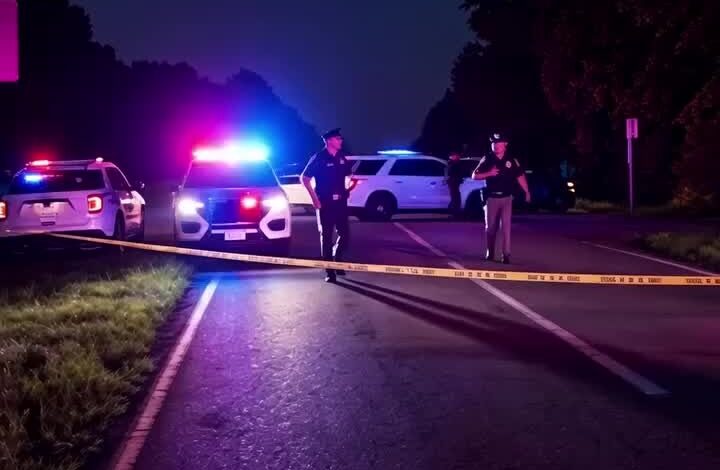
A widely shared caption tells readers that police are urging everyone to stay away, but the accompanying account never names the city, the police department or the streets affected. It offers an impression of urgency without giving people enough information to determine whether the alert applies to them. The available material does not establish that a current police warning is in effect.
A usable local alert usually identifies the agency issuing it and gives enough information to locate the affected area. A street name, intersection or map can distinguish a closure on one block from a wider emergency. The time of the notice matters too. A message about an active response can remain in circulation after police have reopened a road or ended a restriction. A new share does not reset the time at which the underlying warning was issued.
The most useful first step is to identify the location named in the original notice. If there is no location, the post cannot tell a reader whether the warning applies to their commute or neighborhood. A person with a possible location can look for a statement from the relevant police department, municipal emergency office or transportation agency. A transit agency may report detours, while police may provide a separate account of why an area is closed. Where available, those two notices should be read together.
Footage of emergency vehicles also needs context. Lights, uniforms and blocked roads can show that responders were present somewhere, but similar scenes occur during very different events. The image alone may not establish whether the location is still restricted or whether the response was connected with the claim in the caption. Details such as signs, an original timestamp and the name of the department can make the account easier to verify.
Reposts often strip away the identifying material. Someone may crop a screenshot to show only a warning, leaving out the account name and publication time. Another person may add a new caption that describes a different place. If the original notice can be located, compare its wording with the repost and check whether the issuing agency has since updated it. A later notice may specify that only one entrance is affected or that the restriction has been lifted.
Local emergencies can also generate several updates as conditions change. An early notice may ask people to avoid an area while responders work. A later notice can add precise boundaries, announce reopened roads or correct earlier information. Sharing the latest dated notice from the agency allows recipients to see both the warning and its context. Passing along a location-free caption gives them little practical information.
Nothing in the supplied account identifies a specific active incident. It is possible for imagery to depict a genuine response and for the caption to remain too vague to use as a warning. If an official alert identifies a real location and a current restriction, that specific information can guide decisions. Until a connection to such a notice is established, the post is best understood as an unverified claim about an unspecified police response. The distinction matters because an urgent tone is easy to reproduce, while a named agency, a place and a time allow a reader to check the claim.