The Dirty Diaper That Made My Family Rethink Household Chores
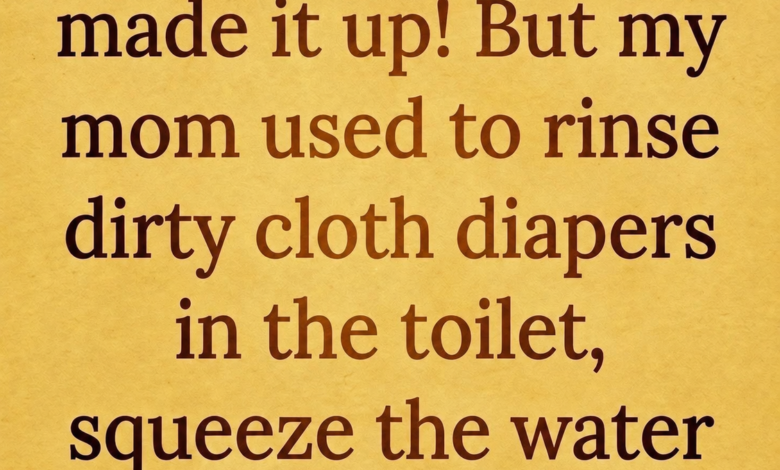
In the story linked from Facebook, the narrator remembers the day their mother threw a dirty cloth diaper into a fire pit. Their father was sitting over lunch. For the mother, the diaper was one part of a job the family had assumed she would keep doing. For the people watching, it was an unexpected interruption to a day that had otherwise followed its usual pattern. The incident is told as a family memory about who did the work at home and who was allowed to take it for granted.
The Facebook image names the steps that once went into cleaning a reusable diaper. The mother rinsed it in the toilet, squeezed out the water and put it in a pail. The pail was only an intermediate stop. The cloth still had to be washed, dried and made ready to use again. A child might remember a parent bending over the toilet or carrying the pail down a hall. The adult responsible for the job had to think about how many clean diapers remained, how soon the next load had to be done and what else needed attention at the same time.
That sequence explains why one diaper could stand for much more than itself. Finishing the job never meant it was finished for the week. It only meant that there were clean diapers for the next change. The routine returned whether lunch was ready or someone had time to help. A person who saw only the folded cloth missed the earlier steps that made it available. The person doing those steps was also the one who had to make time for them.
The fire pit was the moment when the work became visible to everybody else. In the linked excerpt, the mother left the job she had been expected to carry and gave the father two choices by evening. The account leaves the wording of those choices unfinished. The part it does describe is enough to show the change in the household conversation. The father was being asked to take a position on a chore that the family had previously treated as his wife’s responsibility. She had stopped making the decision for him by continuing to do it herself.
The detail about lunch makes the memory more concrete. One person was able to sit down while another was still occupied by a job that would have to be repeated. That contrast does not need a long speech to explain why the mother had run out of patience. The family already understood how the house worked. They had simply understood it from different places in the room. The story remembers the moment when the mother made those places visible and required somebody else to reckon with the next diaper.
The linked excerpt describes an unusual gesture. The routine behind it is what gives the gesture its force. The mother had been rinsing, wringing and setting aside the cloth so the family could use it again. Once she walked away, the question became who would do those steps when the next change came. That was the household lesson her family had been able to avoid while she kept the pail moving.