Emirates Flight EK521 and the Dubai Runway Crash
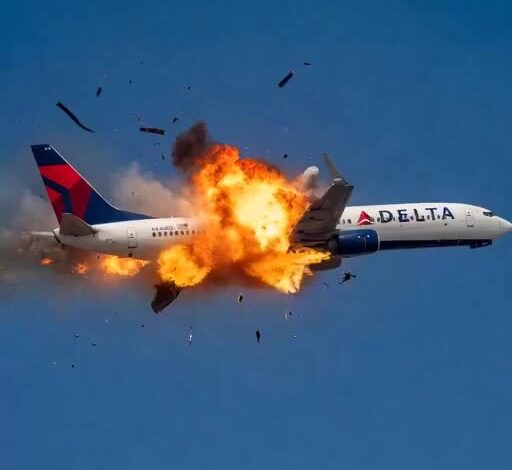
Emirates Flight EK521: The Terrifying Dubai Runway Crash That All 300 Passengers and Crew Survived — But Cost a Firefighter His Life
On August 3, 2016, a r
The aircraft was expected to land on runway 12L.
Under normal conditions, the final approach involves a highly structured sequence of procedures. Pilots monitor speed, altitude, descent rate, runway alignment, and environmental conditions while coordinating with air traffic control.
Cabin crew members prepare passengers for landing, ensuring that seat belts are fastened, personal items are secured, and the cabin is ready for the aircraft’s arrival.
The atmosphere aboard a passenger aircraft during descent is often relatively calm.
Travelers may look through the windows at the approaching city. Some begin thinking about their next flight or transportation from the airport. Others remain seated, waiting for the familiar sound and sensation of the wheels touching the runway.
But landing is also one of the most demanding phases of flight.
Aircraft operate close to the ground, with limited time and altitude available to respond to unexpected developments.
Changes in wind conditions, aircraft performance, or runway alignment can require pilots to modify their approach or discontinue the landing altogether.
In the case of Flight EK521, those final moments became central to understanding the accident.
Weather Conditions and the Challenge of Landing
Initial reports following the accident mentioned possible wind shear, a weather phenomenon that can create serious challenges for aircraft during takeoff and landing.
Wind shear occurs when wind speed or direction changes significantly over a relatively short distance.
These changes can affect an aircraft’s airspeed, lift, and flight path.
For example, an aircraft approaching a runway may encounter shifting winds that alter its performance just when it is close to the ground.
Pilots receive specialized training to recognize and respond to wind shear because the available recovery time can be limited.
Dubai’s hot summer environment can also produce challenging atmospheric conditions.
Strong surface heating can create rising air currents, while changing winds may influence the way an aircraft behaves during its final approach.
However, it is important to distinguish between early speculation and findings established by investigators.
The official final report on Flight EK521 did not simply conclude that an unavoidable wind shear event forced the aircraft into the runway.
Instead, investigators examined the combination of environmental conditions, the crew’s decision-making, aircraft automation, and the handling of an attempted go-around.
The airport’s weather information had included a forecast warning of moderate wind shear affecting its runways.
The aircraft was also approaching with a tailwind, although investigators determined that the tailwind was within the Boeing 777’s operational limitations.
A tailwind means that the wind is blowing generally in the same direction as the aircraft’s movement.
During landing, tailwinds can increase an aircraft’s groundspeed and influence the distance required to land safely.
Pilots must take these factors into account when evaluating whether an approach can be continued.
On Flight EK521, the captain was manually flying the aircraft during the landing attempt.
As the aircraft neared the runway, the crew faced a developing situation that led the captain to decide against completing the landing.
The decision to abandon a landing is not inherently unusual or unsafe.
In fact, an appropriately executed go-around is a standard safety maneuver used when conditions are unsuitable for landing.
The challenge in this case was what happened after that decision was made.
The Attempted Go-Around
A go-around is a procedure in which pilots discontinue a landing and begin climbing away from the runway.
It may be initiated for several reasons, including an unstable approach, unexpected runway conditions, changing weather, or uncertainty about whether the aircraft can land safely.
When performed correctly, a go-around allows the pilots to regain altitude, establish a stable flight path, and prepare for another approach.
Commercial pilots practice this maneuver extensively during training and recurrent simulator evaluations.
For Flight EK521, the captain decided to go around because he believed the aircraft would not land within the intended touchdown zone.
According to the final investigation, the captain’s decision was based on his perception that thermal conditions were preventing an appropriate landing, rather than on a recognized wind shear encounter.
The crew therefore initiated the normal go-around procedure.
However, a critical complication had already occurred.
The aircraft’s main landing gear had briefly made contact with the runway.
The touchdown lasted approximately six seconds, but the pilots did not recognize that it had occurred.
This detail became crucial because of how the Boeing 777’s automated systems were designed to operate.
The aircraft’s takeoff/go-around switches, commonly referred to as TO/GA switches, can command an increase in engine thrust under appropriate conditions.
However, the switches are inhibited in certain circumstances after touchdown.
When the captain activated the TO/GA switch, it did not produce the expected automatic increase in engine thrust because the aircraft had already registered ground contact.
The pilots did not immediately recognize that the engine thrust remained at idle.
Although the aircraft subsequently became airborne again, it was not receiving the thrust needed to sustain the intended climb.
The Boeing 777 rose to approximately 85 feet above the runway.
For a brief period, it appeared to be climbing away.
But without sufficient airspeed and engine thrust, the aircraft could not maintain that climb.
It began descending toward the ground.
As the situation deteriorated, the captain initiated a wind shear escape maneuver and advanced the thrust levers.
By then, there was insufficient time to prevent the aircraft from striking the runway.
The sequence unfolded in seconds.
Approximately 18 seconds after the go-around was initiated, the Boeing 777 impacted runway 12L.
The final report would identify the failure to monitor and verify engine thrust during the attempted go-around as a central element in the accident.
It was not a simple case of engines unexpectedly failing.
Investigators found that the aircraft’s systems and engines had operated according to their design, but the interaction between automation behavior and crew actions contributed to a dangerous outcome.
This distinction became one of the most important lessons of the investigation.
A Violent Impact on the Runway
At approximately 12:37 p.m. local time, Flight EK521 struck the runway during the unsuccessful go-around.
The aircraft impacted the pavement and began sliding along its lower fuselage.
According to the official investigation, the Boeing 777 traveled approximately 800 meters along the runway over a period of roughly 32 seconds before coming to rest.
The impact caused extensive structural damage.
The right engine and its supporting assembly separated from the aircraft, along with other components.
The aircraft was no longer capable of normal movement or flight.
Yet despite the severity of the impact, the main passenger cabin initially remained sufficiently intact to protect the people inside.
This was an essential factor in the survival of everyone aboard.
But even as that reassuring information emerged, the emergency outside the aircraft was far from over.
Flames, Smoke, and a Race Against Time
Images recorded at Dubai International Airport showed thick smoke rising from the damaged Boeing 777 as emergency responders worked around the aircraft.
The photographs quickly attracted international attention.
For viewers around the world, the contrast was startling.
Emirates arranged assistance for affected passengers following the accident.
According to the airline’s subsequent update, some travelers left the airport in Dubai, while others chose to continue their journeys on alternative flights.
Passengers who needed temporary accommodation were offered support.
The airline also assisted those receiving medical treatment.
For many travelers, the immediate practical questions would have been substantial.
How would they contact their families?
What would happen to their checked baggage?
Could they continue their journeys?
Would their connecting flights still operate?
Where would they stay if they could not travel that day?
These concerns may seem secondary when compared with survival, but they are part of helping people recover a sense of stability after a major emergency.
The response therefore extended beyond the runway.
Airport staff, airline representatives, medical personnel, and support teams all had roles in assisting those affected.
A Major Disruption to Dubai International Airport
The accident took place at one of the busiest aviation hubs in the world.
As a result, its consequences spread rapidly throughout airport operations.
Dubai International Airport suspended flights following the crash.
Runways and associated operating areas had to remain unavailable while emergency personnel responded and authorities assessed the situation.
Incoming aircraft could not simply continue landing as if nothing had happened.
The airport needed to protect the accident scene, coordinate emergency vehicles, and ensure that other aircraft would not interfere with rescue operations.
Departing flights were also affected.
Aircraft that were ready to leave could not operate normally while airport movements were restricted.
The resulting delays extended through the airline network.
For Emirates, the disruption was particularly significant because Dubai served as its primary hub.
Flights arriving from multiple countries depended on coordinated connections with onward services.
When an important hub closes, even temporarily, delays can accumulate.
Passengers may miss connections, aircraft may be positioned at unexpected airports, and crew schedules may require adjustment.
The disruption can continue even after the airport reopens.
According to Emirates, Dubai International was closed for approximately six hours on August 3, 2016.
Operations gradually resumed at around 6:30 p.m. local time.
The airline later reported that 27 of its flights had been canceled and 23 had been diverted to alternative airports.
Diversions included airports in the United Arab Emirates and neighboring countries.
More than 23,000 Emirates passengers were affected by the disruption.
These figures demonstrate how the consequences of a single runway accident can reach travelers who were nowhere near the damaged aircraft.
A passenger preparing to depart from another country might experience a cancellation because the aircraft assigned to that route could no longer arrive as scheduled.
Someone connecting through Dubai might find that an onward flight had been delayed or rescheduled.
Airport operations involve a complex network of aircraft, crews, gates, ground services, and passenger connections.
When one part of that network is interrupted, the effects can spread widely.
Restoring normal service therefore requires much more than reopening a runway.
Airlines must account for displaced aircraft, revised departure times, missed connections, crew availability, and passenger assistance.
The Flight EK521 accident provided a vivid example of the operational vulnerability that can accompany large, interconnected aviation networks.
Emirates Responds to the Disaster
In the hours following the accident, Emirates issued public statements confirming the incident and providing information about the people aboard.
The airline identified the flight as EK521, operating from Trivandrum to Dubai.
It confirmed that the aircraft was a Boeing 777-300 and that all 282 passengers and 18 crew members had evacuated.
Emirates Chairman and Chief Executive Sheikh Ahmed bin Saeed Al Maktoum addressed the emergency and the airline’s response.
He confirmed that the company was focused on the safety and welfare of those involved.
The airline also acknowledged the death of the firefighter who had been responding to the accident.
For Emirates, the incident was a major operational and reputational challenge.
The carrier had spent decades developing its international network and establishing a reputation for service and safety.
A serious accident involving one of its passenger aircraft naturally attracted intense global scrutiny.
However, a responsible response to an aviation accident requires more than defending an airline’s reputation.
It requires cooperation with investigators, transparent communication, assistance for affected passengers and employees, and a willingness to implement changes when safety weaknesses are identified.
Emirates stated that it would cooperate with the relevant authorities.
It also provided information about assistance for passengers and the disruption to scheduled flights.
As investigators began their work, the company faced questions about how an experienced flight crew operating a modern aircraft had encountered such a serious accident.
At the time, the answers were not immediately available.
The aircraft’s damaged condition, the complexity of the landing sequence, and the possible influence of environmental conditions all required systematic analysis.
The airline’s initial statements therefore could not substitute for a full technical investigation.
It would take years before investigators published their final conclusions.
During that period, the accident remained an important subject for aviation professionals examining aircraft automation, crew procedures, and safety training.
The International Investigation Begins
The United Arab Emirates General Civil Aviation Authority activated an official investigation following the accident.
The inquiry was led by the country’s Air Accident Investigation Sector.
Aviation accident investigations are designed to establish what happened, why it happened, and what changes may prevent similar events.
Their principal purpose is safety improvement rather than the assignment of criminal or civil liability.
Investigators typically examine multiple sources of evidence.
These may include flight data recordings, cockpit voice recordings, air traffic control communications, aircraft systems, maintenance records, operational procedures, weather observations, and physical wreckage.
In a complex event, no single piece of evidence necessarily tells the entire story.
A flight data recorder may show the aircraft’s altitude, speed, engine parameters, and control inputs.
Cockpit recordings may help investigators understand crew communications and the timing of decisions.
Aircraft wreckage can provide information about impact forces, structural damage, fire behavior, and system performance.
Weather records can establish the environmental conditions at the time.
Investigators then analyze how these elements interacted.
Flight EK521 also involved international cooperation.
The Boeing 777 was manufactured in the United States, while its engines were produced by Rolls-Royce.
Consequently, the United States National Transportation Safety Board and the United Kingdom Air Accidents Investigation Branch participated through their respective roles in the international investigation process.
Boeing and Rolls-Royce provided technical assistance.
Such cooperation is normal in major aviation investigations involving aircraft, engines, operators, and authorities from different countries.
The objective is to bring together relevant expertise and identify safety issues that may affect aviation beyond the country where an accident occurred.
For Flight EK521, investigators needed to explain several critical questions.
Why had the aircraft impacted the runway during an attempted go-around?
Why had the engines remained at idle when the pilots were attempting to climb?
What role had the aircraft’s automation played?
How had the crew interpreted the aircraft’s behavior?
Were weather information and training procedures adequate?
How effective had the evacuation been?
And what additional protective measures could reduce the risk to firefighters responding to aircraft emergencies?
These questions formed part of an investigation that extended well beyond the immediate crash.
A normal go-around is not identical to a wind shear escape maneuver.
Both procedures aim to preserve aircraft safety, but they may involve different priorities and techniques.
Investigators examined whether the information available to the flight crew adequately reflected conditions at the airport.
They also considered how weather warnings were communicated and how flight crews interpreted those warnings.
The final report on Flight EK521 documented safety actions taken following the accident and issued recommendations to several organizations.
These included Emirates, the UAE General Civil Aviation Authority, Boeing, the United States Federal Aviation Administration, Dubai Airports, Dubai Air Navigation Services, and the International Civil Aviation Organization.
The wide distribution of recommendations demonstrated that the investigation’s findings were relevant to more than one airline or aircraft.
The lessons concerned operational training, technical information, weather communication, aircraft systems, evacuation procedures, and emergency services.
Modern aviation safety depends on learning from failures and near failures.
The value of an investigation is not limited to explaining why one aircraft crashed.
Its findings can help other organizations recognize hazards before similar circumstances produce another accident.
How Aviation Accidents Change Safety Practices
Aviation has developed many of its modern safety procedures through the systematic investigation of accidents and serious incidents.
When an accident occurs, investigators do more than identify the final mistake or malfunction.
They examine the underlying conditions that allowed a dangerous sequence to develop.
These may include training gaps, unclear procedures, design assumptions, organizational practices, communication problems, or insufficient information.
The Flight EK521 investigation followed this broader approach.
The event demonstrated that the successful execution of a familiar procedure can depend on a crew’s understanding of the aircraft’s current operating state.
It also showed the importance of confirming actual engine response during a critical maneuver.
The findings highlighted why recurrent training should incorporate realistic variations of unusual situations.
A go-around initiated before touchdown may not present the same automation behavior as one initiated after ground contact.
Pilots need training that prepares them for these differences.
The report also drew attention to the need for effective coordination between pilots.
In multi-crew operations, both pilots contribute to monitoring aircraft performance and identifying unexpected conditions.
Clear communication and cross-checking can reduce the risk that one critical detail will go unnoticed.
The accident further emphasized the value of accurate weather information and effective coordination with air traffic control.
For cabin safety, the evacuation demonstrated the importance of functioning escape equipment and immediate passenger compliance.
For airport emergency services, it revealed hazards that can persist or emerge after an aircraft has stopped moving.
Taken together, these lessons illustrate the complexity of aviation safety.
A safe flight does not depend on any single individual, procedure, or machine.
Instead, it depends on multiple layers of protection functioning together.
Aircraft design, pilot training, cabin safety procedures, weather reporting, air traffic control, airport emergency planning, and regulatory oversight all contribute.
When one layer becomes ineffective, others may prevent a disaster from becoming fatal.
On Flight EK521, several protective factors helped all occupants survive.
At the same time, the accident exposed weaknesses that required attention.
This combination is precisely why detailed accident investigations are valuable.
The Importance of Remembering the Human Story
Technical reports are essential for understanding aviation accidents, but they cannot fully convey what such events mean to the people involved.
Flight EK521 carried passengers who had expected to arrive safely and continue their ordinary lives.
Instead, they experienced a violent runway impact, an emergency evacuation, and the sight of their aircraft being consumed by fire.
For some, the journey ended with medical treatment.
Others faced disrupted travel plans and the uncertainty of arranging their next steps.
The cabin crew members who assisted the evacuation had to perform safety duties in circumstances that tested their training and judgment.
The pilots survived an accident that would be examined in detail for years.
Emergency responders confronted a dangerous aircraft fire, and one firefighter lost his life.
Families and loved ones were affected in different ways.
Those waiting for news about passengers received confirmation that everyone aboard had survived.
The family of the firefighter, however, faced an irreversible loss.
This contrast should remain central to any account of the disaster.
It would be inaccurate to describe Flight EK521 as an accident in which nobody died.
The correct statement is that all passengers and crew survived, while one firefighter was fatally injured during the emergency response.
That distinction recognizes the success of the evacuation without overlooking the sacrifice made on the ground.
It also reminds readers that aviation emergencies extend beyond the aircraft itself.
The people who maintain airports, guide aircraft, operate emergency vehicles, provide medical assistance, and support affected travelers are all part of the aviation system.
Their contributions are often less visible than those of pilots and cabin crew, but they are indispensable.
The Flight EK521 tragedy brought the risks faced by airport firefighters into sharp focus.
Their work requires confronting situations from which everyone else is trying to escape.
When an aircraft is burning, emergency responders must move toward the danger rather than away from it.
That responsibility deserves recognition, particularly when the consequences are fatal.
A Disaster That Could Have Been Even Worse
Looking at the photographs of the destroyed Boeing 777, it is difficult to ignore how severe the accident became.
The aircraft sustained a violent impact, slid along the runway, suffered extensive structural damage, and was ultimately destroyed by fire.
A fuel tank explosion occurred while emergency services were responding.
Several evacuation slides were unusable.
Passengers and crew were injured.
These were not minor circumstances.
Yet all 300 people who had been aboard survived.
The outcome reflected the fact that the passenger cabin initially remained survivable and that the occupants were able to leave before the fire consumed it.
The timing of the evacuation was particularly important.
Had the cabin become engulfed in flames before the passengers escaped, the consequences could have been far more severe.
That possibility makes the successful evacuation remarkable, but it should not lead to exaggerated claims that survival was assured or that every safety system performed perfectly.
The official investigation documented several complications.
Emergency slides did not all function as intended under the circumstances.
Some passengers delayed their own evacuation by taking belongings.
Crew members were injured.
The event demonstrated that even a successful evacuation can reveal serious vulnerabilities.
It also showed that a major accident does not necessarily result in mass fatalities.
The survivability of a crash depends on numerous factors, including impact forces, aircraft structure, fire development, available exits, passenger behavior, and emergency response.
Flight EK521 became a powerful example of how these factors can interact.
The aircraft was destroyed, but the people inside had an opportunity to escape.
The tragedy was that the emergency remained deadly for someone who had arrived to help.
What Travelers Can Learn From Flight EK521
Most commercial airline passengers will never experience an emergency evacuation.
Nevertheless, the Flight EK521 accident offers several practical lessons that are relevant to anyone who flies.
One of the most important is to pay attention to the safety briefing before departure.
Travelers who fly frequently may become accustomed to hearing similar instructions on every journey.
It can be tempting to ignore information about emergency exits, seat belts, and evacuation procedures.
However, these instructions exist because passengers may need to act rapidly under unfamiliar and stressful conditions.
Knowing where the nearest exit is located can be useful when visibility is reduced or a preferred route becomes unavailable.
Passengers should also understand that the nearest usable exit may be behind them rather than in front.
The circumstances of Flight EK521 demonstrate why evacuation routes can change.
An exit or slide may become unusable, requiring cabin crew members to redirect people toward another location.
Following those instructions promptly can help prevent dangerous delays.
Another crucial lesson is to leave baggage behind.
The final investigation specifically documented passengers taking carry-on belongings during the evacuation.
This behavior created avoidable complications in an already dangerous situation.
A suitcase can slow an evacuation, obstruct movement, or damage emergency equipment.
The instinct to retrieve belongings is understandable, but the priority must be escaping safely.
Passengers should also recognize that cabin crew members are trained safety professionals.
During emergencies, their instructions may sound urgent or forceful.
This is necessary because hesitation and confusion can endanger everyone aboard.
The experience of Flight EK521 demonstrates why these procedures matter.
When an aircraft is damaged and fire is developing, organized passenger movement can make a critical difference.
The broader lesson is not that flying should be feared.
Commercial aviation remains a highly structured form of transportation supported by extensive safety systems.
Rather, the accident illustrates why passengers should take emergency instructions seriously, even though such emergencies are uncommon.
The Lasting Legacy of Flight EK521
More than a decade after the accident, the events of August 3, 2016 remain significant in discussions of aviation safety.
The crash demonstrated how a dangerous situation can emerge during an attempted landing and develop into an accident within seconds.
It also illustrated the importance of understanding aircraft automation and confirming that critical systems are producing the expected response.
The final investigation identified issues that extended beyond the immediate flight crew.
Training procedures, technical information, communication, weather services, evacuation equipment, and emergency-response practices all formed part of the wider safety analysis.
The accident therefore became more than a record of one aircraft’s destruction.
It became an opportunity for the aviation industry to examine how multiple safety systems interact during an emergency.
For Emirates, the accident required passenger assistance, operational recovery, cooperation with investigators, and attention to the resulting recommendations.
For Dubai International Airport, it represented a major emergency that temporarily interrupted one of the world’s busiest international transportation networks.
For Boeing and other aviation organizations, the findings contributed to a broader examination of pilot interaction with automated systems.
For cabin safety professionals, the evacuation provided valuable evidence about passenger behavior and escape equipment under difficult conditions.
For airport firefighters, the tragedy highlighted the dangers associated with aircraft fires and fuel tank explosions.
And for the people who survived, the accident marked the end of a journey that became unforgettable for reasons nobody had anticipated when they boarded.
There is no single lesson that fully captures Flight EK521.
Its significance lies in the combination of survival, system complexity, emergency preparedness, and human loss.
The story reminds us that modern aviation safety is not achieved through the absence of risk.
It is achieved through continuous training, careful design, effective procedures, transparent investigations, and the willingness to learn from events that expose weaknesses.
Three Hundred Survivors, One Life Lost
On the morning of August 3, 2016, Emirates Flight EK521 departed India on what should have been an ordinary journey to Dubai.
The Boeing 777 carried 282 passengers and 18 crew members.
By early afternoon, the aircraft had struck a runway, slid hundreds of meters along the pavement, and become the center of a major emergency response.
Smoke rose above Dubai International Airport as firefighters fought the blaze.
Air traffic was suspended.
Flights were diverted.
Thousands of travelers experienced disruptions that spread through the airline’s international network.
Inside the damaged aircraft, cabin crew members worked to direct passengers toward emergency exits.
Despite unusable evacuation slides and other complications, everyone aboard eventually escaped.
It was an extraordinary survival outcome.
But the emergency also claimed the life of a firefighter who was struck by a large section of the aircraft’s wing after a fuel tank explosion.
His death gave the accident a tragic dimension that cannot be separated from the story of the 300 survivors.
The investigation that followed eventually explained how the unsuccessful go-around had developed, identifying a combination of crew actions, automation behavior, and procedural issues.
The resulting findings provided lessons for pilots, airlines, aircraft manufacturers, regulators, airport operators, and emergency responders.
Flight EK521 therefore remains a reminder of both the strengths and limitations of modern aviation safety.
The successful evacuation demonstrated the value of a survivable aircraft structure, trained cabin crew members, emergency equipment, and rapid response.
The accident itself demonstrated how unexpected system behavior and human decisions can combine under severe time pressure.
And the firefighter’s death demonstrated that even when every person aboard survives, an aviation disaster may still demand a terrible sacrifice.
The lasting memory of Flight EK521 should include all of these truths.
Three hundred people escaped a burning aircraft and were given the opportunity to return to their lives.
A firefighter responding to protect others lost his own.
The aircraft was destroyed, but the lessons drawn from the disaster continue to matter.
Ultimately, the story is not simply about a plane that crash-landed in Dubai.
It is about how quickly an ordinary flight can become a life-threatening emergency, how preparation and decisive action can preserve hundreds of lives, and why the courage and safety of those who respond must never be forgotten.